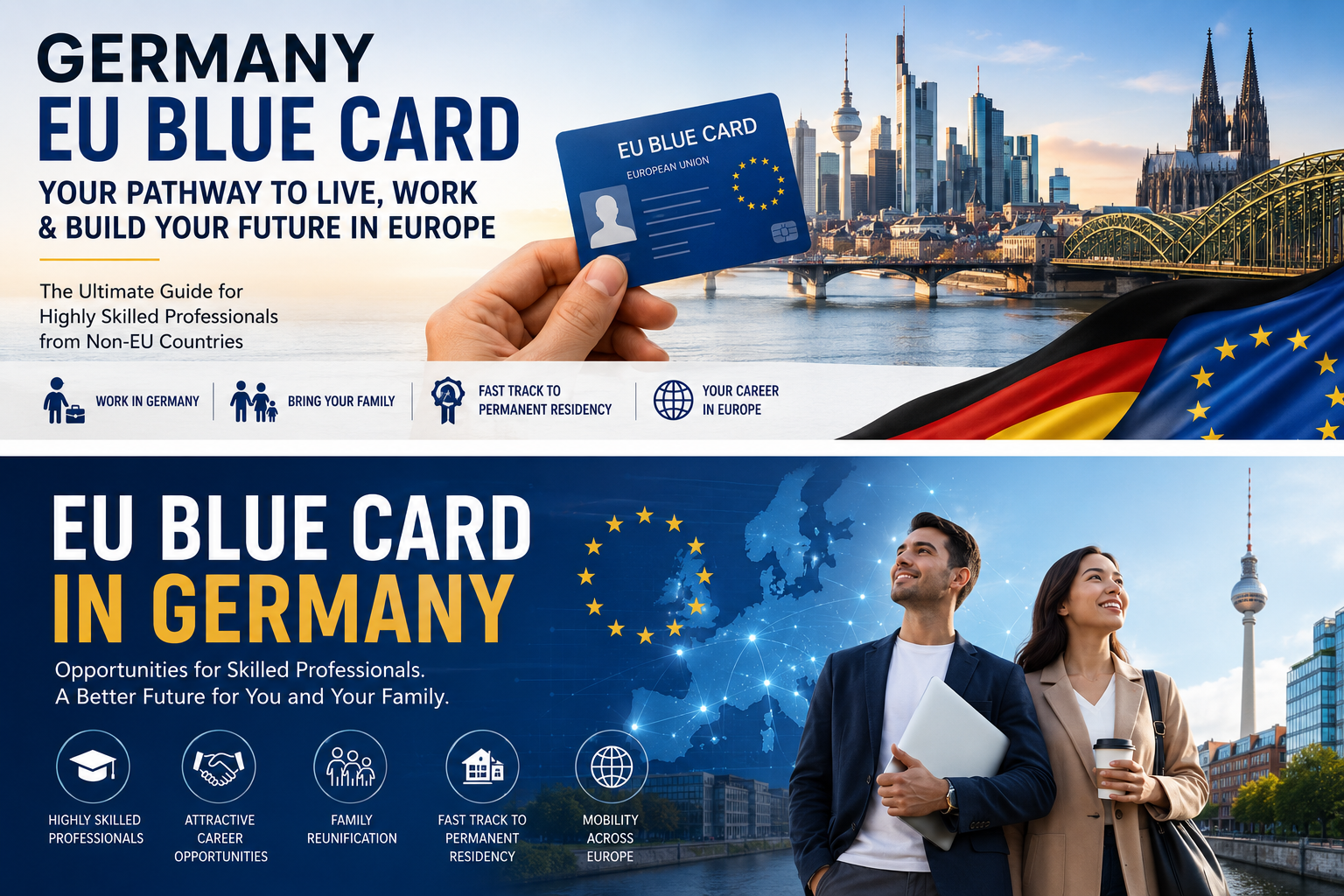
One of the Most Realistic Pathways for Highly Skilled Professionals to Live and Work in Europe
Europe is currently facing a significant shortage of skilled professionals. In particular, sectors such as IT, engineering, semiconductors, healthcare, logistics, research, and industrial technology are actively searching for qualified international talent.
To address this challenge, the European Union introduced the EU Blue Card, a residence and work permit designed for highly qualified professionals from non-EU countries.
The EU Blue Card was first introduced at the EU level in 2009. Its purpose is to make it easier for skilled professionals from third countries to work, live, and potentially settle long-term in Europe.
Although many people associate the EU Blue Card mainly with Germany, the system also exists in several other EU countries, including:
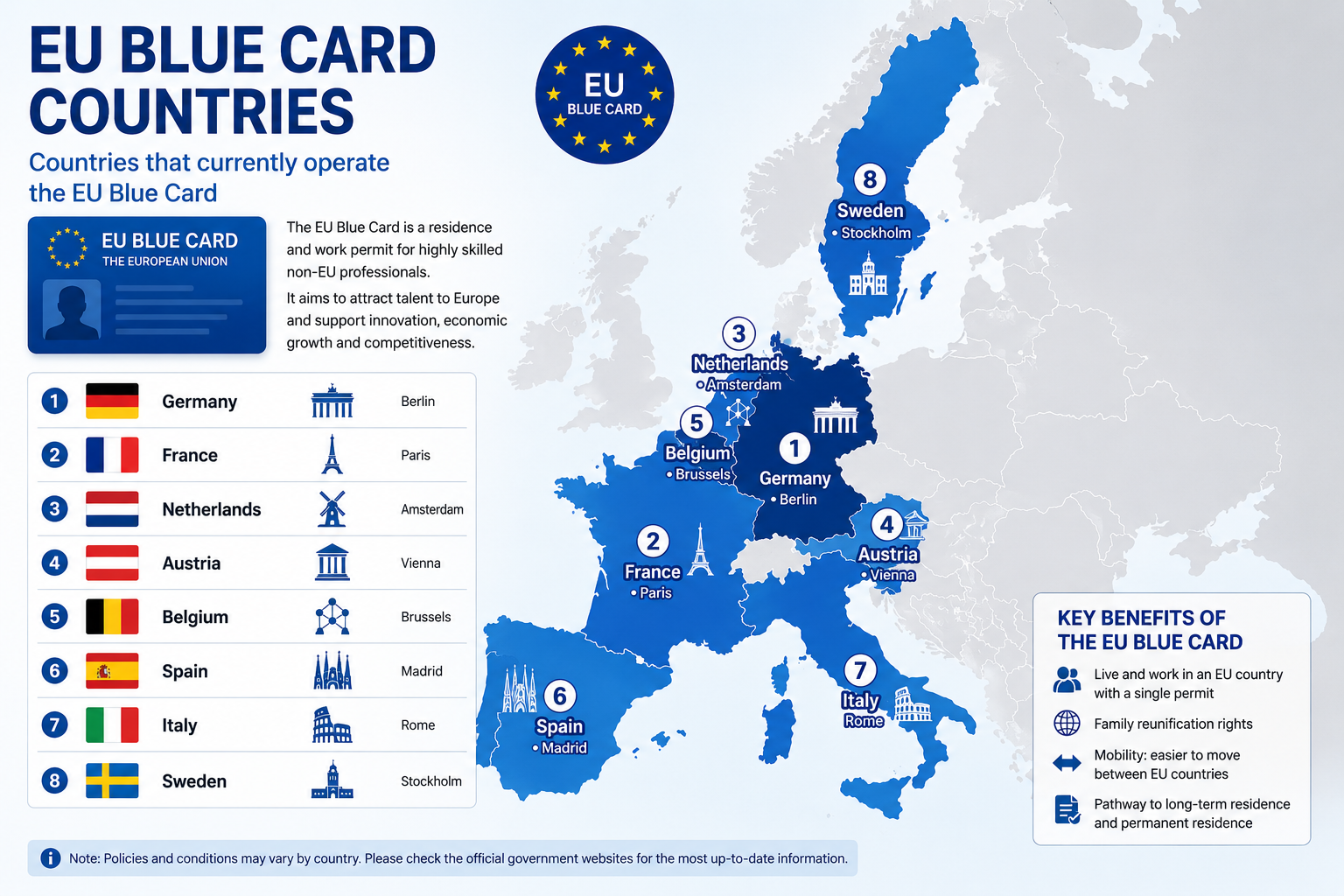
However, each country applies the system slightly differently. Salary thresholds, processing times, documentation requirements, and family reunification rules may vary.
Among all EU countries, Germany has become one of the most active and attractive destinations for EU Blue Card holders.
Why Germany Is Especially Attractive for Skilled Professionals
Germany combines several important advantages for international professionals:
strong economy
high demand for qualified workers
stable political system
strong social security and healthcare system
good public infrastructure
family-friendly environment
long-term residence opportunities
Germany is particularly attractive for professionals working in:
IT and software
engineering
semiconductors
automotive industry
healthcare
logistics
finance
scientific research
skilled technical professions
Because of demographic change and labor shortages, Germany increasingly depends on international talent.
What Is the EU Blue Card?
The EU Blue Card is a residence permit for highly qualified non-EU nationals who want to work in Germany or another participating EU country.
In general, applicants need:
a recognized university degree or equivalent qualification
a valid employment contract
a position related to their qualification or professional expertise
a minimum salary defined by law
valid health insurance
a genuine employee-employer relationship
One important point must be clearly understood:
The EU Blue Card is primarily designed for qualified employees — not for self-employed business owners.
Why the EU Blue Card Can Be Easier Than a Standard Work Visa
Traditional work visa procedures may involve additional labor market checks or administrative reviews depending on the country and profession.
The EU Blue Card system, however, is more standardized and transparent.
If the core requirements are fulfilled — especially qualification, salary level, and employment contract — the process is often more predictable and efficient.
For highly qualified professionals from third countries, this makes the EU Blue Card one of the most practical legal pathways into Europe.
Minimum Salary Requirements in Germany
To qualify for the EU Blue Card in Germany, applicants must meet a minimum salary threshold.
As of 2026, the general minimum gross salary is approximately:
€50,700 gross annually
or about €4,225 gross per month
For shortage occupations (“Mangelberufe”), lower salary thresholds may apply.
These shortage professions typically include:
IT specialists
engineers
mathematicians
scientists
healthcare professionals
For these professions, the minimum threshold in 2026 is approximately:
€45,934 gross annually
or about €3,828 gross per month
Exact eligibility depends on the individual position and current legal regulations.
Fast Pathway to Permanent Residency
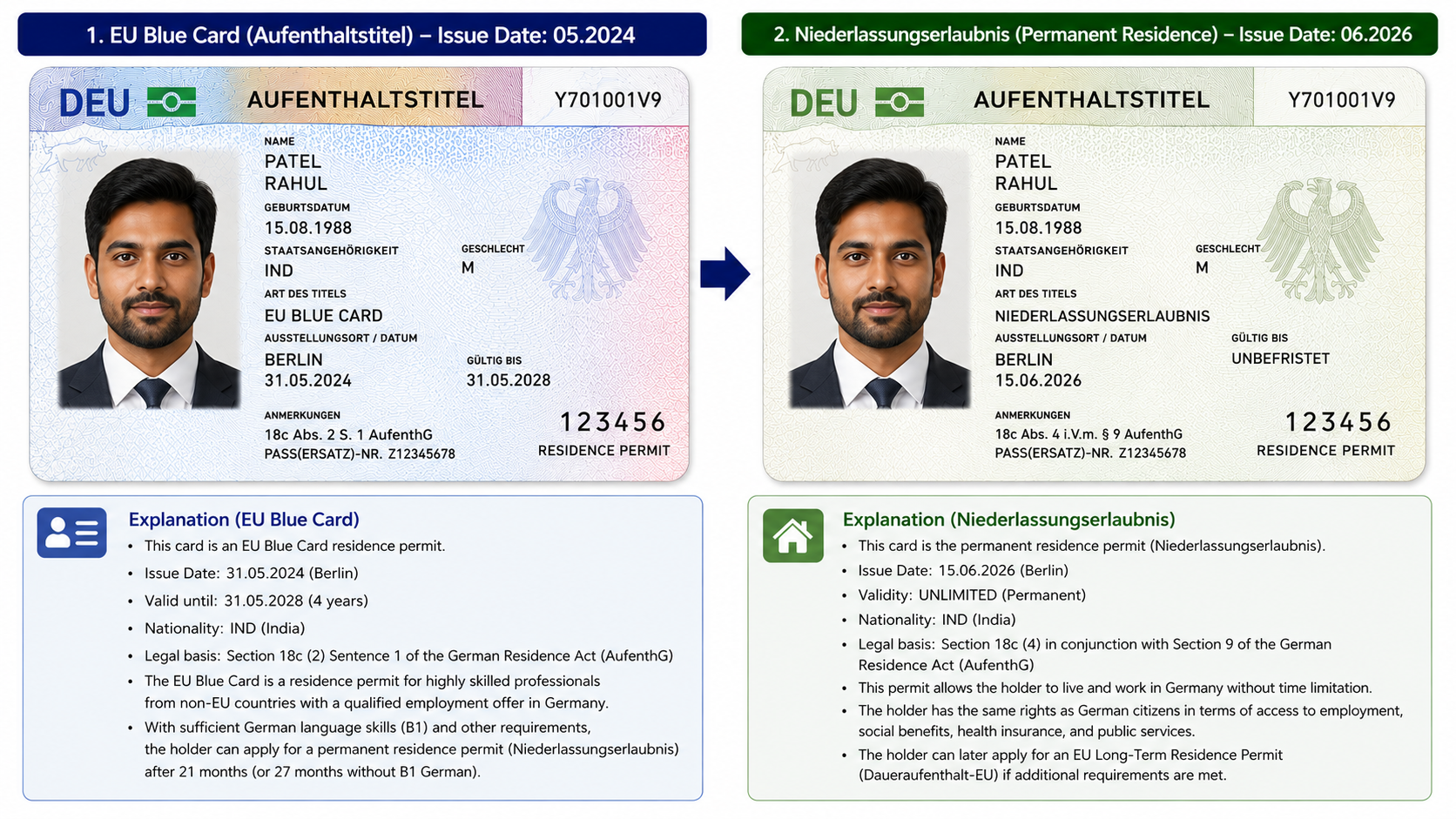
One of the biggest advantages of the German EU Blue Card is the possibility of obtaining permanent residency relatively quickly.
Under current regulations:
with German language skills at level B1, permanent residency may be possible after approximately 21 months
without B1 German, permanent residency is usually possible after approximately 27 months
This creates a strong long-term perspective for professionals and their families.
Mobility Within Europe
Many professionals ask whether an EU Blue Card issued in Germany can later be used in another EU country such as France or the Netherlands.
The answer is:
Partially — but not automatically.
The EU Blue Card is an EU-wide framework, but residence permits are still administered nationally.
This means that someone moving from Germany to another EU country may still need to apply for a new local EU Blue Card or residence permit in the new country.
However, EU Blue Card holders generally benefit from better mobility opportunities than holders of ordinary work visas.
The EU is continuously working toward improving mobility rights for highly skilled workers across member states.
Business Expansion and International Companies
The EU Blue Card can also play an important role for international companies expanding into Germany.
Foreign companies may establish:
branch offices
subsidiaries
representative offices
European headquarters
in Germany and employ qualified international staff locally.
If the employee fulfills the legal requirements — university degree, salary threshold, professional role, health insurance, and genuine employment relationship — the EU Blue Card may become a viable option.
However, it is important to understand:
The EU Blue Card is generally intended for employees, not for the actual controlling business owner.
Authorities may closely examine cases involving:
majority shareholders
dominant managing directors
hidden self-employment structures
or non-genuine employment arrangements
Therefore, proper legal and organizational structuring is very important.
Health Insurance Is Essential
Health insurance is a mandatory part of the EU Blue Card process.
Once a valid employment contract exists, employees can usually join Germany’s public health insurance system.
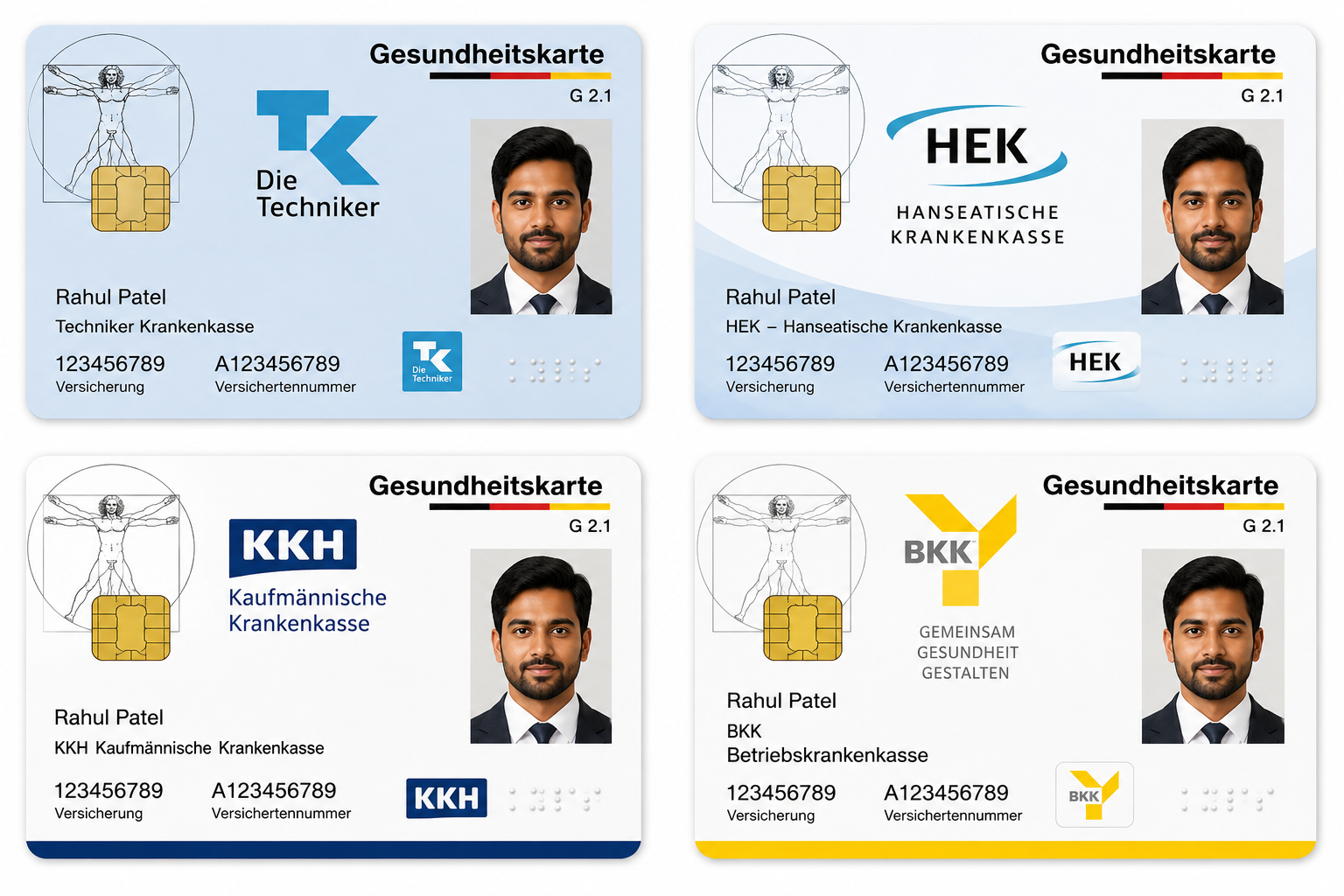
Major public insurers include:
Techniker Krankenkasse
AOK
DAK-Gesundheit
HEK - Hanseatische Krankenkasse
Health insurance is particularly important for professionals relocating with spouses and children.
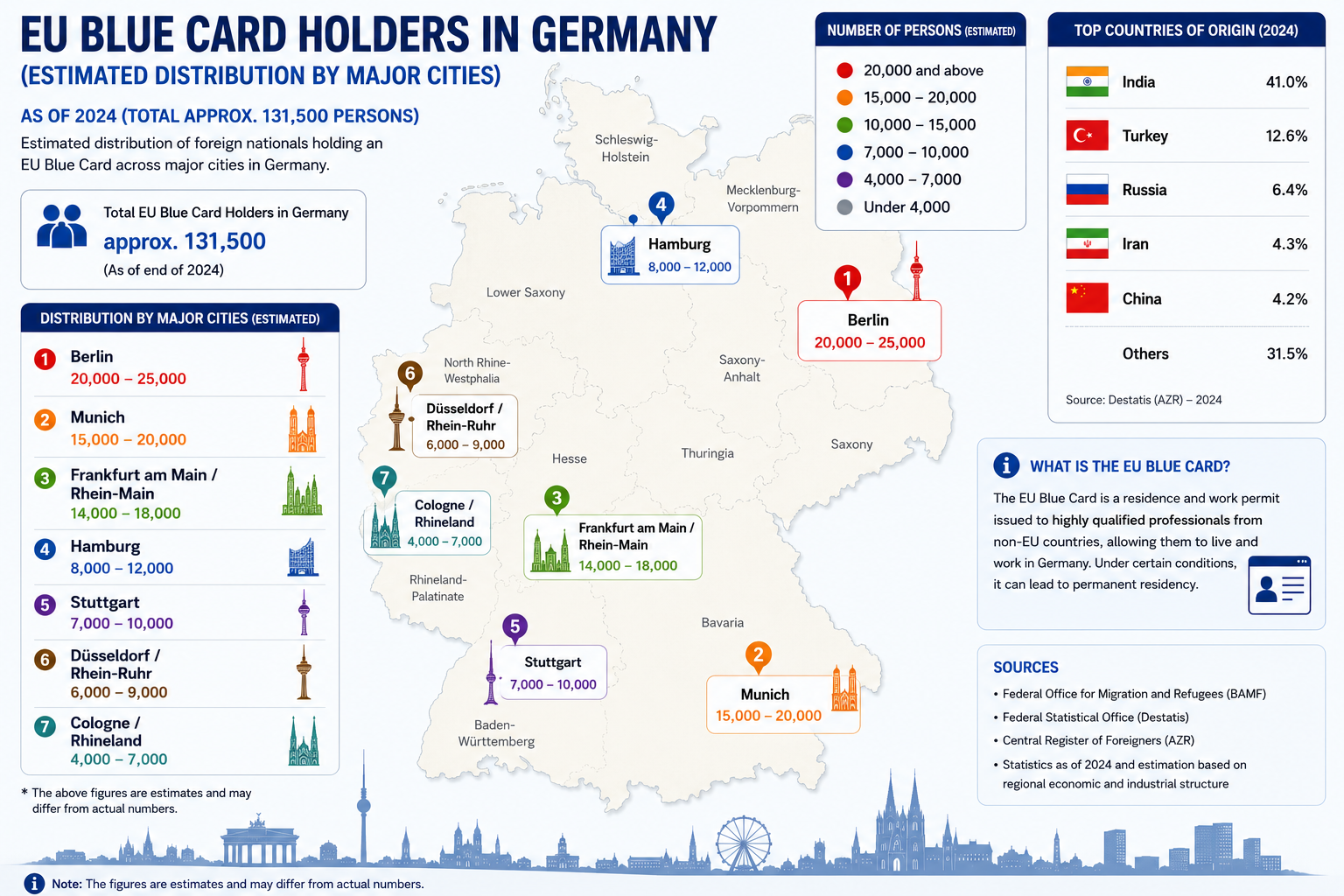
Popular Cities for International Professionals
International professionals and families often choose cities based not only on employment opportunities, but also on:
schools and international schools
housing quality
safety
transportation
international communities
long-term family life
Some of the most popular destinations in Germany include:
Frankfurt am Main / Rhine-Main region
Berlin
Munich
Hamburg
Düsseldorf / Rhine-Ruhr region
Cologne / Rhineland
Stuttgart
Each region has its own strengths:
Frankfurt: finance, logistics, international companies
Berlin: startups, technology, creative industries
Munich: engineering, IT, automotive industry
Stuttgart: industrial engineering and automotive sector
Hamburg: logistics, shipping, trade
Düsseldorf and Cologne: strong international business networks
Germany as a Long-Term Opportunity
For many highly qualified professionals from third countries, the EU Blue Card is more than just a work permit.
It can become a long-term pathway toward:
stable employment
family relocation
permanent residency
European career opportunities
and long-term integration into Europe
With proper preparation and professional planning, the EU Blue Card can offer a highly realistic and legally secure future in Germany and potentially within Europe as a whole.
Free Consultation
Have questions about entering the German market? Request a free consultation.
Request Free Consultation