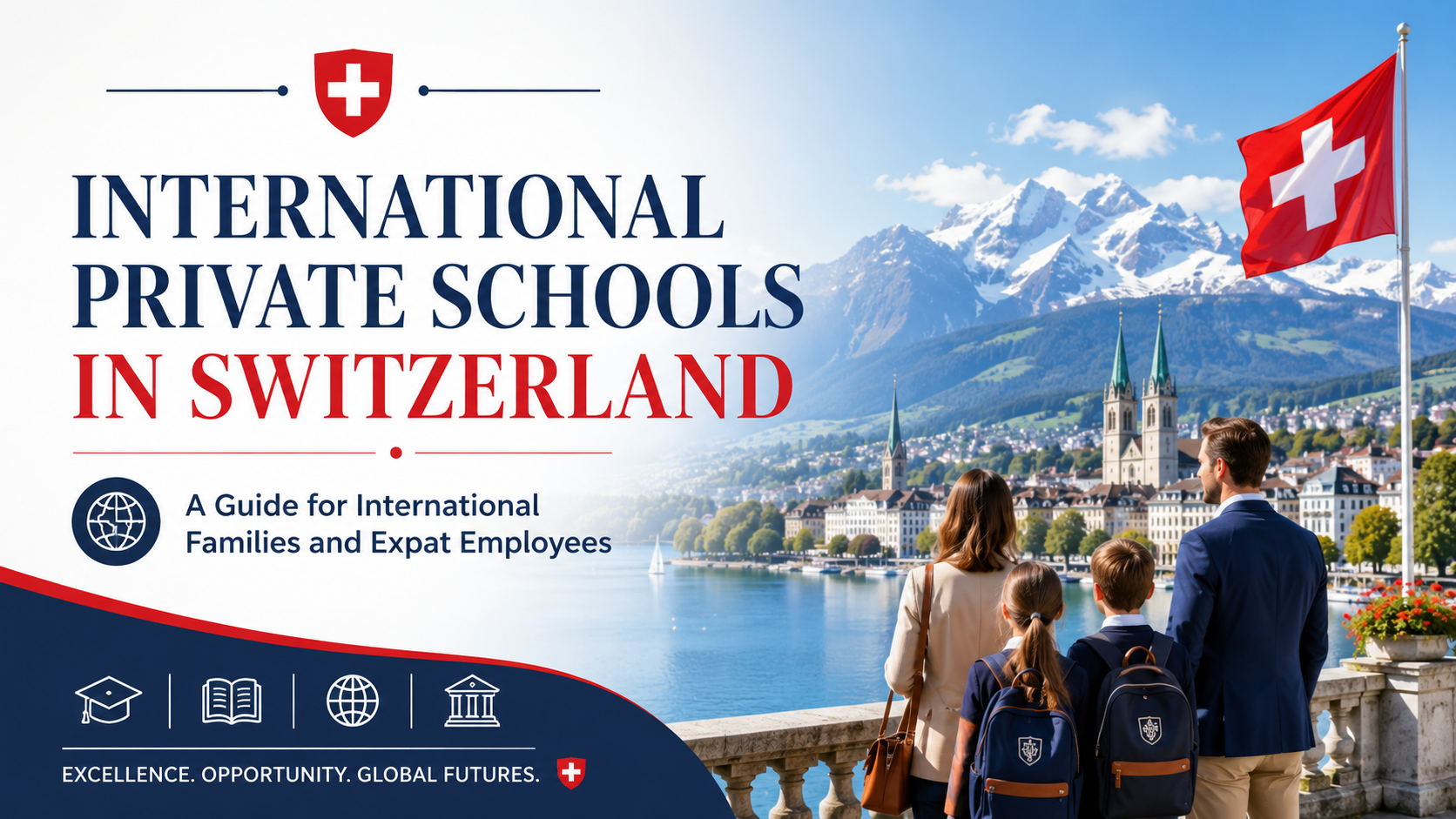
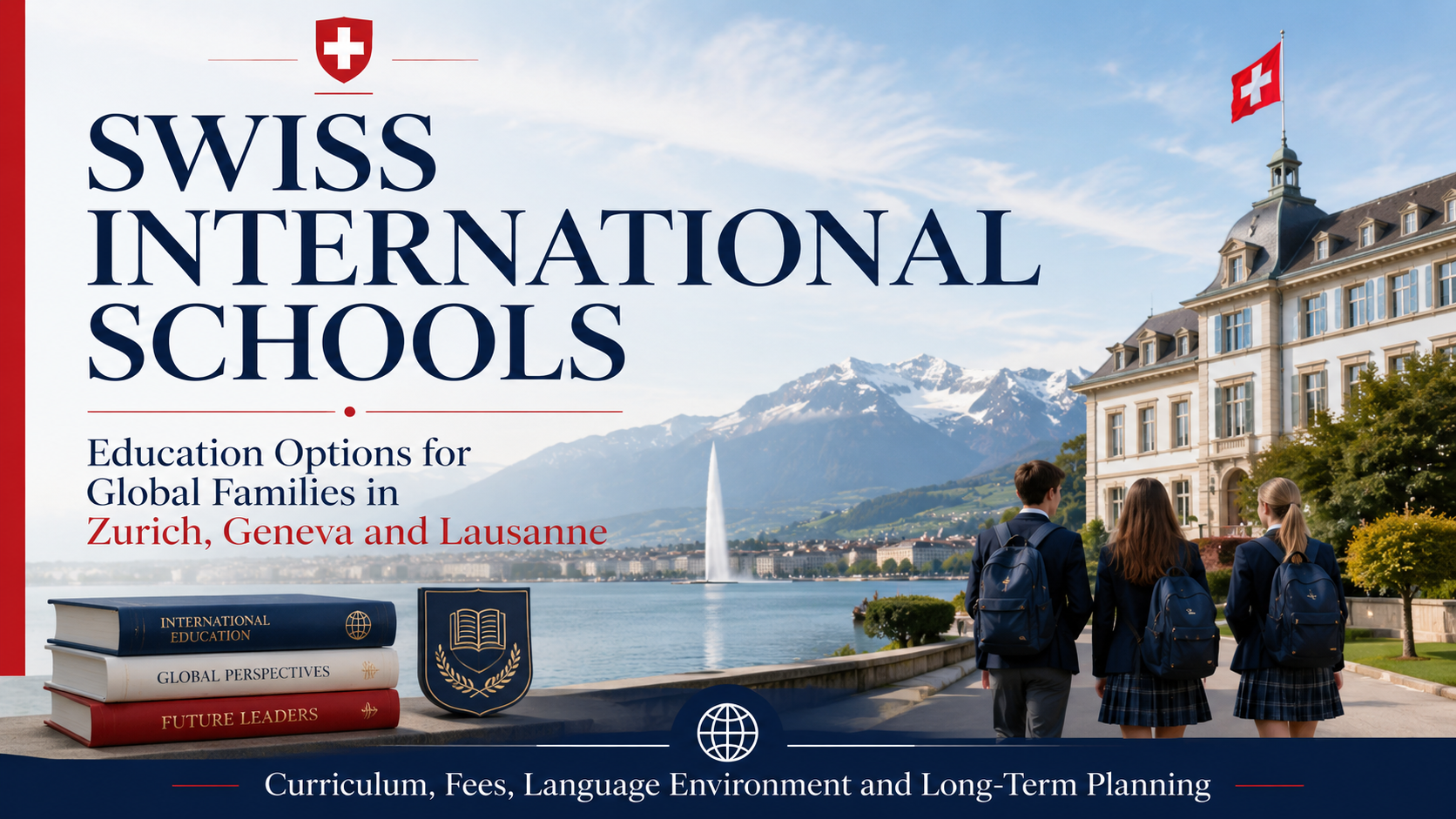
Switzerland is one of Europe’s most established markets for international education. Geneva is closely linked to international organizations and diplomacy. Zurich is shaped by finance, technology, and global companies. The Vaud / Lausanne region combines universities, international schools, and a long tradition of elite boarding schools.
However, international schools in Switzerland are often significantly more expensive than in Germany. This is especially true around Lake Geneva, Zurich, Lausanne, Montreux, Rolle, and Villars, where day schools and boarding schools can reach very high fee levels.
This article focuses on three regions that are especially relevant for international families and corporate expats: Zurich, Geneva, and Vaud / Lausanne.
What Families Should Know About Swiss International Schools
The term “international school” in Switzerland does not refer to one single type of school. It can mean English-language instruction, IB programs, British or American curricula, bilingual education, national curricula, or boarding school education.
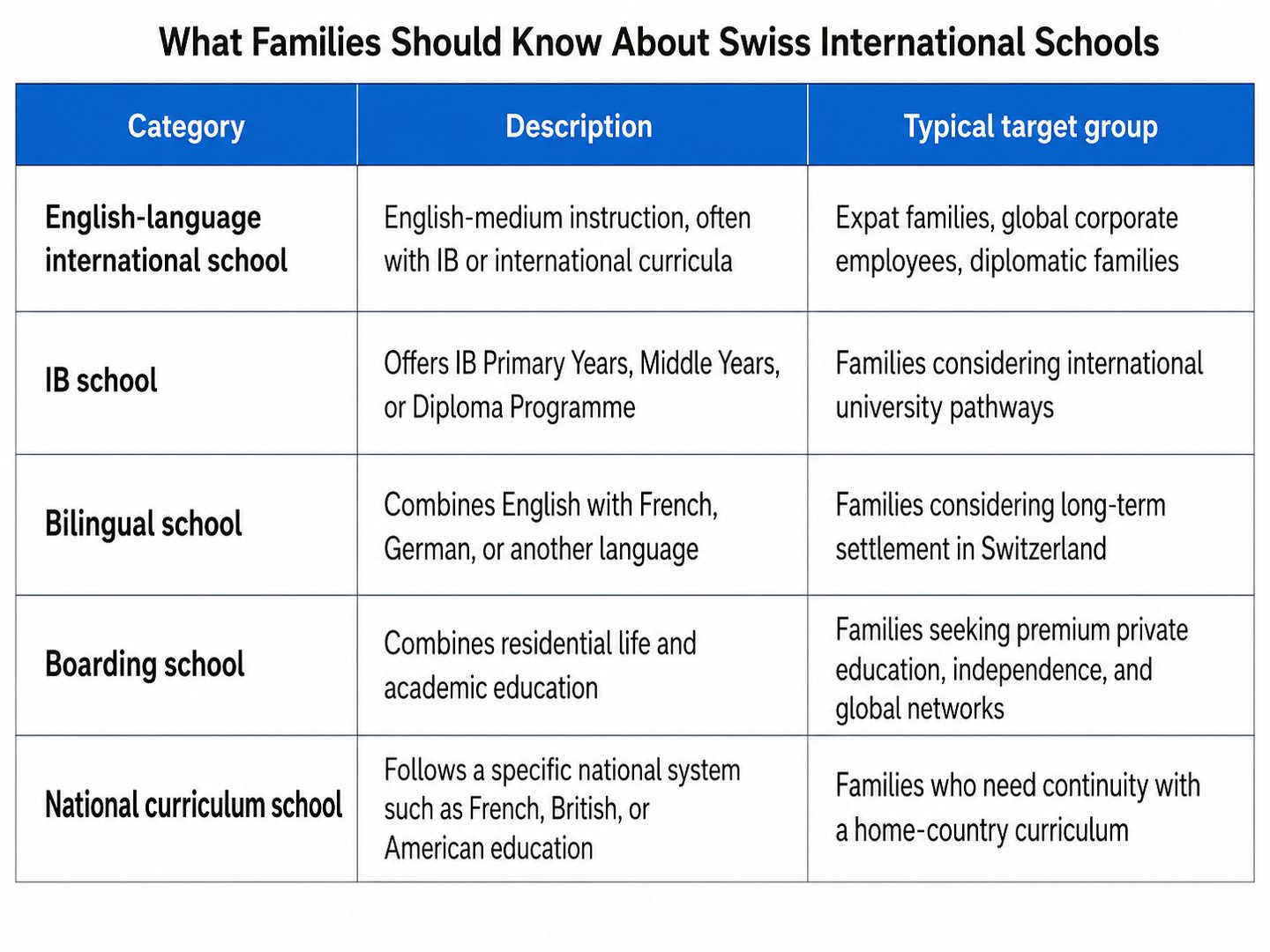
Switzerland is particularly known for its boarding school tradition. While international schools in Germany are often day schools for expat families in major cities, Switzerland has both strong day-school markets and internationally known boarding schools.
Comparing Three Key Regions
Zurich, Geneva, and Vaud / Lausanne are all important, but they serve slightly different family profiles.
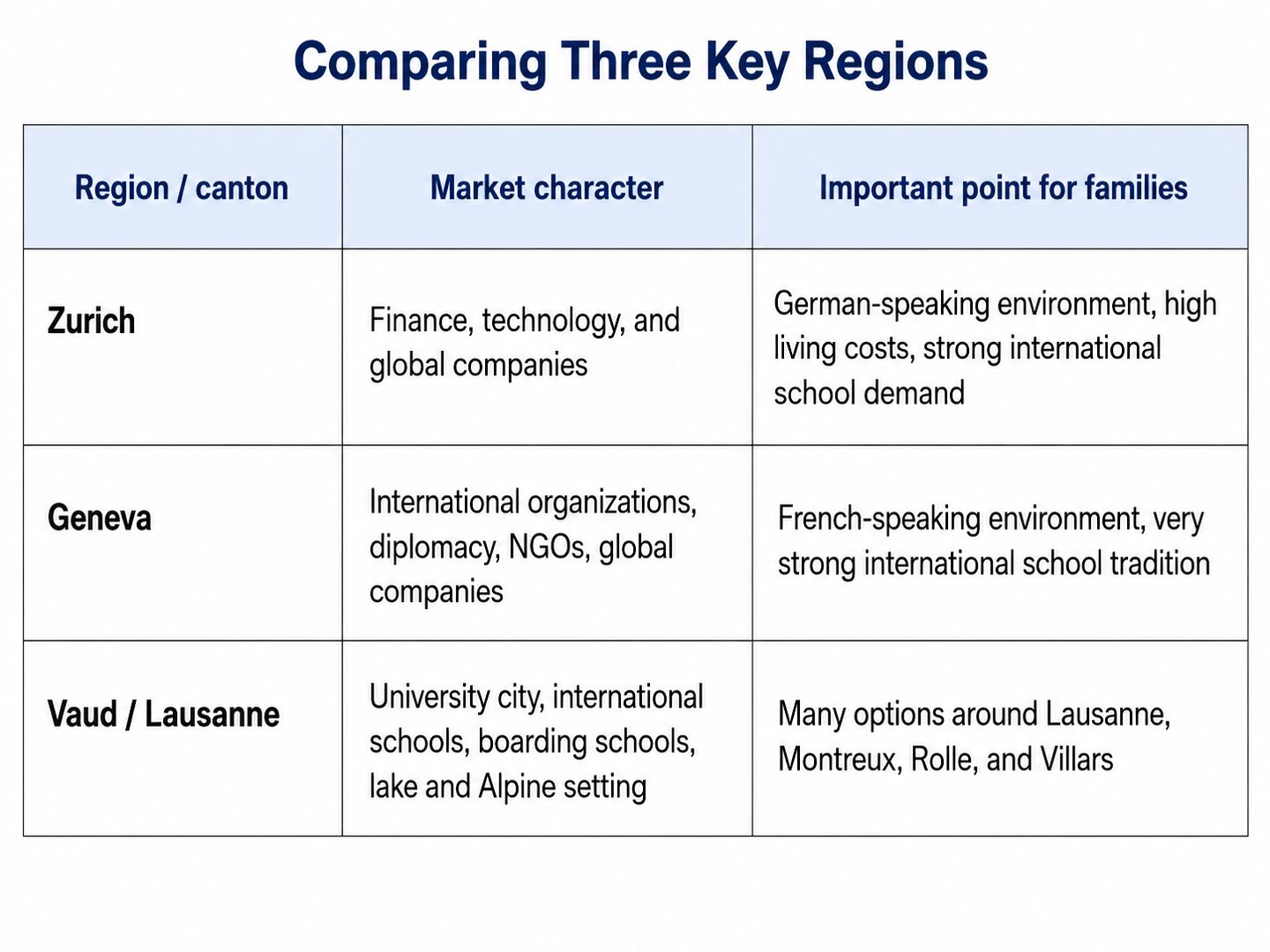
A family should therefore not ask only, “Which Swiss international school is best?” The more practical question is:
Which language region, school type, and long-term education pathway fit our child?
Why International Families Consider Swiss International Schools
Swiss international schools are expensive, but for some families they can be a very strategic choice.
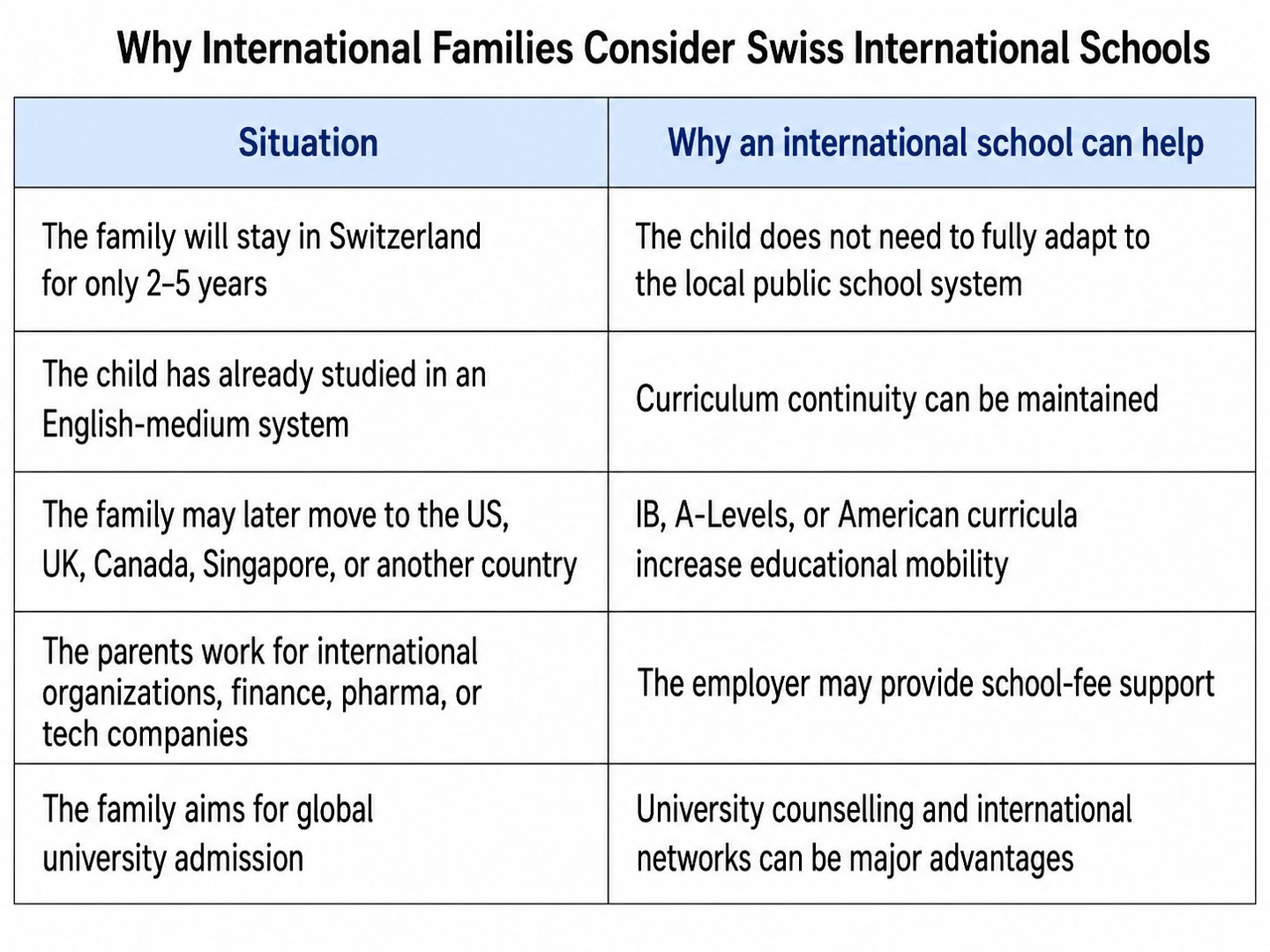
However, if the family plans to settle in Switzerland long term, an international school is not automatically the best or only option. Swiss public schools are generally trusted and can be excellent for local integration. Language region matters greatly: Zurich is German-speaking, while Geneva and Lausanne are French-speaking.
Zurich: A High-Cost International School Market Shaped by Finance and Technology
Zurich is Switzerland’s leading economic center. It has a strong concentration of banks, insurance companies, technology companies, research institutions, and multinational employers. As a result, demand for international schooling is high, and fees are often substantial.
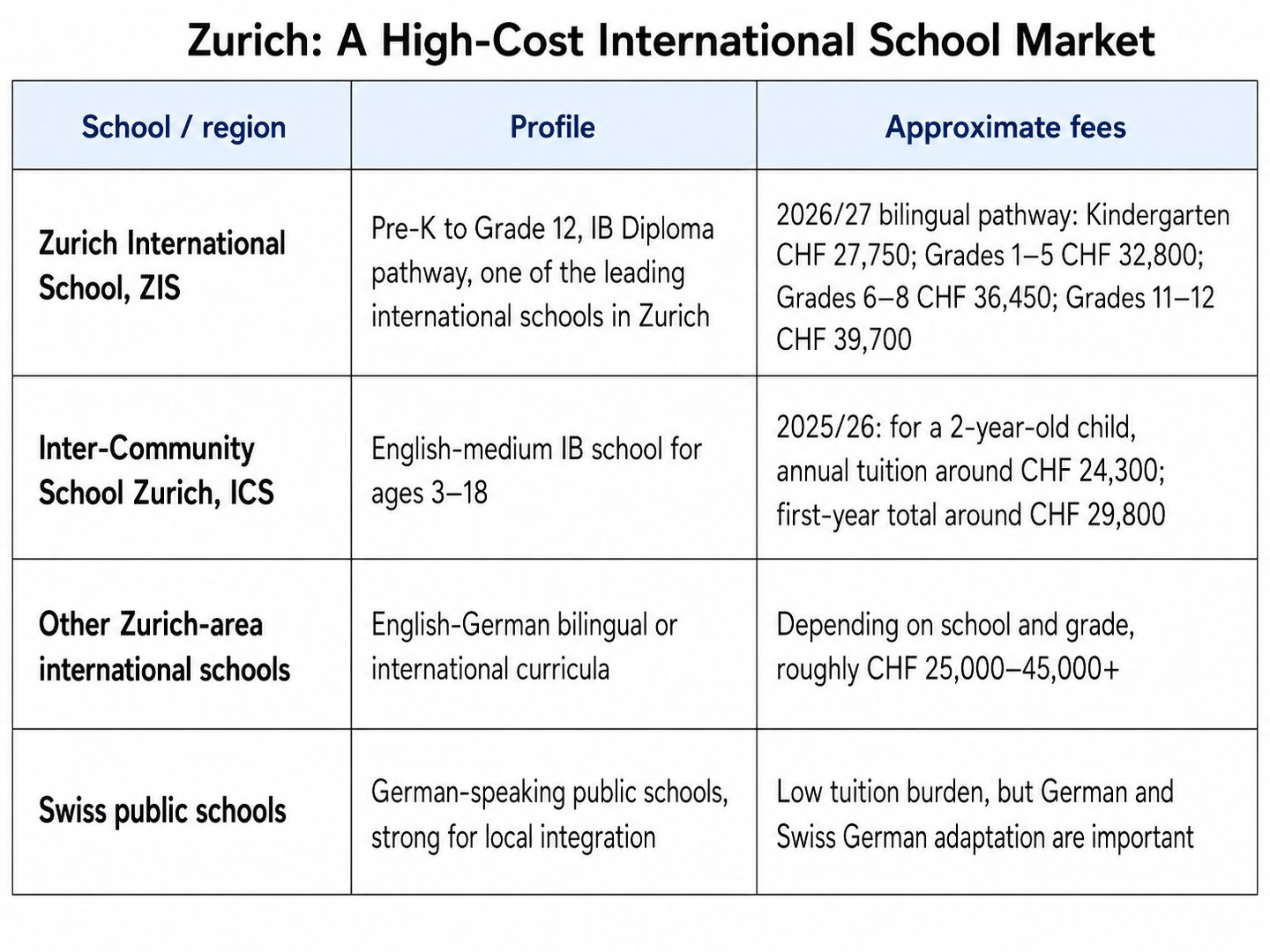
Zurich’s key characteristics are high tuition, high living costs, and strong corporate demand. If an employer supports school fees, an international school can be realistic. If the family pays privately, the full budget must be calculated carefully.
Geneva: A Traditional International School Hub
Geneva is one of the symbolic centers of international education in Switzerland. It is home to the United Nations, WHO, WTO, international NGOs, diplomatic missions, and global companies. As a result, demand for international schools is stable and long established.
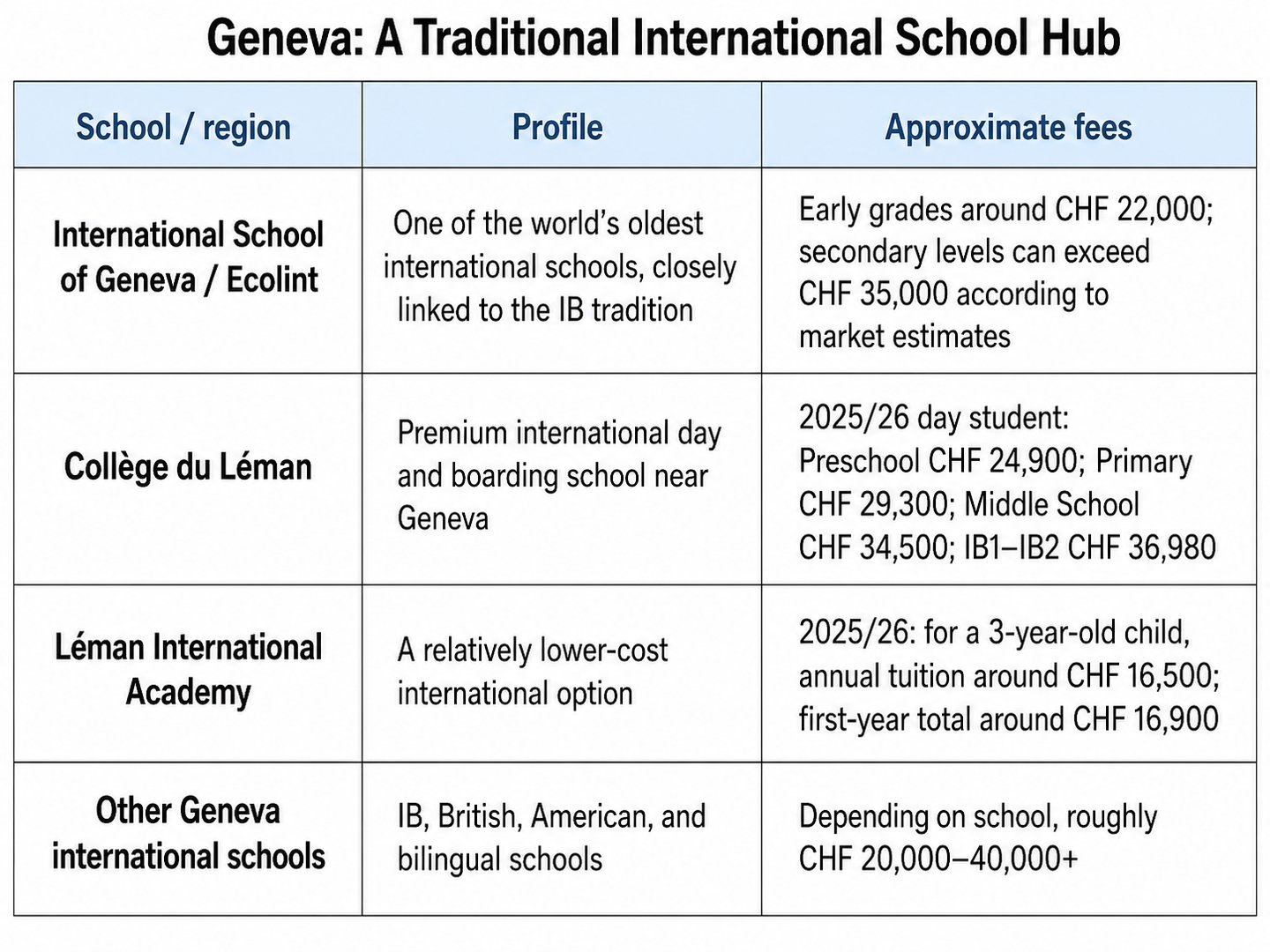
Geneva’s French-speaking environment is very important. Even if an international school teaches mainly in English, daily life and long-term integration depend heavily on French.
Vaud / Lausanne: Universities, International Schools, and Boarding Schools
The canton of Vaud includes Lausanne, Montreux, Rolle, Villars, and other areas with strong international school and boarding school traditions. The region combines the Lake Geneva lifestyle with proximity to universities, international companies, and the Alps.
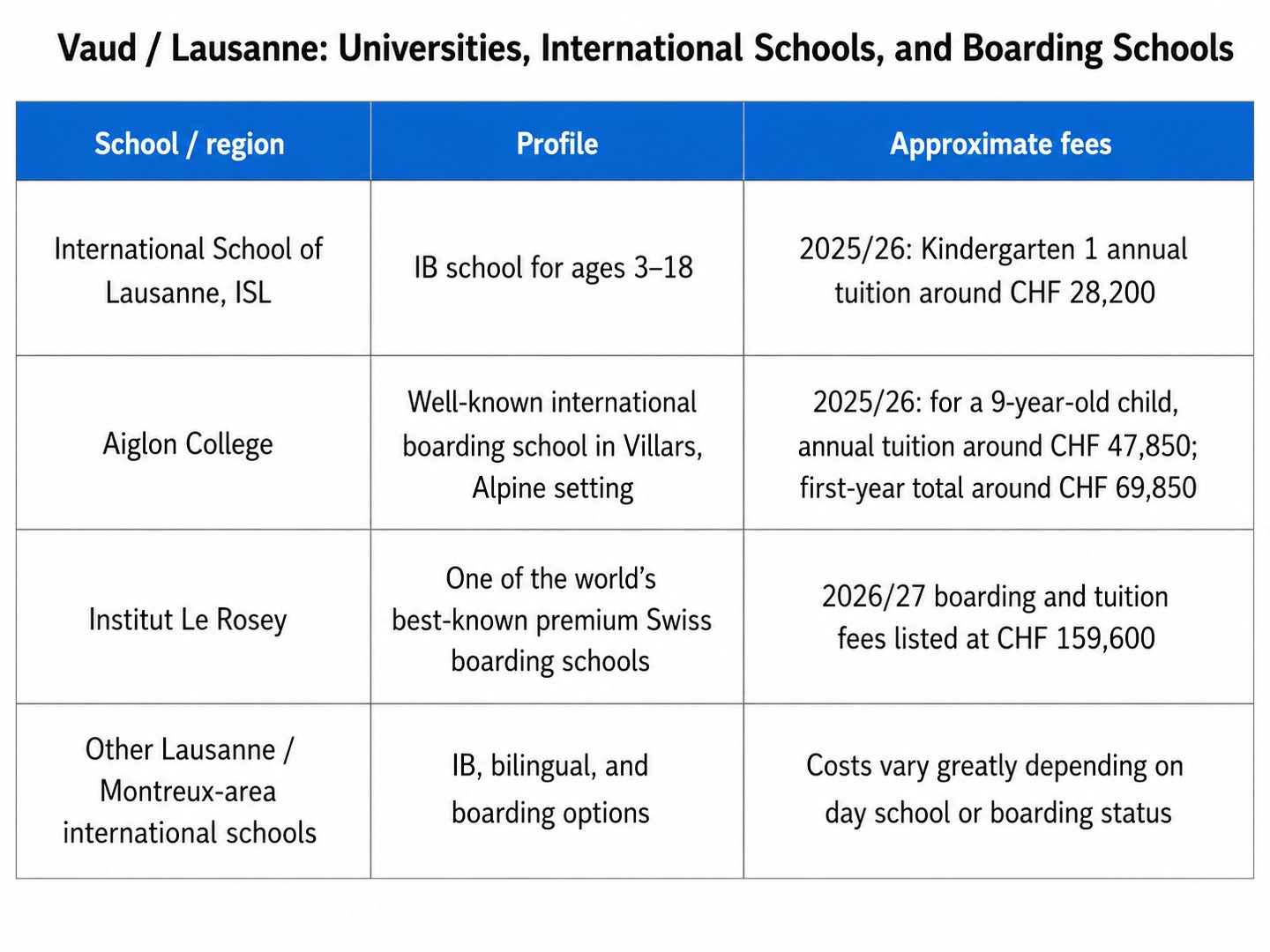
The Vaud / Lausanne region is not only an expat day-school market. It also includes a strong elite boarding school segment. Families should therefore consider not only tuition, but also boarding, weekend programs, university counselling, language environment, and the child’s emotional readiness.
General Fee Comparison
Swiss international schools are generally more expensive than many international schools in Germany. Fees increase especially in higher grades, IB Diploma years, and boarding school programs.
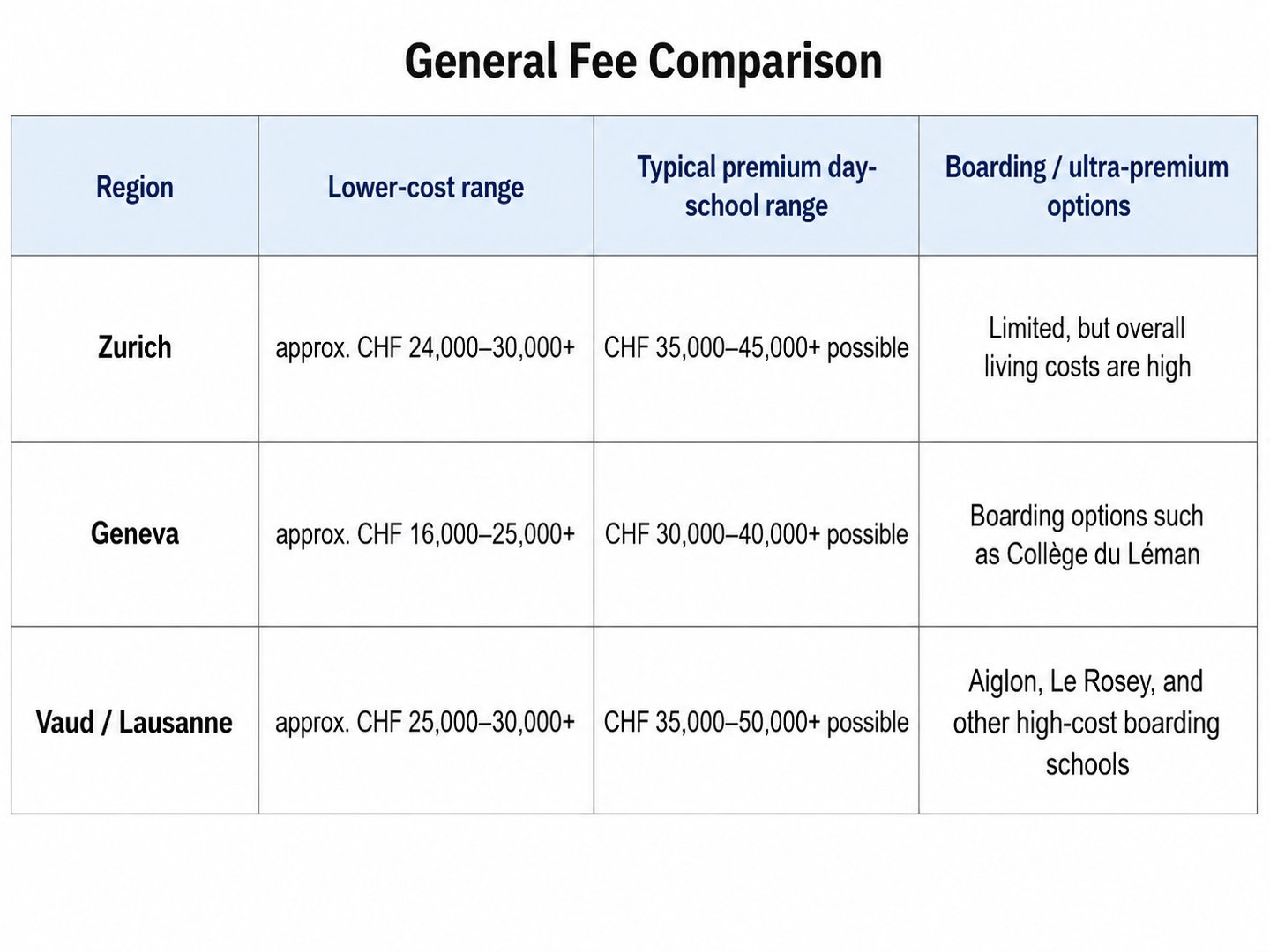
A simple rule of thumb:
Swiss day schools are often expensive. Swiss boarding schools can be extremely expensive.
What to Check Before Choosing a Swiss International School
The image of Swiss private education can be very attractive. But a prestigious name does not automatically mean that a school is the right fit for a specific child.
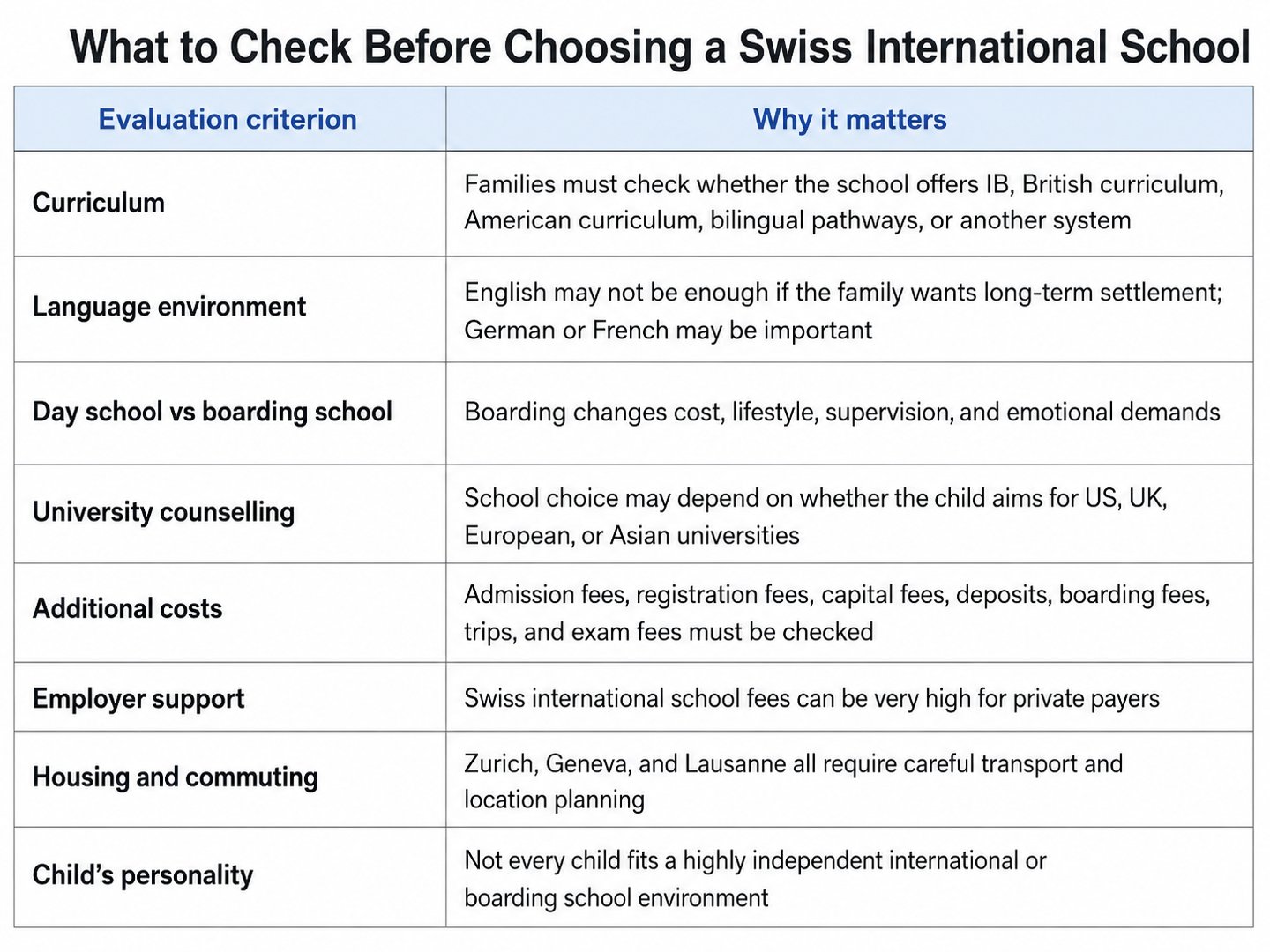
Boarding schools can offer independence, structure, and global networks. But they also mean that a child lives away from the family. For younger children, emotional maturity and family readiness should be considered very carefully.
Which Families May Fit Swiss International Schools Well?
International schools in Switzerland are not necessary for every family. But they may be a strong choice for certain situations.
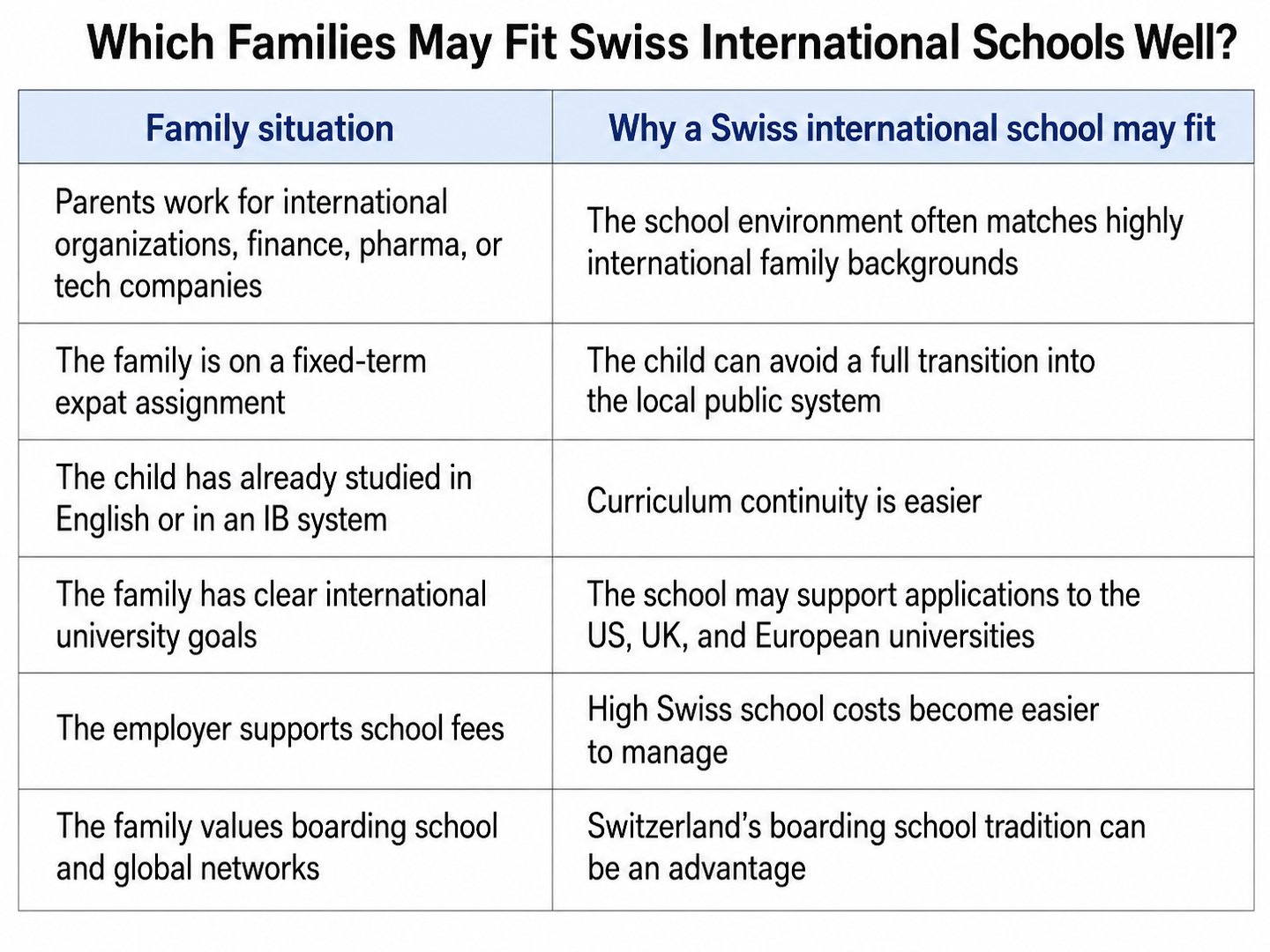
For families planning permanent settlement, however, public schools or bilingual schools may be equally worth considering, especially if local language integration is a priority.
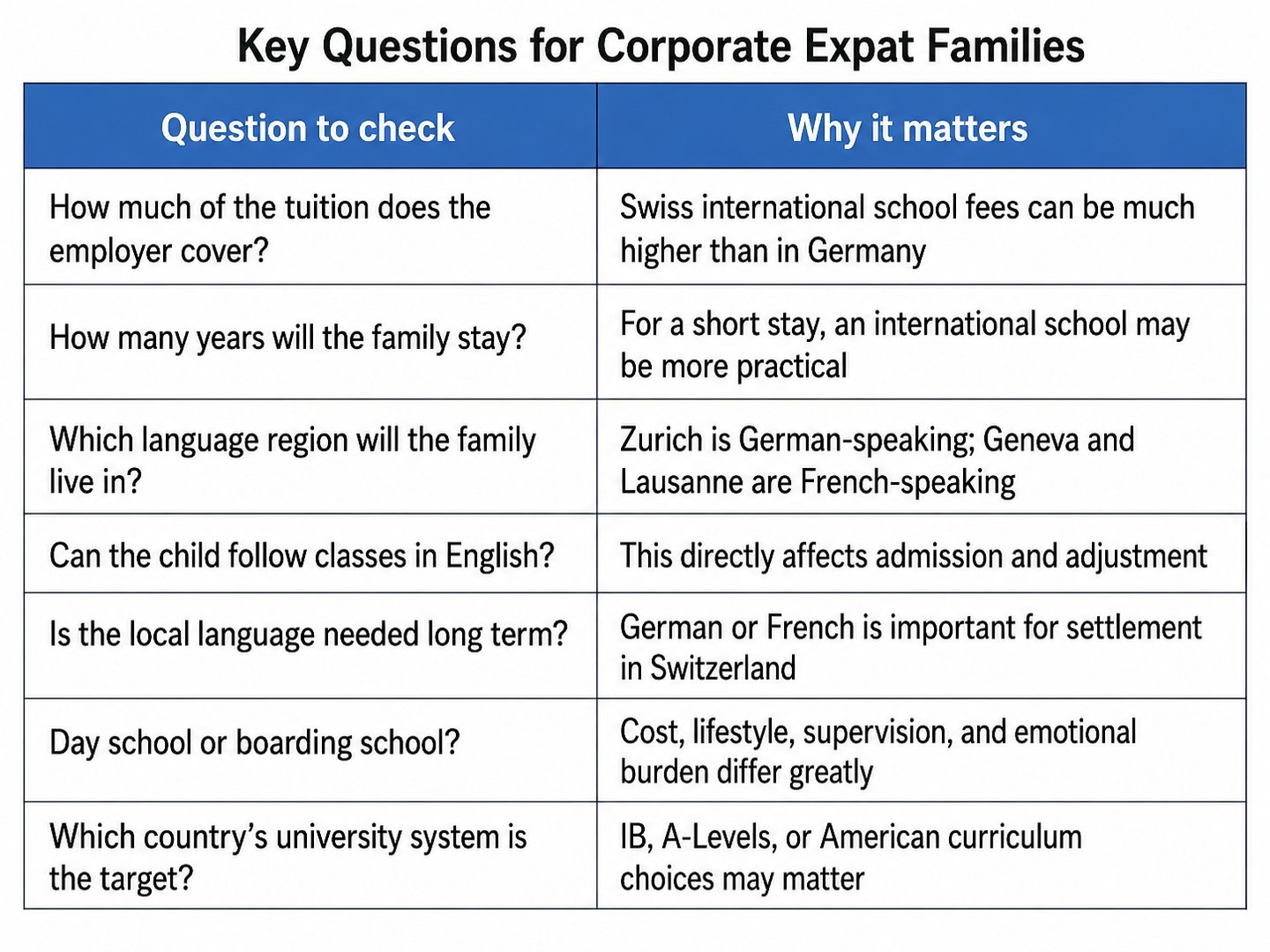
Key Questions for Corporate Expat Families
Choosing a Swiss international school is not only a school decision. It is connected to housing, employer benefits, language strategy, length of stay, and university planning.
Short Regional Conclusion
Zurich is a high-cost international school market shaped by finance, technology, and corporate demand. Long-term families should also think about German and Swiss German adaptation.
Geneva is a traditional international education hub with strong links to diplomacy, international organizations, and NGOs. English-language schooling is common, but French matters in daily life.
Vaud / Lausanne combines international schools, universities, and elite boarding schools. It offers attractive surroundings and strong educational brands, but costs can be very high.
Final Summary
International schools in Switzerland are not simply “good private schools.” For some families, they are a strategic choice that supports educational mobility, English-language continuity, international university admission, and global networking.
But they are not the right answer for every family. Switzerland has strong public schools, important local languages, and very high living costs. Families should compare not only school fees, but also language region, length of stay, university plans, employer support, housing, commuting, and the child’s personality.
Choosing an international school in Switzerland means building a family strategy: education, language, residence, university planning, and finances all have to fit together.
Free Consultation
Have questions about entering the German market? Request a free consultation.
Request Free Consultation