
Buying German Real Estate Directly or Through a Company
When acquiring commercial property in Germany, international investors may encounter two fundamentally different transaction structures: the asset deal and the share deal.
In an asset deal, the investor purchases the property itself. In a share deal, the investor acquires shares in the company that owns the property.
Both structures can be suitable. However, they differ significantly in terms of ownership transfer, liability, financing, due diligence and real estate transfer tax. The appropriate structure should therefore be determined before negotiations become binding.
What is purchased in an asset deal?
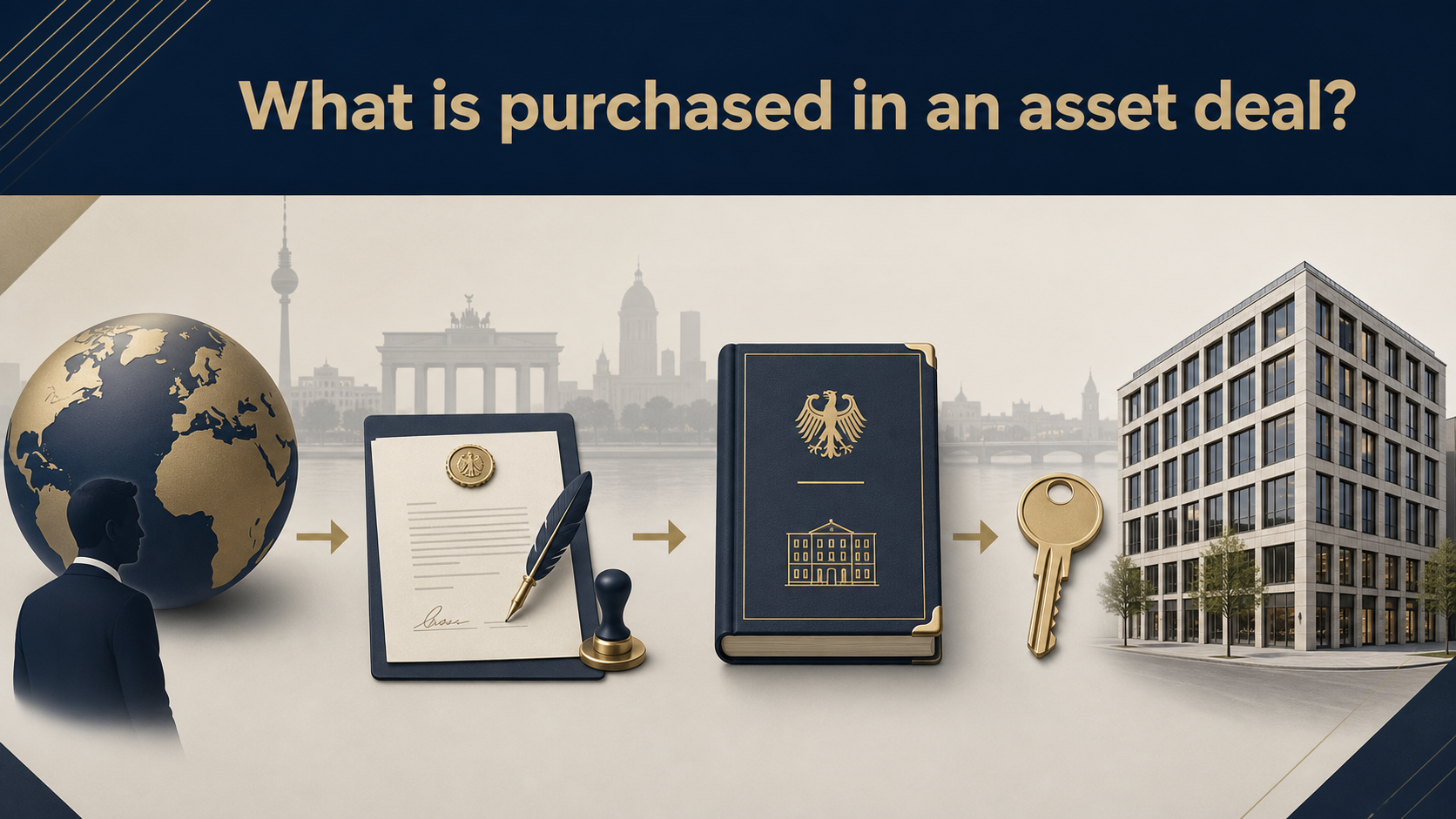
In an asset deal, the buyer acquires the property directly from its current owner.
The purchase agreement identifies the land, buildings and, where applicable, other assets included in the transaction. The agreement must generally be notarised. Ownership is transferred only after the purchaser has been entered in the German land register.
The buyer can usually define more precisely which assets and contractual obligations are to be acquired. Existing leases connected with the property may continue after the transfer.
This comparatively transparent structure is one reason why asset deals are frequently used for individual commercial properties.

What is purchased in a share deal?
In a share deal, the property remains owned by the same company. Instead of purchasing the property, the investor acquires shares in that company.
If the property is held by a German GmbH, the transfer of its shares must generally be notarised. Because the property owner itself does not change, existing agreements, financing arrangements and permits may remain with the company—subject to their respective terms and possible change-of-control provisions.
A share deal can therefore be attractive when an established property company already holds a functioning contractual and administrative structure.
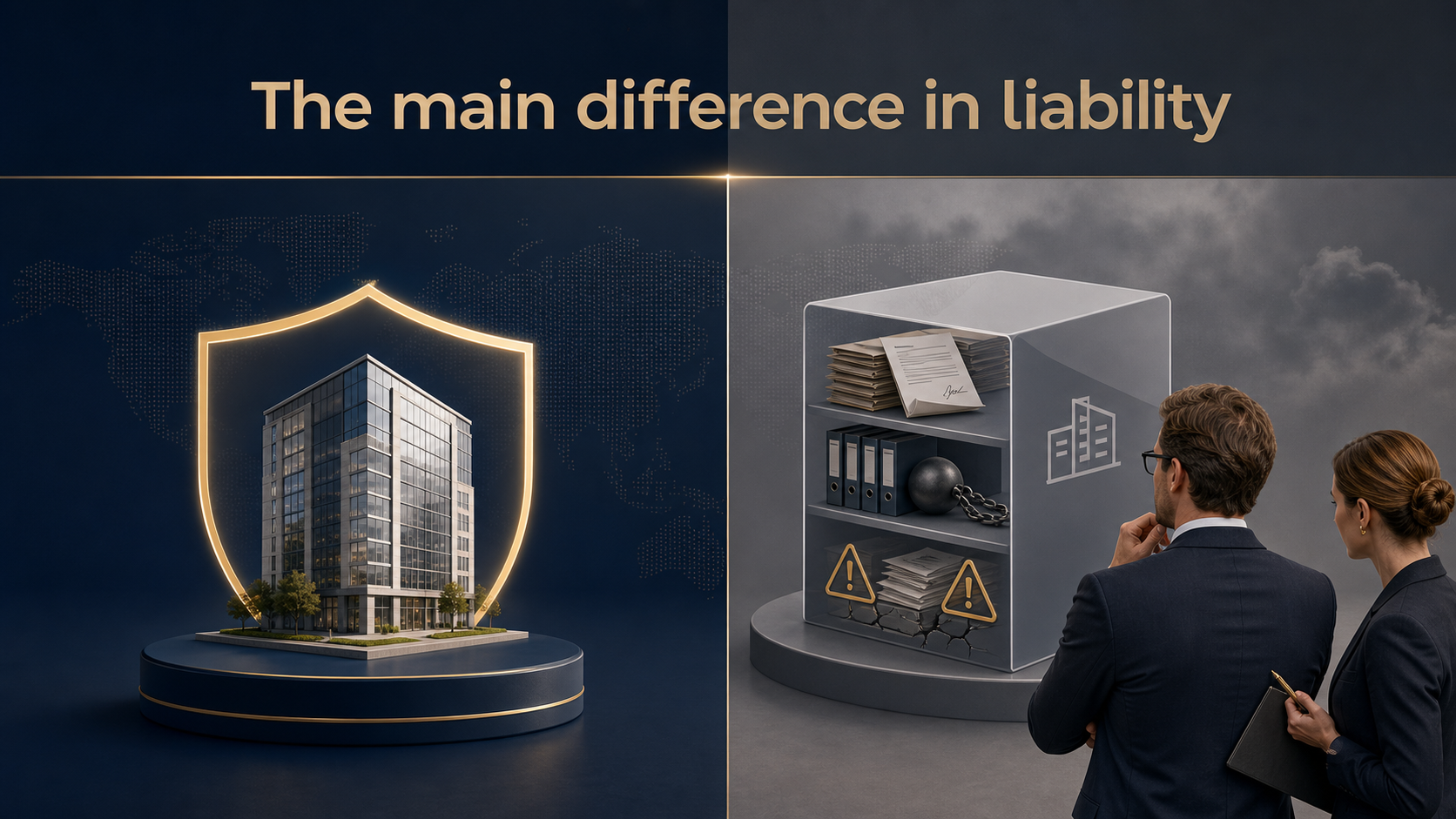
The main difference in liability
An asset deal generally allows the purchaser to select the property and the expressly agreed obligations.
A share deal is different. The investor acquires the company with its complete legal, financial and tax history. This may include obligations that are not immediately visible in the property documentation.
Potential risks can include:
outstanding tax liabilities;
undisclosed creditor claims;
disputes with tenants or contractors;
defective construction or maintenance obligations;
environmental risks;
guarantees and security interests; and
earlier compliance or accounting problems.
Contractual warranties and indemnities can allocate some of these risks between seller and buyer. They cannot, however, replace careful due diligence or guarantee that the seller will later be able to satisfy a claim.
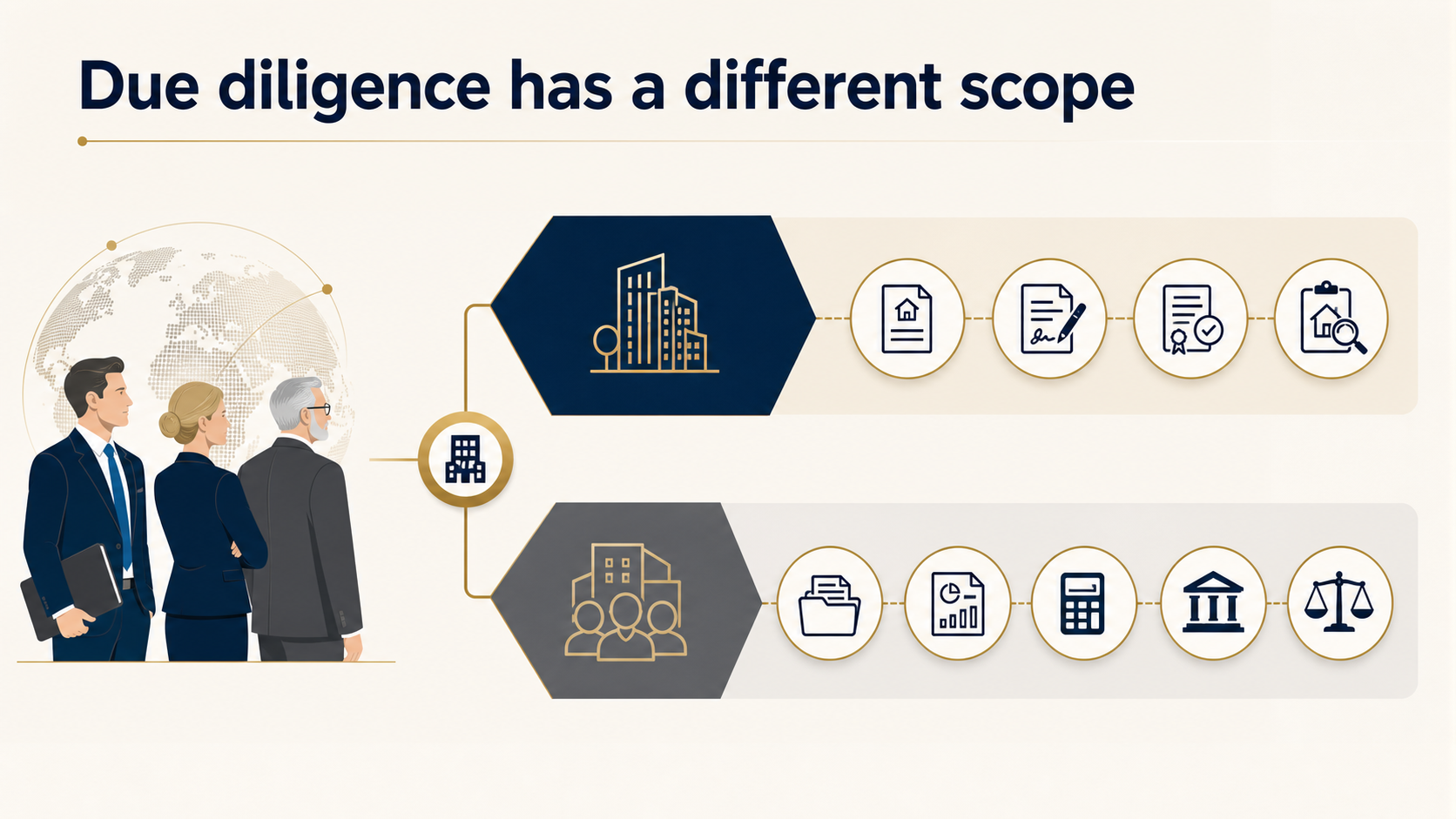
Due diligence has a different scope
For an asset deal, the review concentrates primarily on the property itself. This includes the land register, leases, building permits, technical condition, environmental matters, insurance coverage and existing encumbrances.
In a share deal, all these areas remain relevant, but the company must also be examined. Corporate records, annual accounts, tax filings, financing agreements, litigation, employment matters and compliance documentation may require review.
The apparently simpler transfer of company shares can therefore involve a more extensive investigation before signing.

Financing the acquisition
German banks often assess asset deals and share deals differently.
In an asset deal, the acquired property can usually serve directly as collateral for the acquisition financing. The lender can assess the property, rental income and loan-to-value ratio in a relatively direct manner.
In a share deal, the purchaser initially acquires company shares rather than the property itself. The financing and security structure may therefore be more complex. Existing loan agreements must also be reviewed for change-of-control clauses or repayment obligations.
International investors should discuss the intended transaction structure with potential lenders at an early stage. A legally possible structure is not necessarily one that a bank will finance on acceptable terms.

Real estate transfer tax applies to asset deals
The direct acquisition of German real estate generally triggers German real estate transfer tax. The applicable rate depends on the federal state in which the property is situated.
The tax is normally calculated on the agreed consideration, subject to the detailed statutory rules. It represents a substantial transaction cost and should be included in the investment calculation from the beginning.
Notarial expenses, land-register fees, legal advice, tax advice and technical due diligence must also be considered.

A share deal is not automatically exempt from real estate transfer tax
It is a common misconception that acquiring a property company automatically avoids real estate transfer tax.
German law contains extensive rules for direct and indirect changes in the ownership of companies holding German real estate. Among other situations, real estate transfer tax may be triggered when at least 90% of the shares are transferred to new shareholders within a period of ten years, or when at least 90% are combined or economically held in the legally relevant manner.
Indirect share transfers and transactions across several corporate levels may also be relevant. Even transactions below the threshold must not be structured or presented as automatically tax-free.
The ownership history of the company and all related transactions must be examined before signing. The statutory reporting obligations also require close attention. The relevant rules are found particularly in Section 1 of the German Real Estate Transfer Tax Act.

When can an asset deal be preferable?
An asset deal may be preferable when the investor:
wants to acquire a clearly defined property;
does not want to assume the seller company’s history;
requires a straightforward collateral structure for bank financing;
intends to place the property into a newly established property company; or
considers transparency more important than preserving the existing corporate structure.
For many investors purchasing a single commercial property, the asset deal is the more easily understandable starting point.

When can a share deal be preferable?
A share deal may be considered when:
the property is already held by a clean and professionally managed special-purpose company;
important contracts or financing arrangements should remain in place;
several properties or operational elements form one investment unit;
the acquisition is part of a larger corporate transaction; or
the investor’s German holding structure is designed to acquire property companies.
However, the benefits depend on the quality and history of the target company. A share deal should not be chosen solely because it appears faster or potentially more tax-efficient.
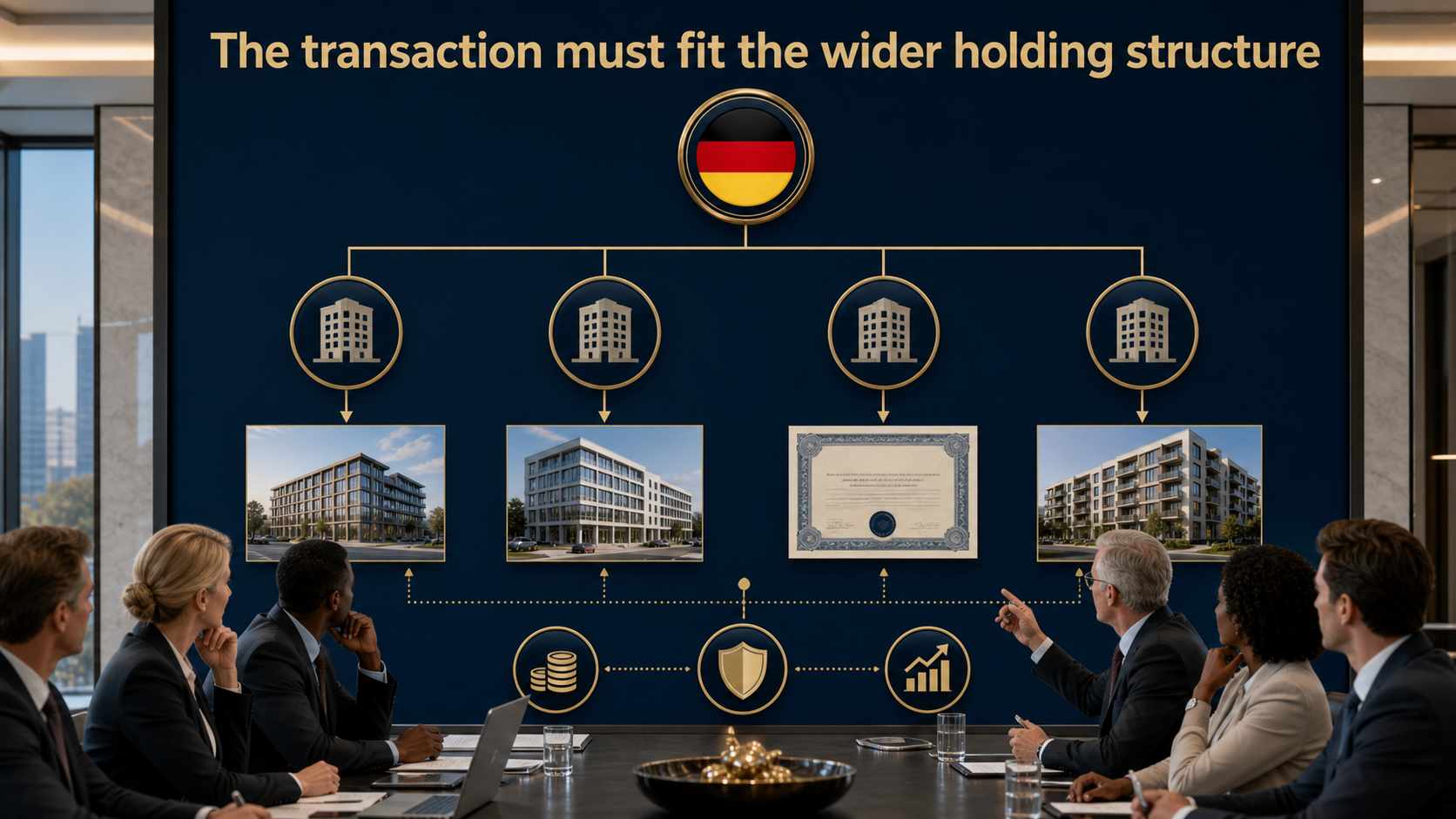
The transaction must fit the wider holding structure
For investors planning to acquire several German properties, the decision should not be made separately for each purchase without considering the overall investment structure.
A German holding company may acquire individual property companies through share deals, while other properties may be purchased through newly established subsidiaries by means of asset deals. Both methods can therefore exist within the same group.
The decisive questions include:
Where should the acquisition financing be placed?
Which company should assume the property-related risks?
Should the property be held, developed or sold?
Will other investors participate?
How should future sale proceeds be reinvested?
What exit route is realistically available?
The answers may determine not only how the property is purchased, but also how the investment can later be refinanced or sold.

Conclusion
An asset deal provides a direct and comparatively transparent acquisition of the property. A share deal preserves the property-owning company and its existing legal relationships, but also transfers the company’s history and possible liabilities to the investor.
Neither method is generally superior. The right choice depends on the property, the target company, financing, tax consequences, liability risks and the investor’s long-term strategy.
For larger international investments, the transaction structure should be coordinated with German legal, tax and financing advisers before a letter of intent or purchase agreement fixes the essential commercial terms.
This article provides general information only. It does not constitute legal, tax or financial advice. The rules applicable to a particular acquisition must be reviewed individually.
Free Consultation
Have questions about entering the German market? Request a free consultation.
Request Free Consultation