
Running a business in Germany can be challenging, especially if you are not familiar with the German tax system.
Many foreign business owners already have business experience. The difficulty is often not running the business itself, but understanding German tax terminology, administrative procedures, deadlines and documentation requirements.
And these mistakes are certainly not limited to foreign entrepreneurs. German business owners can make them as well. However, language barriers and an unfamiliar tax system can make certain issues easier to overlook.
The good news is that many problems can be prevented through good bookkeeping, proper documentation and a basic understanding of the German tax system.
This article explains ten common mistakes from a practical bookkeeping perspective – and what business owners can do to avoid them.
Important: This article provides general information only and does not constitute individual tax advice. My work focuses on bookkeeping support and helping business owners keep their financial records organized and understandable. Individual tax questions and decisions should be discussed with a qualified tax advisor (Steuerberater).
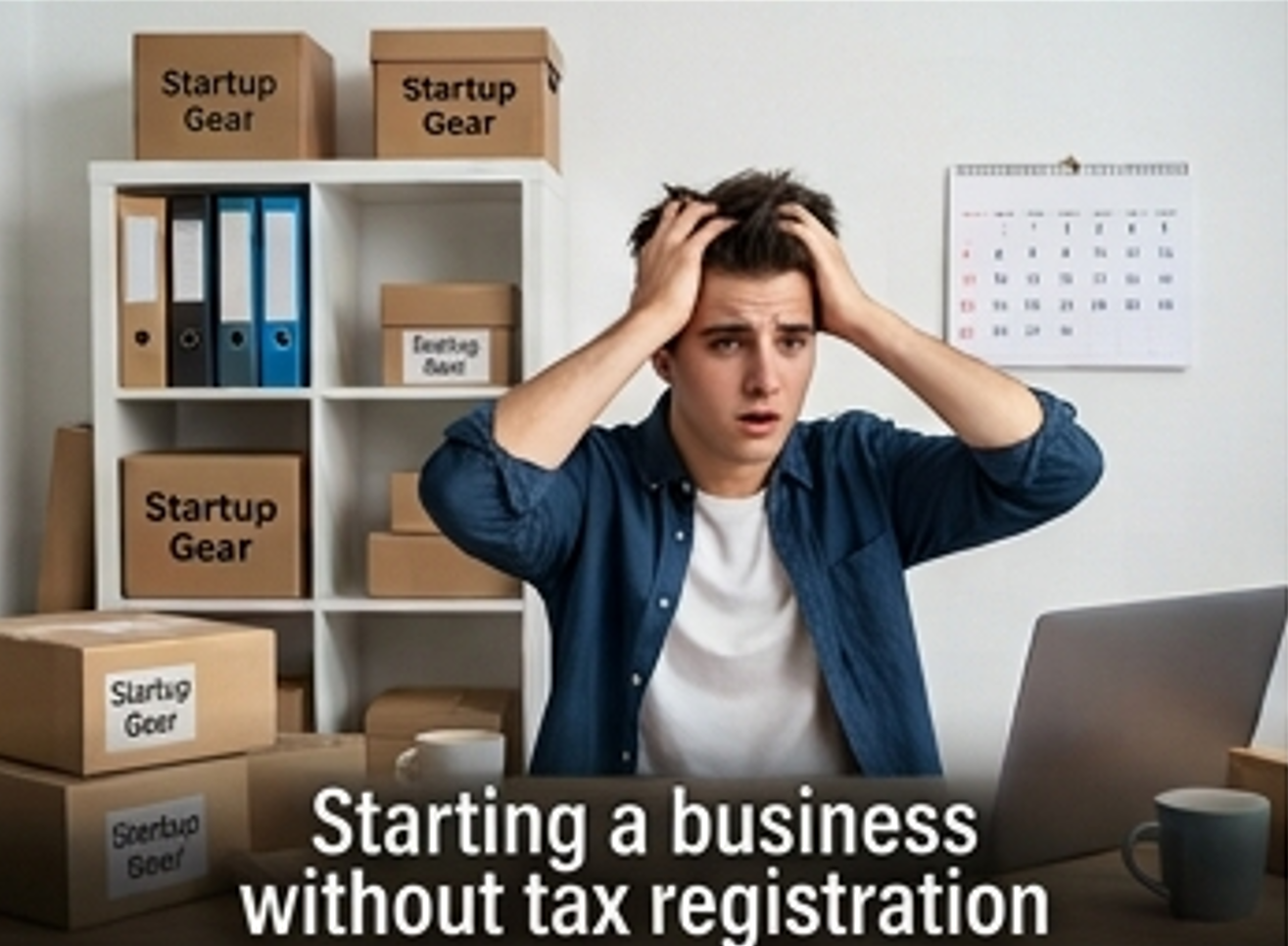
1. Starting the Business but Forgetting About Tax Registration
Finding customers, renting business premises and sending the first invoices may feel like the real beginning of your business.
But starting a business in Germany also comes with administrative obligations.
Depending on your activity and legal form, you may need to register your business and provide information to the German tax office (Finanzamt), including through the Fragebogen zur steuerlichen Erfassung – the questionnaire for tax registration.
A common misunderstanding is:
“I registered my business, so everything with the tax office is automatically taken care of.”
That is not always the case.
How to avoid it
At the beginning of your business, find out which registrations apply to your activity and legal form.
Do not wait until the first letter from the Finanzamt arrives before dealing with your tax registration.

2. Treating VAT as Your Own Money
This is one of the most important things new business owners should understand.
Imagine a customer pays you €11,900.
It may look as if your business has received €11,900 in income.
However, if €1,900 of that amount is VAT, that part should not automatically be treated as money available for your personal or business spending.
Depending on your VAT situation, part of the VAT collected from customers may later have to be paid to the tax office.
How to avoid it
Understand whether your invoices should include VAT and how VAT affects your cash flow.
Most importantly, do not wait until the payment deadline to realize that money you have already spent may actually be needed for a VAT payment.
Good bookkeeping helps you distinguish between revenue, VAT and actual business income.
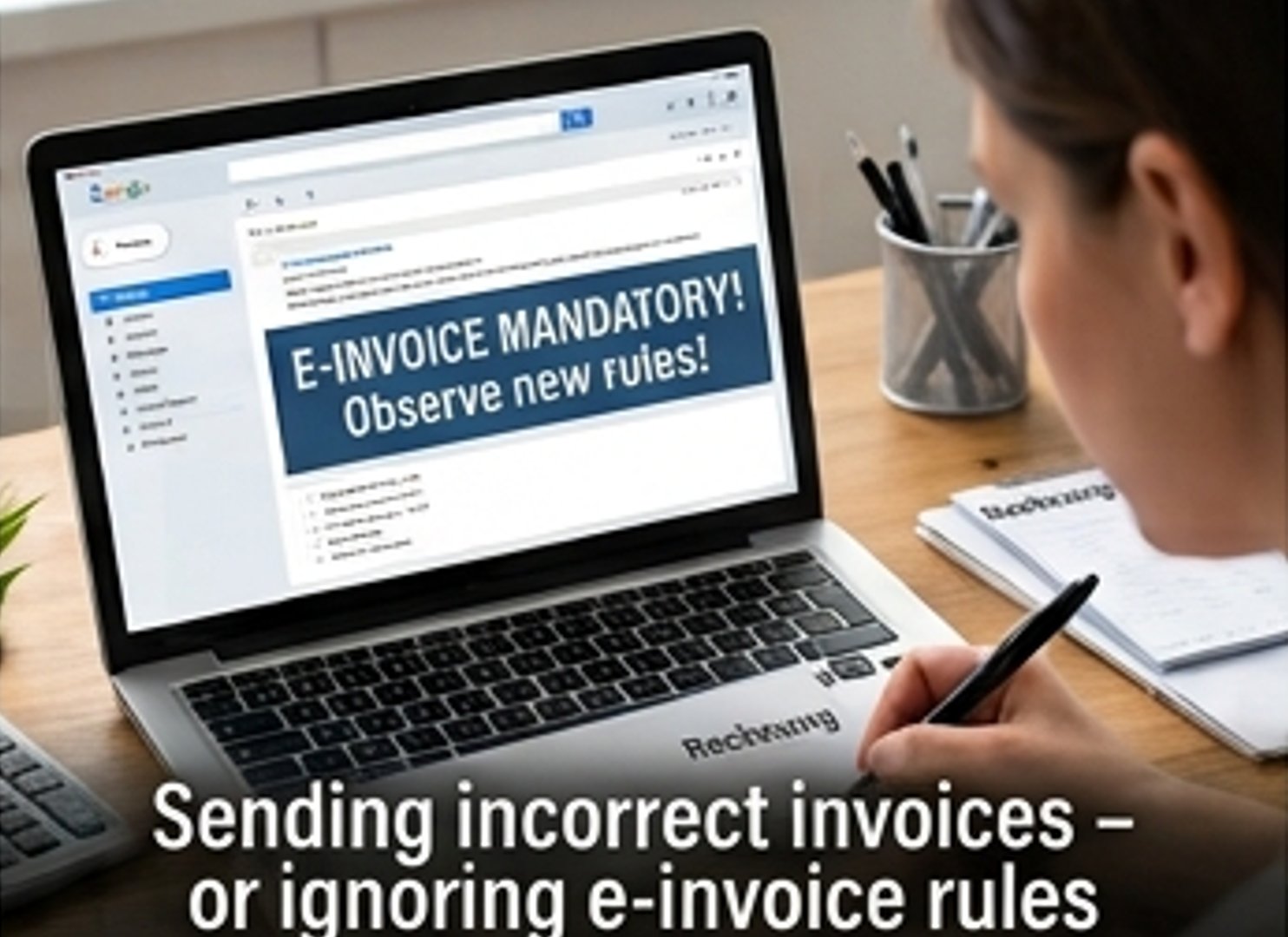
3. Sending Incorrect Invoices – or Ignoring the New E-Invoice Rules
An invoice in Germany is more than simply a request for payment.
Invoices generally need to contain specific information.
Depending on the situation, this may include:
the names and addresses of the supplier and customer
the invoice date
a unique invoice number
a description of the goods or services
the date of supply or service
the tax number or VAT identification number
the VAT rate and VAT amount, where applicable
An invoice that looks professional is therefore not automatically a correct invoice.
In addition, businesses in Germany increasingly need to deal with electronic invoices (E-Rechnungen).
How to avoid it
Use an invoicing system that is suitable for German business requirements.
Check your invoice template regularly and make sure your business can properly receive, process and store electronic invoices where required.
Because invoicing rules can change, current requirements should always be checked.
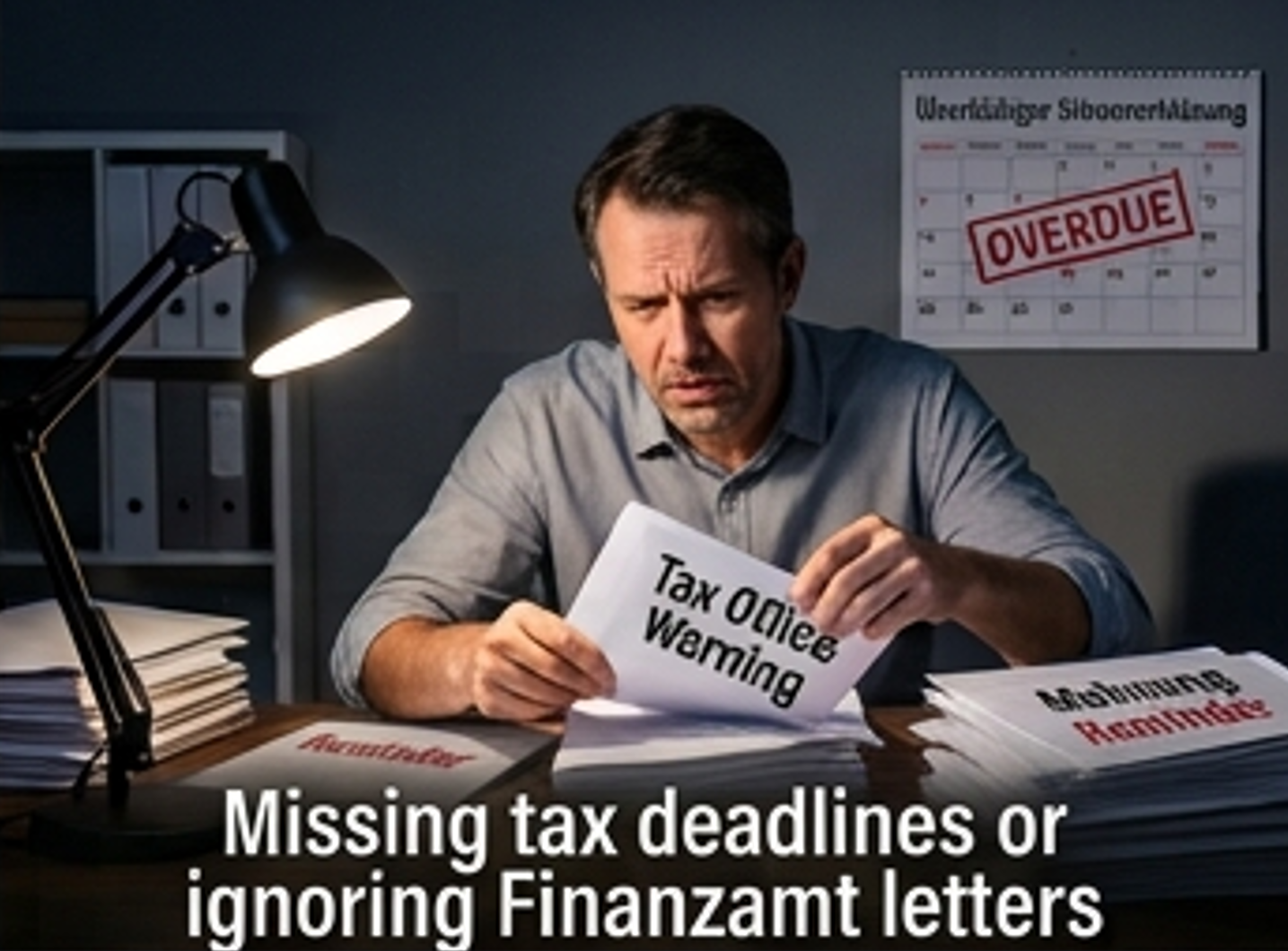
4. Missing Tax Deadlines or Ignoring Letters from the Finanzamt
A letter from the Finanzamt can be difficult to understand, especially when German is not your first language.
But putting the letter aside because you do not understand it can create a much bigger problem later.
German tax procedures include deadlines for declarations, VAT returns, advance tax payments and responses to the tax authorities.
Missing deadlines or paying taxes late can result in additional costs.
How to avoid it
Open letters from the Finanzamt as soon as you receive them.
If you do not understand something, ask for help before the deadline expires.
Use a calendar or digital reminder system for important bookkeeping and tax dates.
Do not rely on the Finanzamt to remind you personally every time.

5. Not Putting Money Aside for Taxes
A successful month does not mean that all the money in your bank account is available to spend.
This is particularly important when the tax office sets advance tax payments (Steuervorauszahlungen).
A business owner may suddenly have to deal with several payments around the same time:
a tax payment for the previous year, an advance payment for the current year, VAT and normal business expenses.
Even a profitable business can experience cash-flow problems if no money has been reserved for taxes.
How to avoid it
Create financial reserves for future tax payments.
There is no single percentage that is appropriate for every business owner because the amount depends on the individual situation.
But the principle is simple:
Money in your bank account is not automatically money that you can safely spend.
Regular bookkeeping gives you a much clearer picture of your financial position.

6. Mixing Private and Business Payments
Many small business owners use the same bank account for everything.
Customer payments arrive there.
Business rent is paid from it.
Groceries, private bills and business expenses may also be paid from the same account.
This quickly makes bookkeeping more complicated.
Later, somebody has to determine:
Was this payment private?
Was it business-related?
What was this cash withdrawal for?
Who paid this invoice?
How to avoid it
Keep private and business transactions as separate as possible.
A separate business bank account can make bookkeeping much easier, even if it is not legally required in every individual situation.
Private withdrawals and private expenses should also be recorded correctly instead of being treated as business expenses.
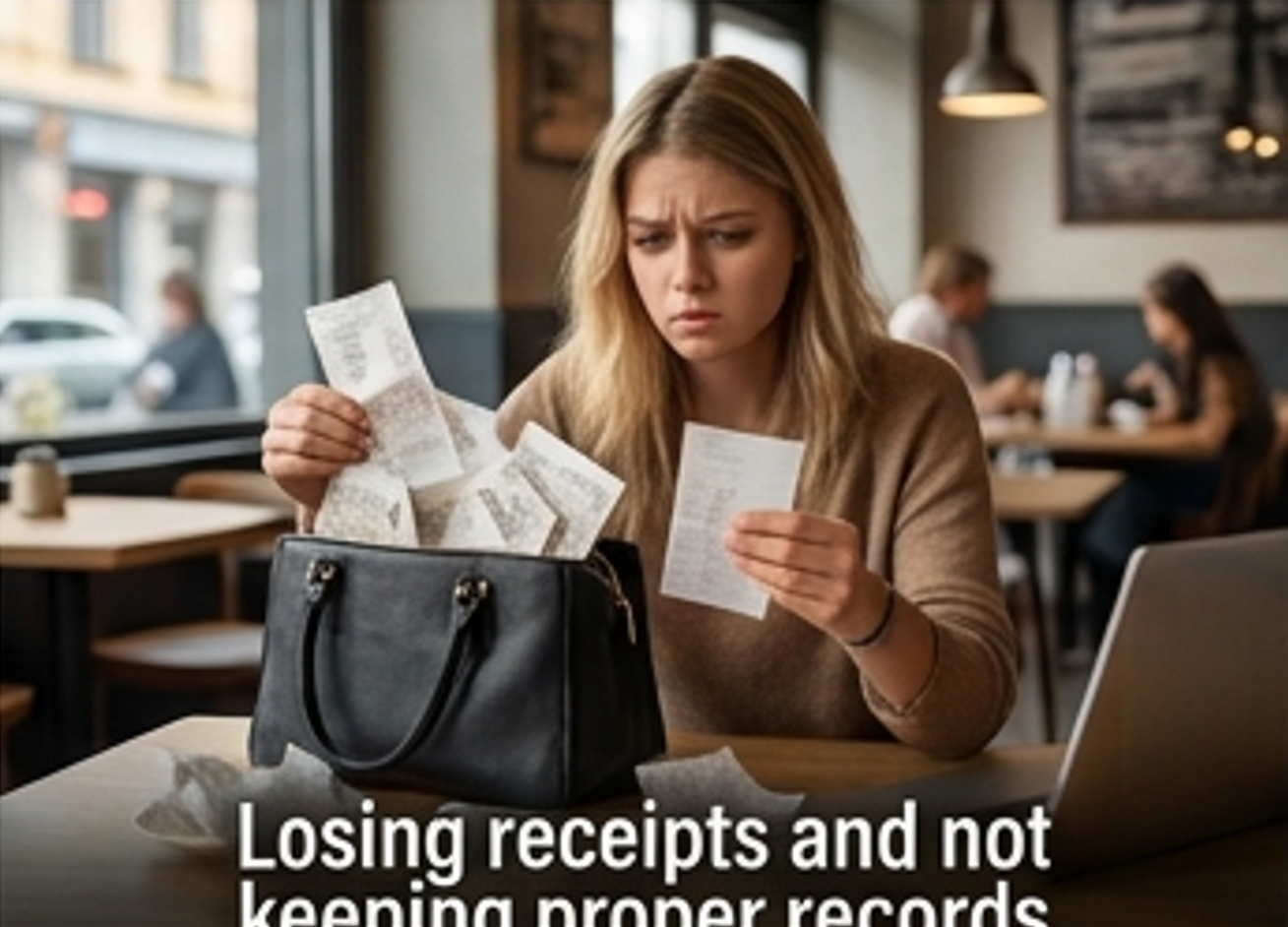
7. Losing Receipts and Not Keeping Proper Records
A bank statement shows that money was paid.
But it does not always explain exactly what was purchased, why it was purchased or whether the expense was business-related.
For bookkeeping and tax purposes, invoices, receipts and other supporting documents are therefore very important.
A common problem is that business owners collect documents in different places:
some are in an email inbox, some are in a car, some are in a drawer, some are on WhatsApp and others have already been lost.
How to avoid it
Create a simple document routine.
Whenever you receive an invoice or receipt, store it properly as soon as possible.
Digital bookkeeping works best when documents are collected continuously throughout the year.
Trying to reconstruct twelve months of business activity shortly before a deadline creates unnecessary stress and increases the risk of mistakes.

8. Assuming Every Business-Related Purchase Is Automatically Tax-Deductible
A common assumption is:
“I bought it for my business, so I can deduct it from my taxes.”
Unfortunately, it is not always that simple.
Whether an expense is deductible, how much can be deducted and what documentation is required depends on the individual circumstances.
The same applies to VAT paid on business purchases.
Simply having paid an invoice does not automatically mean that the full amount can be deducted.
How to avoid it
Keep the relevant invoice or receipt and document the business purpose clearly.
Be particularly careful with expenses that are partly private, unusually high or not obviously related to the business.
For individual questions about tax deductibility, professional tax advice may be necessary.

9. Treating International Transactions Like Normal German Transactions
This is particularly important for foreign business owners and companies that work internationally.
For example, you may:
buy software from another EU country,
sell services to a customer abroad,
purchase goods from a foreign supplier,
import products,
or receive an invoice without German VAT.
Cross-border transactions may be subject to different VAT rules and reporting requirements.
They should therefore not automatically be treated in exactly the same way as an ordinary domestic German transaction.
How to avoid it
Pay special attention whenever a customer or supplier is located outside Germany.
Make sure foreign invoices are identified correctly during bookkeeping.
If you are unsure whether reverse charge, EU VAT rules, import rules or other special provisions apply, seek qualified advice before making important tax decisions.
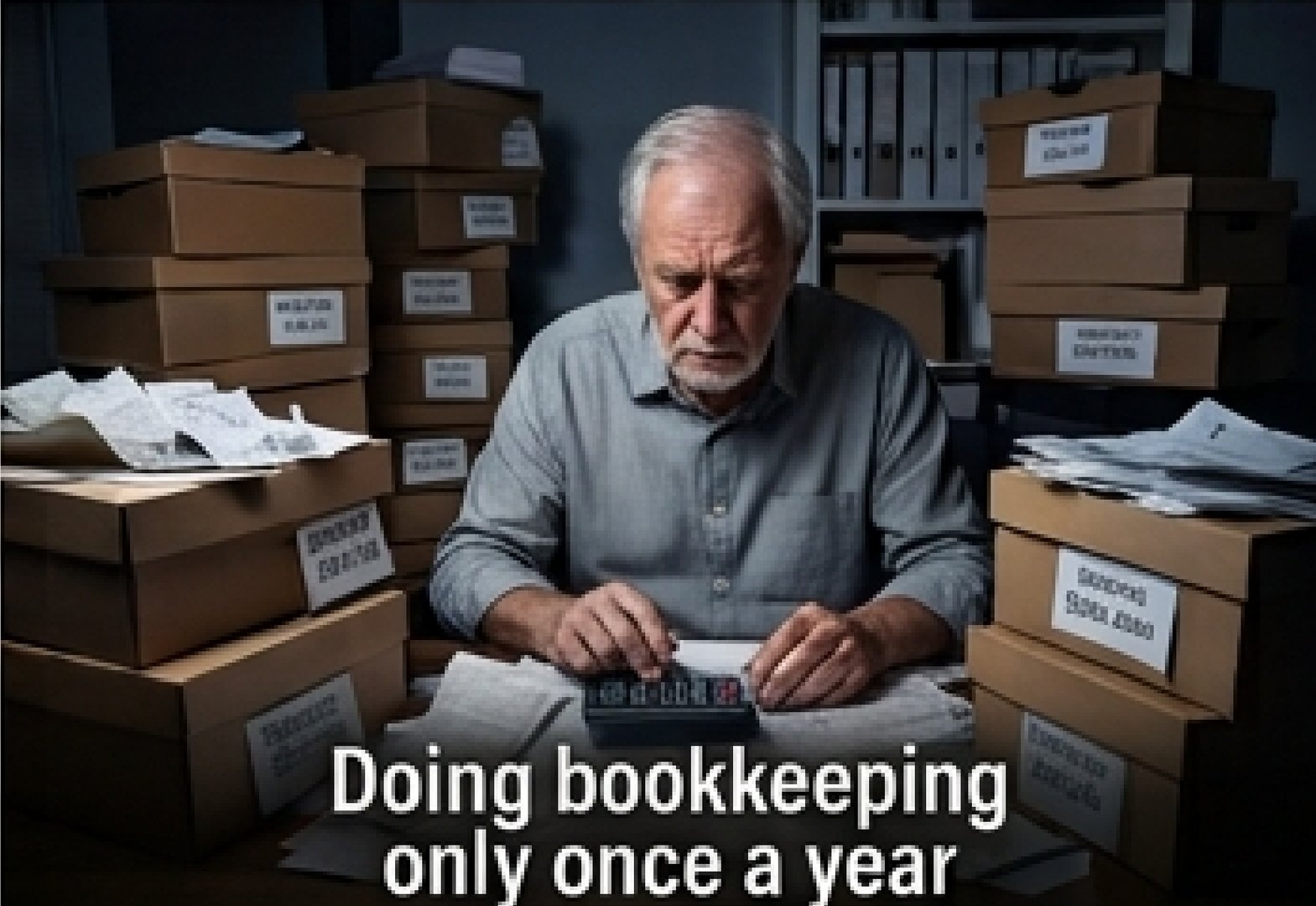
10. Doing the Bookkeeping Only Once a Year
Some business owners collect invoices and receipts throughout the year and only start organizing everything when the tax return becomes due.
By that time, several problems may have developed.
Documents may be missing.
Customer invoices may still be unpaid.
Private and business transactions may have been mixed.
And nobody remembers what a payment from nine months ago was for.
But there is another disadvantage:
The business owner has spent almost an entire year without a clear financial overview.
How to avoid it
Bookkeeping should be an ongoing business process – not an annual emergency.
When your bookkeeping is kept up to date, you can answer important questions much earlier:
How much revenue is my business generating?
What are my main expenses?
How much profit am I making?
Which customers still owe me money?
Are there unusual transactions that need clarification?
What payments may be coming up?
This information is useful not only for the Finanzamt.
It is useful for you as the business owner.

The Most Important Lesson
You do not need to become a German tax expert to run a successful business in Germany.
But you should understand the basic financial and administrative processes surrounding your business.
Know where your documents are.
Know your important deadlines.
Understand the difference between revenue, profit and VAT.
Keep an overview of your business finances.
And if you receive something from the Finanzamt that you do not understand, deal with it early rather than ignoring it.
Good bookkeeping cannot replace professional tax advice.
But it can create the structure and transparency needed to understand your business, identify problems early and prepare the right questions when professional tax advice is necessary.
Final Note
This article provides general information and practical guidance and does not constitute individual tax advice.
My work focuses on bookkeeping support and helping business owners maintain organized, transparent and understandable financial records.
Individual tax questions, tax planning and tax decisions should be discussed with a qualified tax advisor (Steuerberater).
Good bookkeeping is not only about meeting your obligations. It is about understanding your own business.
Free Consultation
Have questions about entering the German market? Request a free consultation.
Request Free Consultation