What Actually Happens When You Exceed the 6-Month Limit
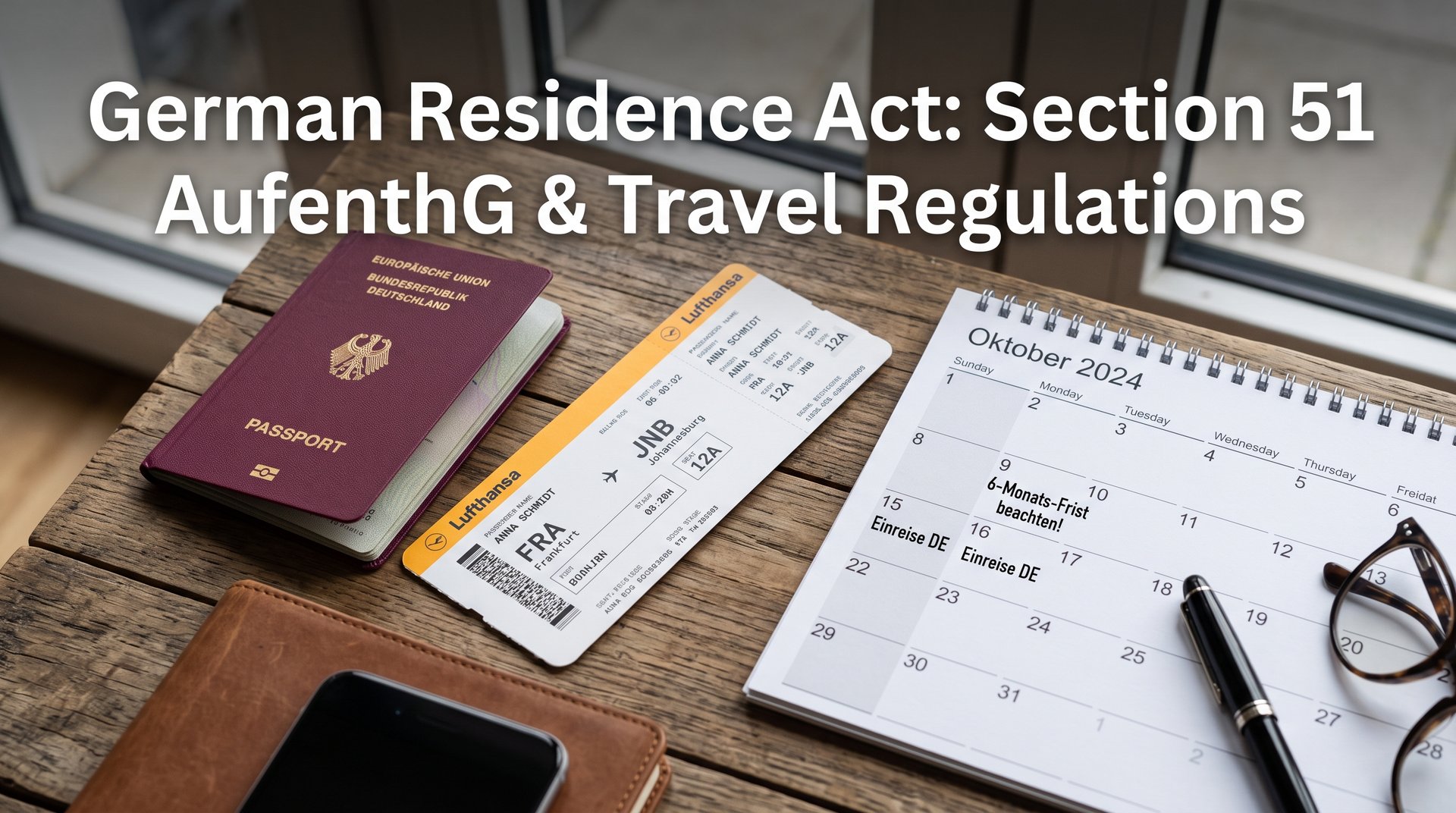
A Permanent Settlement Permit (Niederlassungserlaubnis) grants its holders a permanent right of residence in Germany. However, the German Residence Act (Aufenthaltsgesetz – AufenthG) sets clear deadlines regarding how long you may remain outside of Germany.
If the statutory re-entry deadline of 6 months is exceeded without prior approval from the authorities, severe legal consequences often follow upon returning to Germany or during subsequent appointments with government agencies.
1. The Core Legal Rule: Expiry by Operation of Law
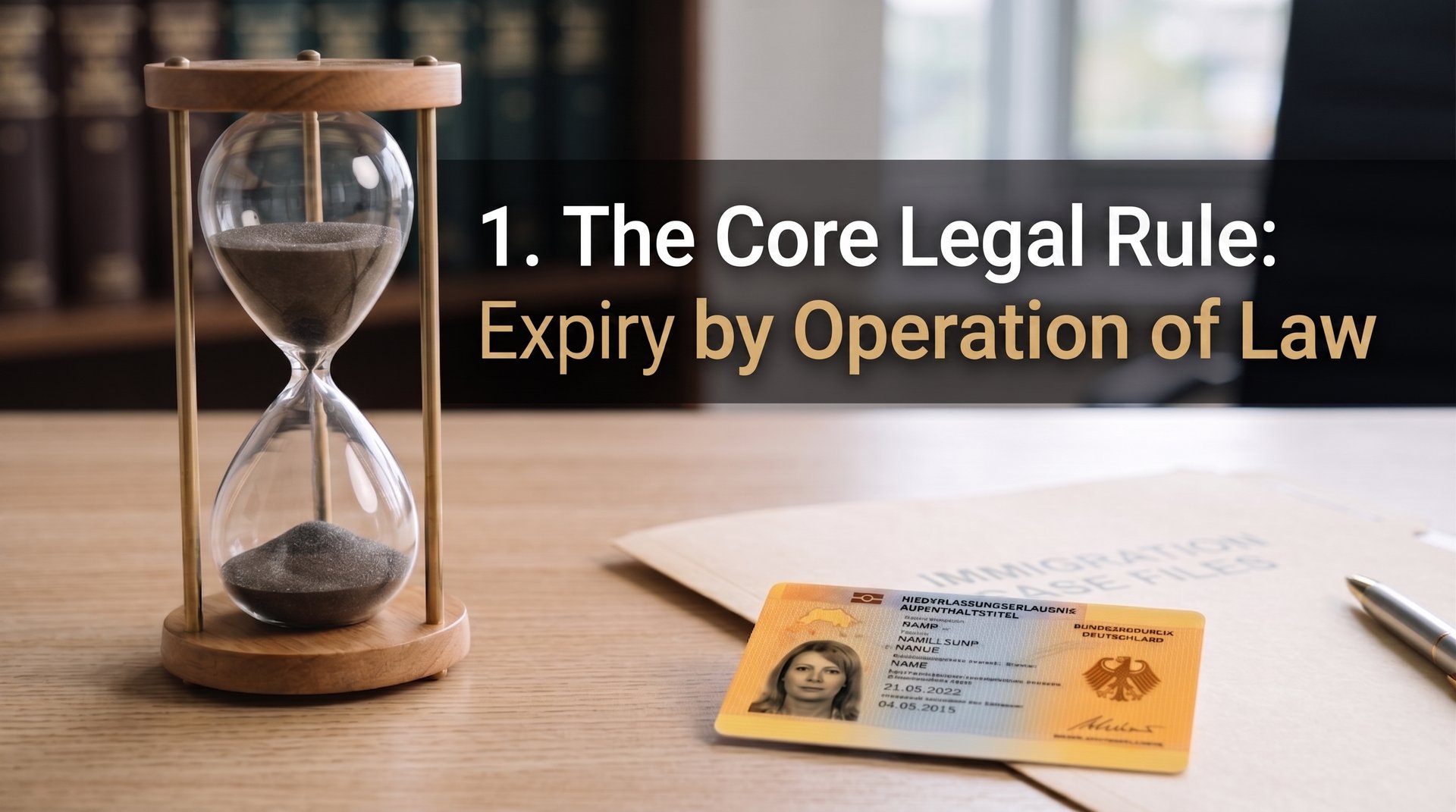
Pursuant to Section 51 (1) No. 7 AufenthG, a permanent settlement permit automatically expires upon the conclusion of the sixth month following departure if the holder has not re-entered German territory by that time.
Automatic Expiry: The loss of status occurs directly through the passage of time. No separate revocation order by the Immigration Authority (Ausländerbehörde) is required prior to re-entry. The permit loses its validity the exact moment the deadline expires.
No Retroactive Remedy: Extending the deadline after it has already been exceeded is generally excluded by law.

2. What Happens When the Deadline Is Exceeded? Administrative Consequences
Anyone returning to or staying in Germany after more than 6 months without an exemption permit faces the following official procedures:
A) Issues at Border Control
When re-entering via an airport or external border, entry and exit dates are verified in the system. If more than 6 months have elapsed between departure and entry, the case is referred to border officials for residence status verification. In the worst-case scenario, entry may be denied or a formal report forwarded to the local Immigration Authority.
B) Formal Loss Determination by the Immigration Authority
If the deadline overrun becomes known domestically (e.g., when renewing an electronic residence title, filing tax returns, or applying for social benefits), the Immigration Authority initiates a formal procedure:
Determination of Loss: The authority formally determines that the settlement permit has expired.
Requirement to Leave: The individual is given a deadline to leave the federal territory under threat of deportation.
Issuance of Temporary Documents: Pending legal remedies or reviews, the individual loses the full legal status of a permanent settlement permit and is merely issued a temporary document (e.g., a Duldung or Fiktionsbescheinigung).
C) Employment and Social Security Impact
Loss of Work Authorization: Upon expiry of the residence permit, the legal basis for employment in Germany ceases. Employers are legally required to suspend employment in the absence of a valid permit.
Health Insurance Status: Entitlement to insurance coverage may be disrupted, potentially leading to retroactive adjustments or claims for back payments.
3. Case Examples from Administrative Practice and Case Law
The following practical scenarios illustrate how authorities and administrative courts handle deadline overruns:
Example 1: Unforeseen Delays Abroad (Unawareness of the Rule)
Facts: A settlement permit holder travels to his country of origin to handle family matters. Due to bureaucratic delays on site, the stay extends to 7.5 months. Upon returning, he assumes his permit remains valid because the physical card is not due to expire for several years.
Legal Outcome: During his next address update at the local registration office (Bürgeramt), the matter is forwarded to the Immigration Authority, which determines that the permit has expired. The Administrative Court upholds the decision: Unawareness of the law or unpreventable delays abroad do not waive the statutory deadline under Section 51 (1) No. 7 AufenthG unless an extension was formally requested in advance.
Example 2: Attempting to Reset the Deadline via Short Visits
Facts: An individual temporarily moves abroad but flies back to Germany for two days every 5.5 months, stays with friends, and leaves again, aiming to prevent expiry under Section 51 (1) No. 7 AufenthG.
Legal Outcome: The Immigration Authority evaluates the overall situation. Courts regularly rule under Section 51 (1) No. 6 AufenthG that if the center of main life interests has effectively been moved abroad, mere short visits do not interrupt the expiry of the permit. The title is deemed expired despite the brief visits.
Example 3: Extended Overseas Stay to Care for Family (With Prior Approval)
Facts: A settlement permit holder needs to travel abroad to care for a seriously ill parent. Before leaving, she submits a formal written request to the Immigration Authority to extend her re-entry deadline to 12 months, attaching medical records.
Legal Outcome: The Immigration Authority issues an official certificate pursuant to Section 51 (1) No. 7 AufenthG. She returns after 10 months, and her permanent settlement permit remains fully valid.
4. Statutory Exceptions and Protective Provisions
Section 51 (2) AufenthG contains protective clauses under which the 6-month rule does not result in expiry:
15 Years of Lawful Residence: Individuals who have resided lawfully in Germany for at least 15 years and whose livelihood is secured do not lose their settlement permit through the mere passage of time.
Spouses of German Citizens: Simplified rules similarly apply to spouses of German nationals with a secured livelihood.
Seniors (Ages 60+): Individuals aged 60 or older who have resided lawfully in Germany for at least 15 years benefit from a extended statutory re-entry period of 12 months.

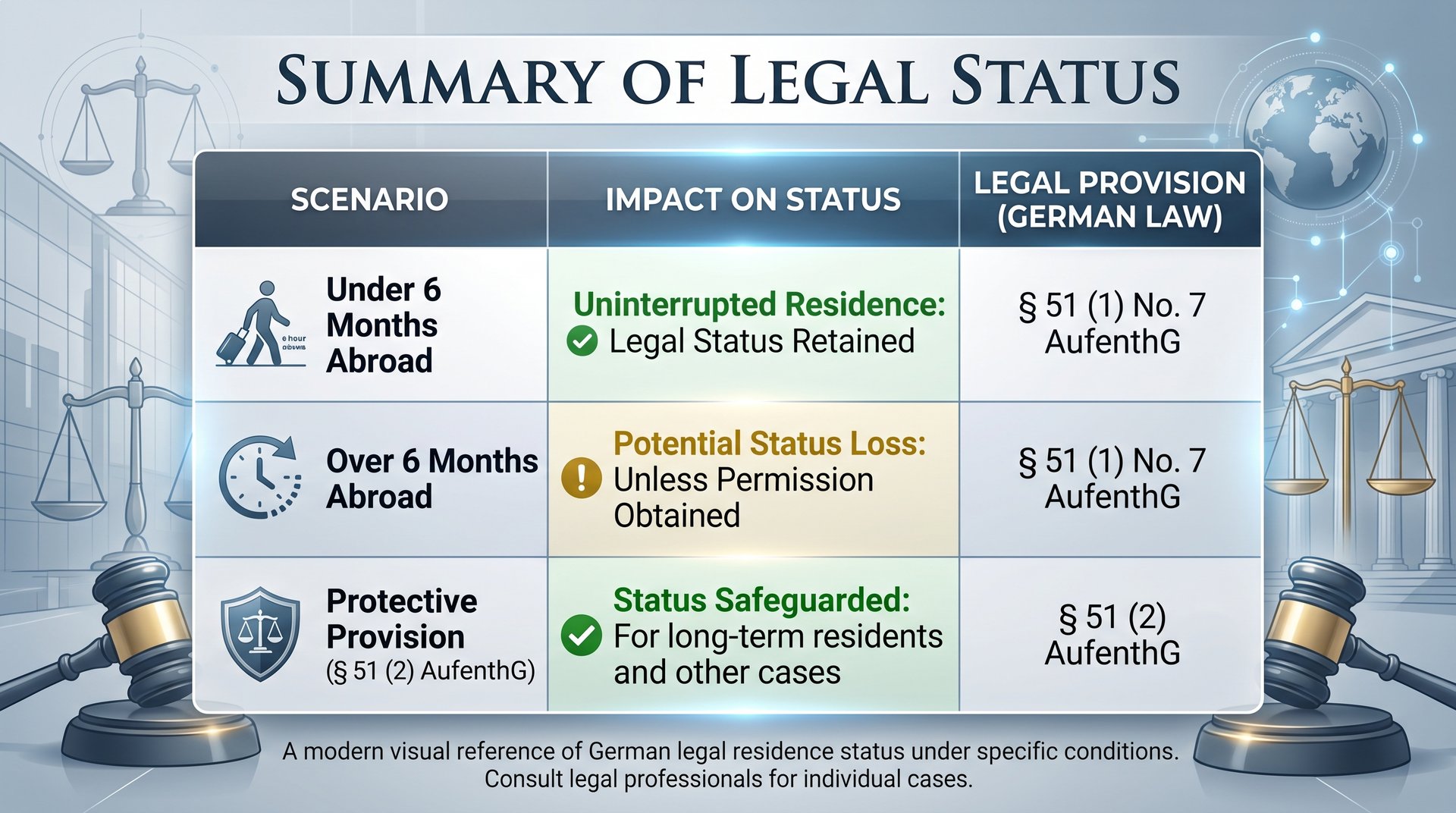
Summary of Legal Status
ScenarioDuration of AbsenceLegal ConsequenceRegular DepartureUnder 6 monthsPermanent Settlement Permit remains valid.Unapproved Deadline OverrunOver 6 monthsPermit expires automatically; loss of employment authorization and initiation of exit procedures.Prior Approved ExtensionAs specified in notice (e.g., up to 12/24 mos.)Permit remains valid for the period approved by the authority.Protective Provision (§ 51 (2) AufenthG)Unrestricted / over 6 monthsExpiry rule does not apply if resident for ≥ 15 years with secured livelihood.
Disclaimer: This article serves general informational purposes regarding the legal framework under Section 51 AufenthG and does not constitute legal advice for individual cases.
Free Consultation
Have questions about entering the German market? Request a free consultation.
Request Free Consultation