
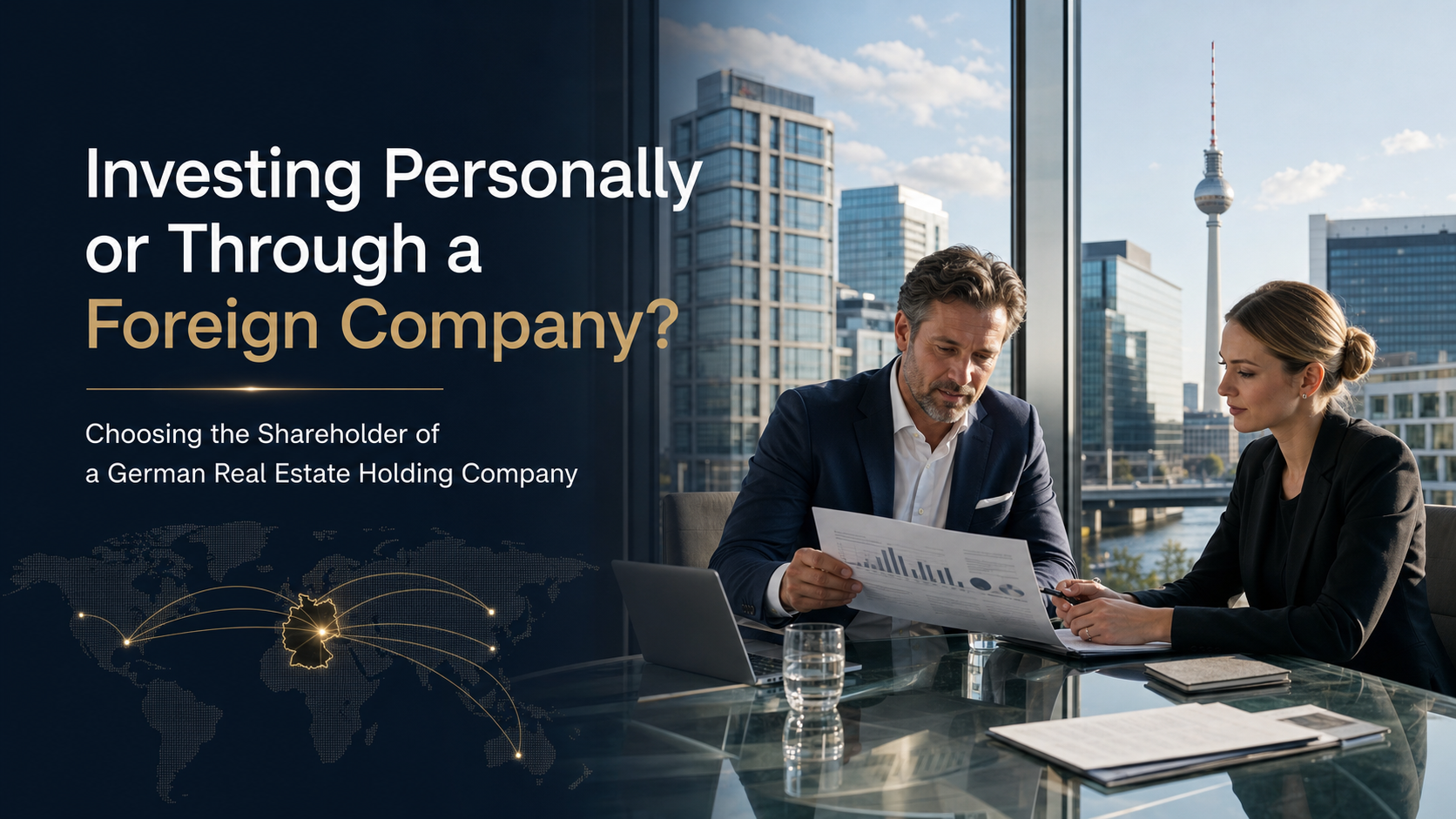
Choosing the Shareholder of a German Real Estate Holding Company
A financially strong international entrepreneur planning a substantial German commercial property portfolio can either own the German Real Estate Holding GmbH personally or through an existing foreign company.
The foreign investor may own 100 per cent of the German holding. German law does not generally require a local shareholder.
However, if a German partner contributes valuable market knowledge, management, business relationships or capital, the investor may voluntarily grant that partner a minority interest—for example, 10 to 20 per cent.
This percentage is only an example. A partner working on the entire portfolio may participate in the holding, while a partner responsible for one project may be better placed in the relevant project company.
The central question is:
Who should own, control and finance the German holding—the entrepreneur personally or a foreign company?
The answer should align ownership, the source of capital, financing, control and the intended exit.
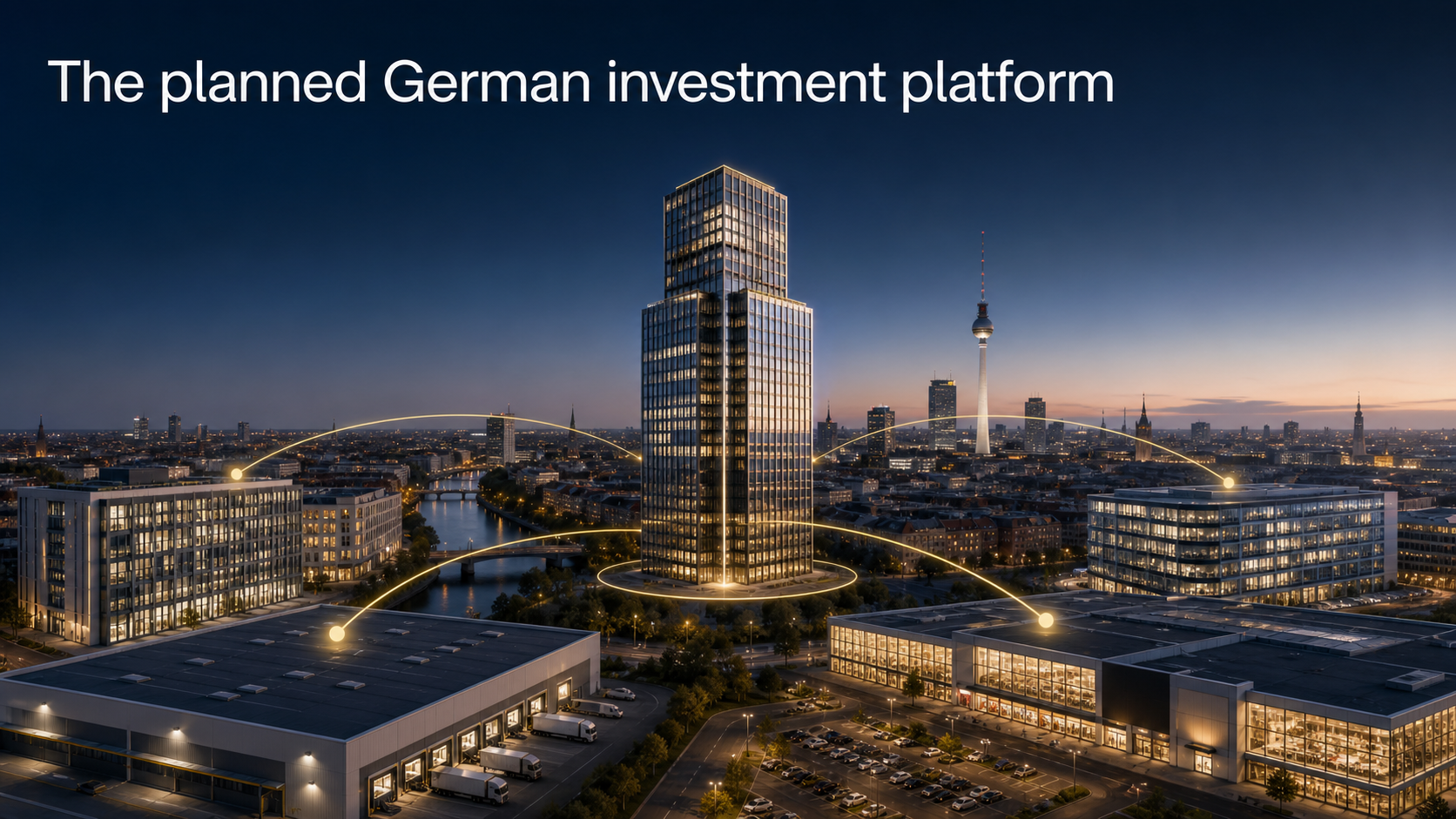
The planned German investment platform
The investor may intend to acquire office buildings, logistics properties, retail premises or other commercial assets.
Some properties may be held for rental income, while others may be renovated, developed and sold.
A German holding structure can help separate individual investments and add further properties over time. Its detailed design will be discussed in Article Six.
This article focuses on the two possible ownership routes:
Foreign entrepreneur → German holding → German property companies
or:
Foreign company → German holding → German property companies
Local minority participation is optional under either model.
Personal ownership does not mean private ownership of the properties
If the entrepreneur personally owns the German holding, the entrepreneur owns company shares—not the buildings held by its subsidiaries.
The private ten-year rule that may apply to directly owned real estate cannot simply be transferred to a GmbH structure.
A property sale creates a result at company level. A later sale of holding shares is governed by separate rules for company participations and real-estate-rich companies.
The question is therefore not whether the buildings are privately owned. It is who owns the shares at the top of the corporate structure.

Option One: The entrepreneur owns the German holding personally
Personal ownership may create a clearer separation between the German property portfolio and the investor’s foreign operating businesses.
It may be suitable where:
The foreign company carries substantial operating risks
Other shareholders participate in that company
The foreign business may later be sold
The German portfolio is intended as separate family wealth
The investor wants direct personal control
Financial problems affecting the foreign operating company do not automatically affect German holding shares it does not own.
However, the shares become part of the entrepreneur’s personal assets and may be affected by inheritance, divorce or personal creditors.

The source of the investment capital matters
Personal ownership may be inefficient if the investment capital is already held by a foreign company.
The company may first have to distribute the funds to the entrepreneur. That distribution could be taxed before the entrepreneur reinvests the remaining amount in Germany.
If the capital is intended to remain within a business investment structure, this intermediate personal distribution may be unnecessary.
The current location and tax status of the investment funds should therefore be examined before selecting the shareholder.
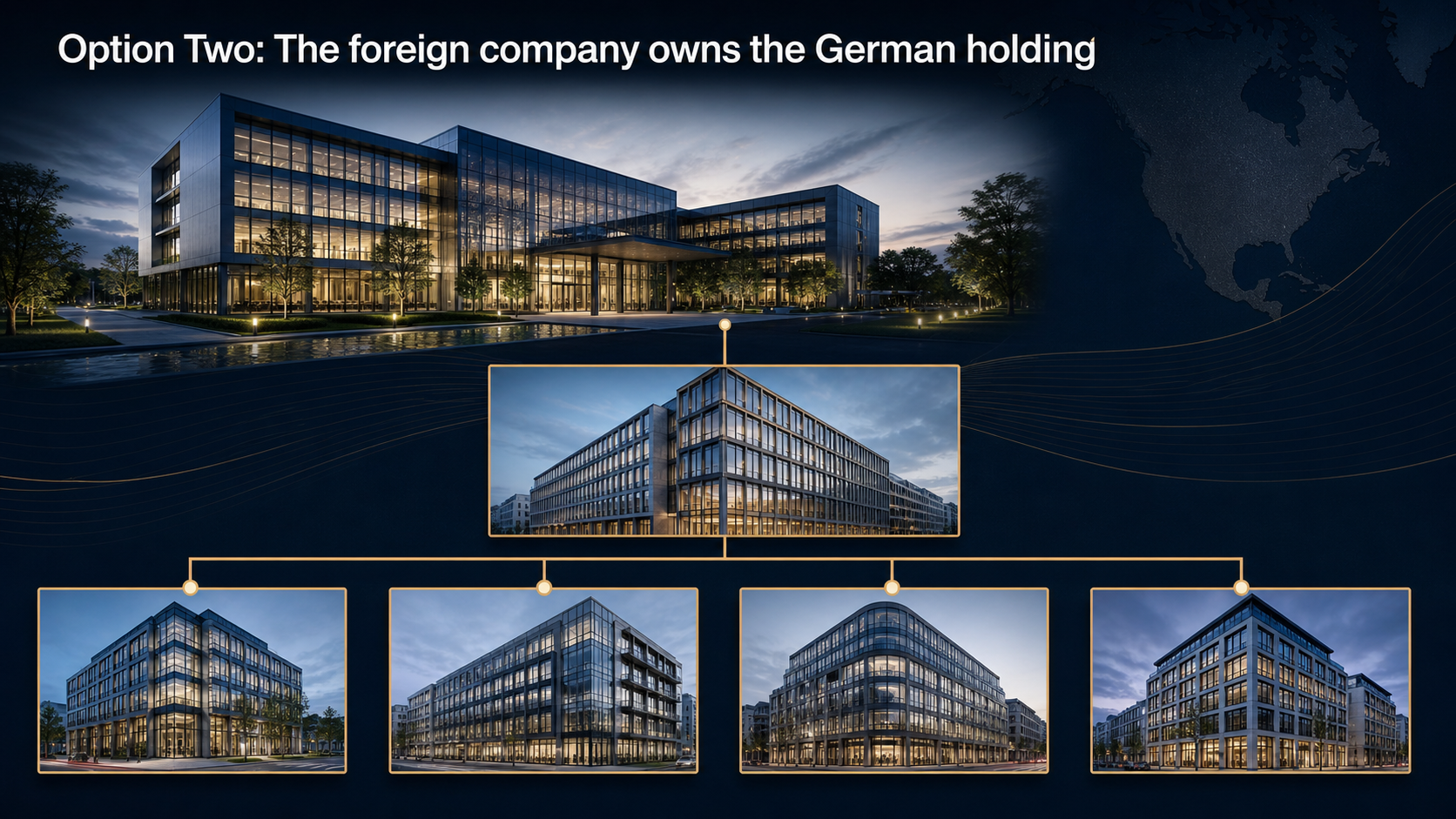
Option Two: The foreign company owns the German holding
Corporate ownership can be appropriate if the foreign company:
Holds substantial investment capital
Will finance the German portfolio over time
Can provide equity, shareholder loans or guarantees
Intends to reinvest profits internationally
Has a reliable financial and business history
Ownership and financing are then aligned: the company providing the capital is also the shareholder receiving the investment.
This may avoid the need to distribute funds to the entrepreneur personally before investing them in Germany.

Providing equity and financial reserves
The foreign parent may finance the German structure through:
Share capital
Capital reserves
Shareholder loans
Additional project equity
Bank guarantees or other security
Equity can strengthen the German company’s balance sheet. Shareholder loans may offer greater flexibility but must be agreed on arm’s-length terms.
If minority shareholders are involved, the parties should specify who must provide future capital. A 10 or 20 per cent shareholding does not automatically create an obligation to finance the same percentage of every acquisition.
A practical financing example
Assume that a foreign company has EUR 20 million available for German commercial property investments.
It may own 100 per cent of the German holding. Alternatively, an experienced German partner may receive 15 per cent for providing long-term market expertise, project management and business relationships.
The foreign company supplies most of the equity, while a German bank finances part of the purchase price.
Audited financial statements, liquidity evidence and a corporate guarantee can strengthen the financing application.
The foreign company’s participation is therefore not merely a tax consideration. It can be an essential part of the financing strategy.

The role of German minority partners
A German shareholder is not generally required.
A local partner may nevertheless add value by:
Identifying suitable properties
Managing development and renovation
Coordinating German professionals
Supporting bank negotiations
Providing capital or local infrastructure
A partner contributing to the entire portfolio may participate in the holding. A project developer working on one property may be better placed in the relevant project company.
Consultants, brokers and service providers do not necessarily need shares. They can be compensated through contractual fees.
Equity should normally be granted only where the partner shares the long-term risks and opportunities of the investment.

Majority ownership does not answer every control question
An investor holding 80 or 90 per cent normally has a clear majority. Actual control, however, depends on the articles of association and the shareholders’ agreement.
Important matters may require minority consent, including:
Major property transactions
Substantial financing
Capital increases
Changes in strategy
Distributions
Sale of the group
The agreement should also regulate management appointments, future funding, transfer rights and dispute resolution.
Minority protection should be reasonable without preventing the majority investor from conducting ordinary business.
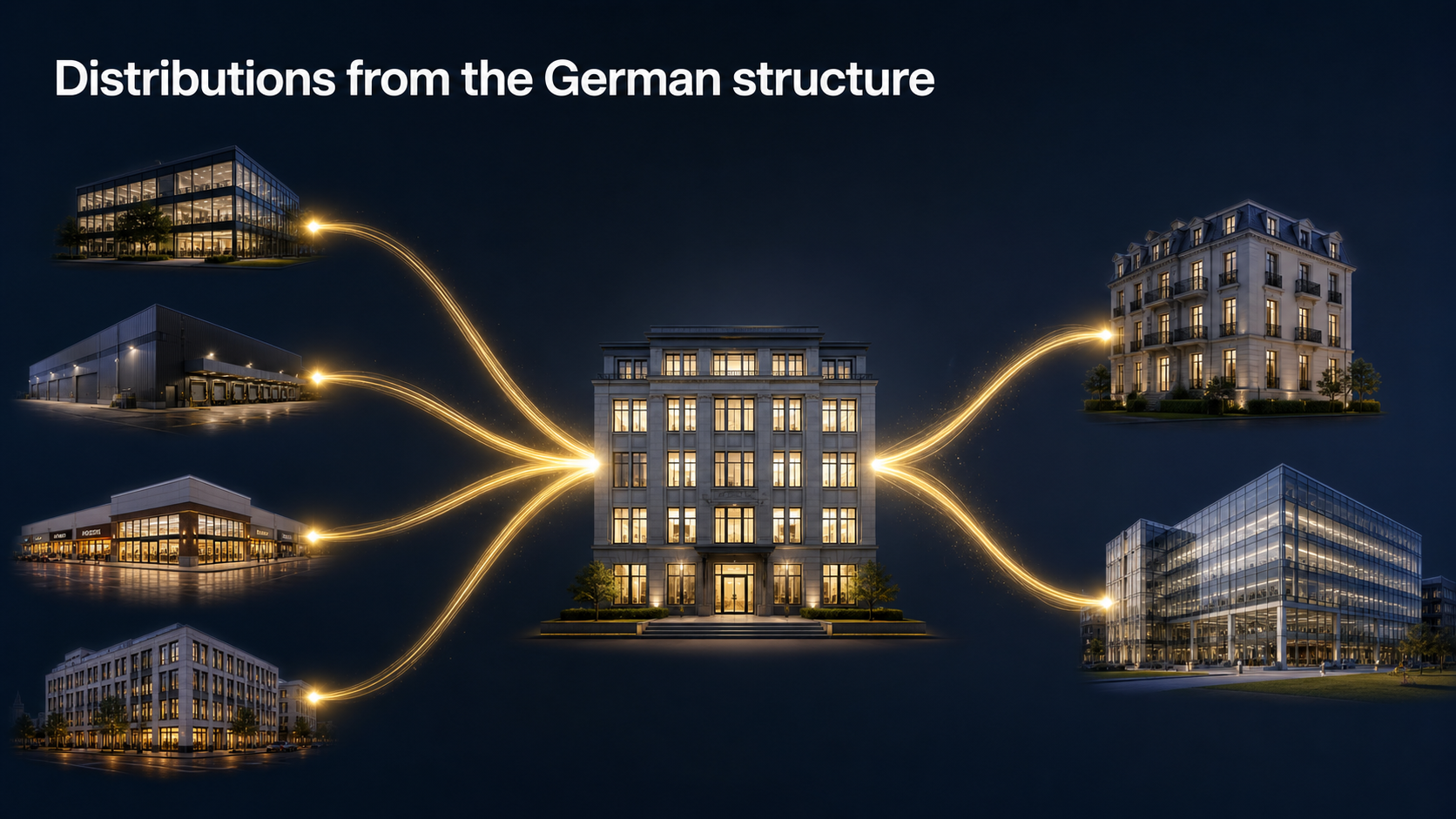
Distributions from the German structure
Profits may move from German property companies to the German holding and be reinvested in new projects.
With personal ownership, the holding distributes directly to the foreign entrepreneur. With corporate ownership, it distributes to the foreign parent company.
Corporate ownership may facilitate reinvestment and defer taxation at the individual level, but it does not automatically eliminate tax.
The analysis must consider German withholding tax, the applicable tax treaty, taxation in the foreign country and any later distribution to the entrepreneur.
Where minority partners participate, the shareholders should also agree whether profits will be distributed or retained for future acquisitions.
A foreign company does not automatically create a tax advantage
The foreign parent should have a genuine commercial function, such as providing capital, guarantees or management resources.
Tax relief may be restricted if the company is merely interposed to receive German dividends without adequate economic substance.
The result depends on the company’s residence, legal form, management, business activities and the applicable double taxation agreement.
German minority participation does not itself create substance for the foreign parent or automatically improve the tax treatment.

Connecting the properties to the foreign business
If the foreign operating company owns the German holding, the holding shares become part of that company’s assets.
Insolvency, creditor claims or shareholder disputes affecting the foreign company may therefore also affect its German participation.
The investor should compare ownership by:
The foreign operating company
A foreign holding or investment company
The entrepreneur personally
The company with the most liquidity is not necessarily the most suitable long-term shareholder. Financing capacity must be balanced against the need to isolate the German portfolio from unrelated business risks.

German bank financing
German banks normally examine the full ownership and financing structure.
A strong foreign parent may support the application through financial statements, liquidity, equity commitments and guarantees.
However, the bank may require:
Foreign corporate documents
Certified translations
A complete ownership chart
Identification of beneficial owners
Evidence of the source of funds
Information about minority shareholders
A German partner may assist with local communication but does not replace the bank’s review of the foreign investor. Local participation also does not guarantee financing approval.

Long-term holding and property development
Long-term rental properties and projects intended for development and resale should not automatically be placed in the same company.
Long-term management of a company’s own property may qualify for specific German trade-tax treatment. Active development or systematic trading may jeopardise that treatment.
Separate subsidiaries may therefore be appropriate.
A German partner responsible for one development may participate only in that project company rather than in the entire holding.

Planning the future exit
Possible exit routes include:
Selling a property
Selling an individual property company
Selling the German holding
Selling the foreign parent company
Each route may produce different tax and real estate transfer tax consequences.
Germany may retain taxation rights if the value of the shares derives predominantly from German real estate.
Where minority shareholders are involved, the agreement should regulate rights of first refusal, tag-along and drag-along rights, valuation and the treatment of individual project sales.
The exit should be planned before ownership interests are granted.

Personal ownership or corporate ownership?
Personal ownership may be suitable if:
The German portfolio should remain separate from the foreign business
The properties are intended as family wealth
The foreign company carries substantial operating risks
The entrepreneur wants direct personal control
Corporate ownership may be suitable if:
The capital is already held by the foreign company
That company will provide long-term financing
It can provide reserves, shareholder loans or guarantees
Profits will be reinvested within the group
The company has sufficient financial history and substance
The foreign investor may own the German holding entirely.
A German partner may receive a minority interest if that partner makes a substantial long-term contribution. For a limited project role, participation at project-company level may be more appropriate.

Conclusion
If substantial investment capital is already available within a financially strong foreign company and that company will provide equity, reserves, shareholder loans or guarantees, corporate ownership of the German holding may be economically consistent.
Personal ownership may offer better separation from the risks of the foreign operating business.
German minority participation is optional. It should reflect a genuine long-term contribution and be governed by clear rules on control, financing, distributions and exit.
The ownership decision should be made before the German holding is incorporated and before the first property is acquired.
The most suitable structure is the one in which capital, ownership, financing responsibilities, control rights, local participation and exit strategy are aligned from the beginning.
This article provides general information and does not constitute legal, tax, financing or investment advice. Cross-border structures must be examined under German law, the law of the foreign company’s country and the applicable double taxation agreement.
Free Consultation
Have questions about entering the German market? Request a free consultation.
Request Free Consultation