
1. Introduction
The tax treatment of a property depends substantially on how it is used.
A property occupied by its owner is treated very differently from a property purchased for rental purposes.
This distinction affects financing costs, depreciation, renovation expenses and many other items.

2. Basic Tax Principles for Owner-Occupied Property
Anyone who lives in their own property does not normally generate taxable rental income from it.
For this reason, the costs of the property are generally part of the private sphere.
Purchase costs, financing expenses and ordinary running costs therefore normally cannot simply be deducted as income-related expenses.
3. Tax Benefits Available to Owner-Occupiers
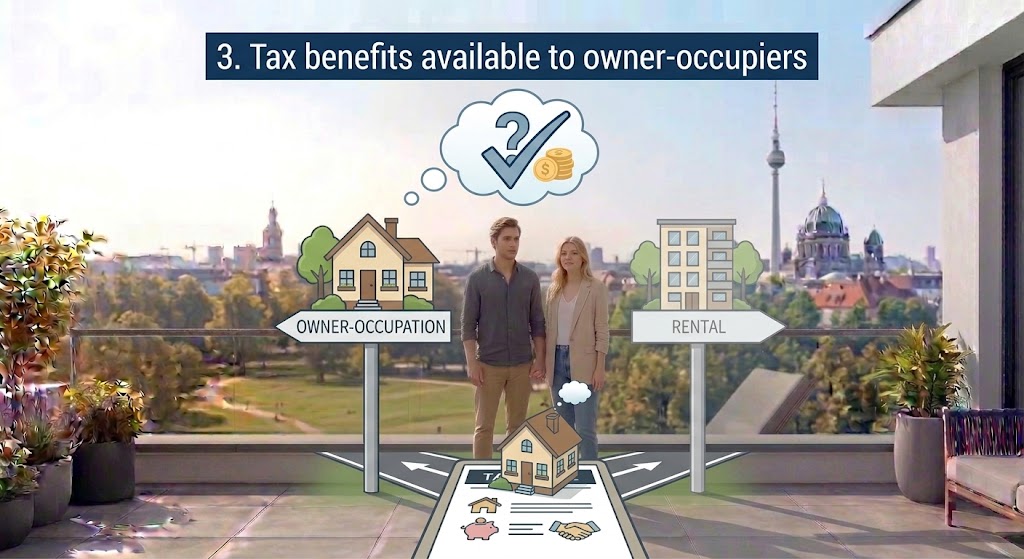
Nevertheless, certain tax benefits may be available.
Examples include qualifying household-related services and craftsmen’s services.
Certain energy-efficient renovation measures may also receive tax support if the legal conditions are met.
These benefits are usually tax reductions rather than normal deductible rental expenses.
4. Mortgage Interest for Owner-Occupied Property
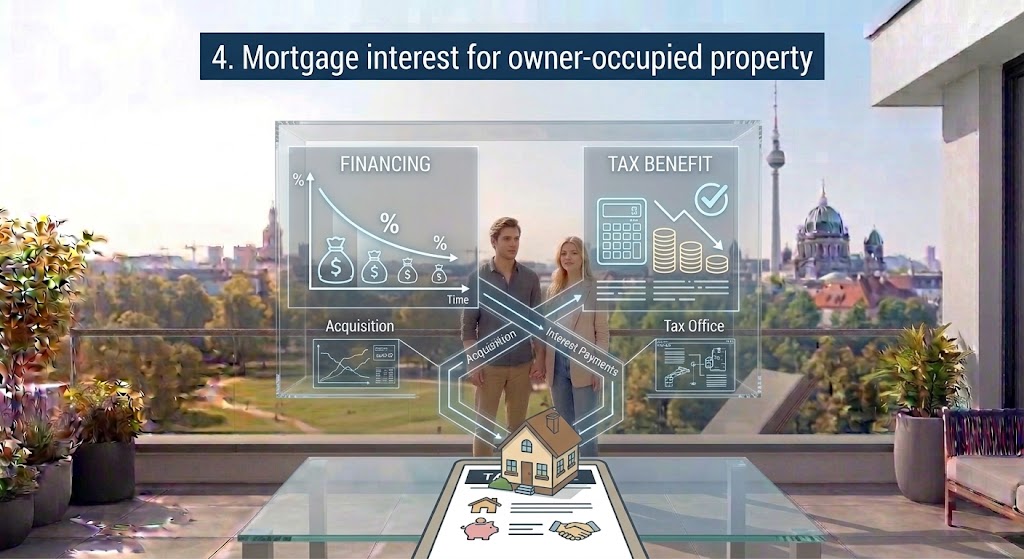
Interest on a loan used to finance a privately occupied home is generally not deductible as an income-related expense.
This is one of the most important differences compared with rental property.
The principal repayment is also a private financing transaction and does not create a normal tax deduction.
5. Depreciation for Owner-Occupied Property
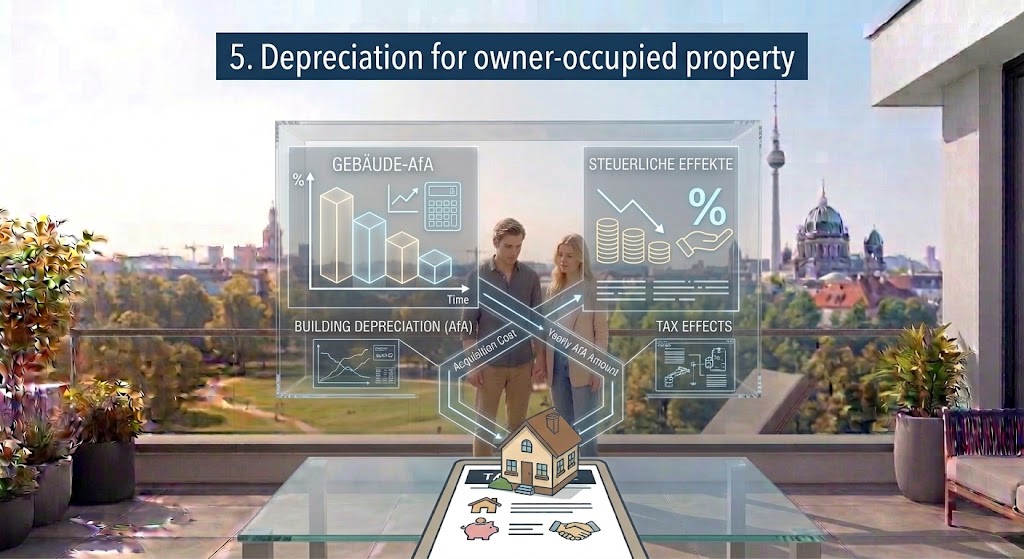
A privately occupied residential property does not normally generate depreciation deductions for ordinary income tax purposes.
The fact that a building physically loses value over time does not, on its own, create a tax deduction for a private owner-occupier.
6. Basic Tax Principles for Rental Property
The situation changes significantly when the property is rented.
Rental income is generally taxable as income from letting and leasing.
Expenses economically connected with earning this rental income may then qualify as income-related expenses.
7. Deductible Expenses for Rental Property
Depending on the individual case, deductible expenses may include:
loan interest,
property management costs,
certain insurance premiums,
property tax,
non-recoverable service charges,
repairs and maintenance,
travel expenses relating to the property,
costs of advertising for tenants,
and professional expenses directly related to the rental activity.
The decisive factor is the connection between the expense and the generation of rental income.
8. Allocation of the Purchase Price Between Building and Land
For tax purposes, the total purchase price of a developed property must generally be divided between:
the land,
and the building.
Land itself cannot normally be depreciated.
The building portion, however, may form the basis for depreciation.
The Federal Ministry of Finance provides a calculation tool for allocating the purchase price between land and building.
9. Building Depreciation – AfA
The building portion of a rental property can generally be depreciated over time.
The applicable depreciation rate depends, among other things, on the age and type of building and, in certain situations, on specific statutory rules for newer buildings.
This depreciation is particularly interesting because it creates a tax expense without requiring the owner to make a corresponding cash payment each year.
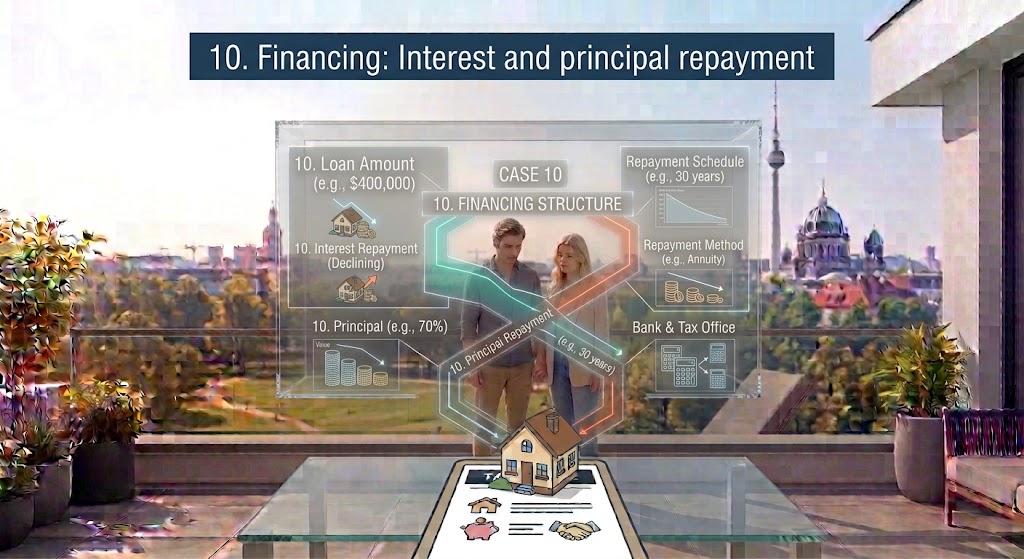
10. Financing: Interest and Principal Repayment
The distinction between interest and principal repayment is essential.
Loan interest relating to the rented property can generally qualify as an income-related expense.
Principal repayment cannot.
For example, if a mortgage payment consists of €1,300 interest and €800 principal repayment, only the interest component is normally relevant as an income-related expense.
The repayment reduces the outstanding debt but does not directly reduce taxable rental income.
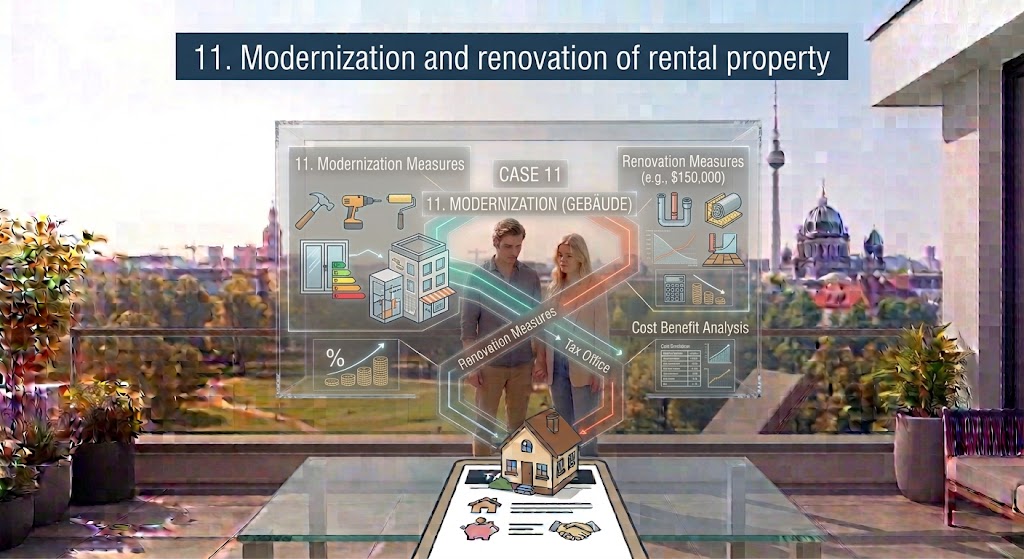
11. Modernization and Renovation of Rental Property
Renovation expenses can be treated differently depending on the nature and timing of the work.
A particularly important rule applies during the first three years after acquisition.
If qualifying repair and modernization costs incurred within this period exceed 15% of the acquisition cost of the building, excluding VAT, they may be treated as acquisition-related production costs.
In that case, the expenditure cannot normally be deducted immediately but must instead be depreciated together with the building.
The 15% threshold should therefore be considered before starting extensive renovation work.
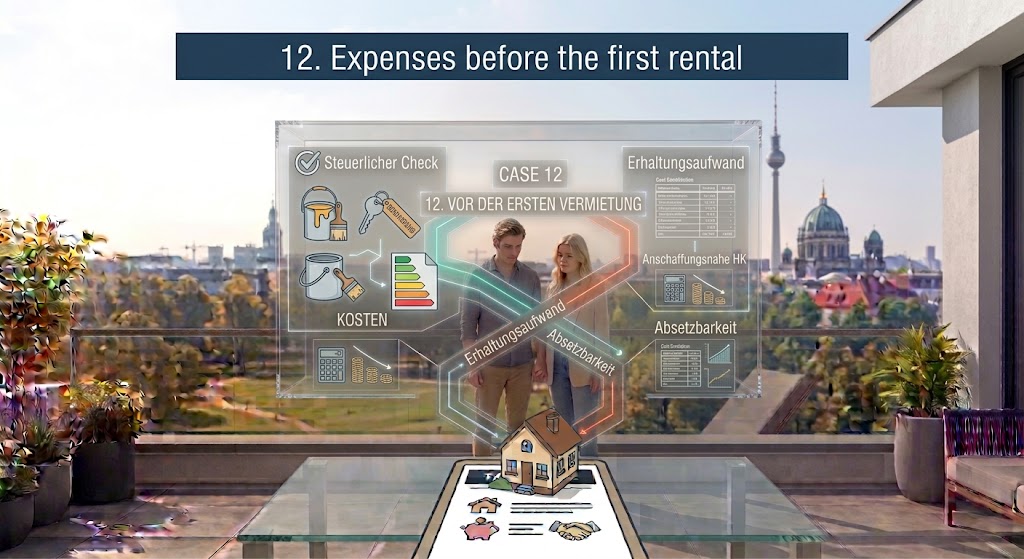
12. Expenses Before the First Rental
Expenses may potentially be tax-relevant even before the first tenant moves in.
For example, interest, advertising costs or certain renovation costs may already have a connection with future rental income.
However, the intention to rent the property should be clearly identifiable and, where necessary, verifiable.
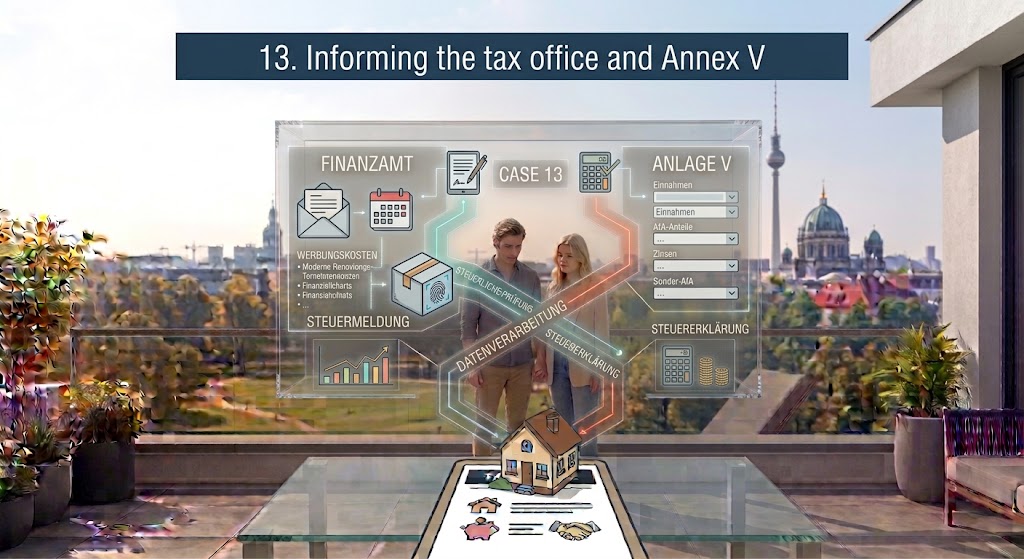
13. Informing the Tax Office and Annex V
Private landlords do not normally have to register a separate rental business merely because they rent out one property.
Rental income and related expenses are generally reported as part of the annual income tax return, in particular through the relevant rental income schedule, commonly known as Anlage V.
Depending on the circumstances, advance tax payments or wage tax allowances may also become relevant.
14. Tax Losses from Rental Income
Rental property can generate a tax loss even where the owner is building up assets economically.
For example:
Annual rent: €21,600
Loan interest: €15,750
Depreciation: €8,800
Other deductible expenses: €2,300
This results in total expenses of €26,850 and therefore a tax loss of €5,250.
This tax loss does not automatically mean that the owner has suffered an economic loss of €5,250.
Depreciation is a tax expense without an equivalent annual cash payment, while principal repayment is a cash payment but is not normally deductible.
Tax calculation and cash-flow calculation therefore need to be viewed separately.
15. Partial Owner-Occupation and Partial Rental
If part of a property is occupied by the owner and another part is rented, expenses generally have to be allocated.
Costs that relate exclusively to the rented portion may usually be assigned directly to it.
Costs relating to the entire property often have to be divided according to an appropriate allocation method.
A clear financing structure can therefore be particularly important.
16. Change of Use Between Owner-Occupation and Rental
A property may also change its use over time.
For example:
the owner initially lives in the property and later rents it out,
or the property is first rented and later used by the owner.
Such changes can affect depreciation, interest deductions and the treatment of renovation costs.
The tax consequences should therefore be reviewed at the time of the change of use.
17. Practical Example with Financing and Depreciation
Assume a property is purchased for €500,000 and €450,000 is financed by a bank.
If, after a proper allocation, €400,000 of the purchase price is attributable to the building and the applicable annual depreciation rate is 2%, annual depreciation would amount to €8,000 before considering additional acquisition costs attributable to the building.
If annual loan interest amounts to €15,750, the combination of interest and depreciation alone could already create significant tax-deductible expenses.
However, the actual tax result always depends on the individual property and the owner’s personal circumstances.
18. Conclusion
Owner-occupied and rental properties should not be treated as if they were tax-equivalent.
For owner-occupiers, tax benefits are generally limited to specific statutory incentives.
For landlords, financing interest, depreciation and numerous property-related expenses can become relevant.
The intended use of the property should therefore be considered not only from a financing perspective but also from a tax perspective before or immediately after the purchase.
Note: This article provides general information only and does not constitute individual tax or legal advice. The tax treatment of a property depends on the specific property, financing structure, use and personal circumstances of the owner.
Free Consultation
Have questions about entering the German market? Request a free consultation.
Request Free Consultation