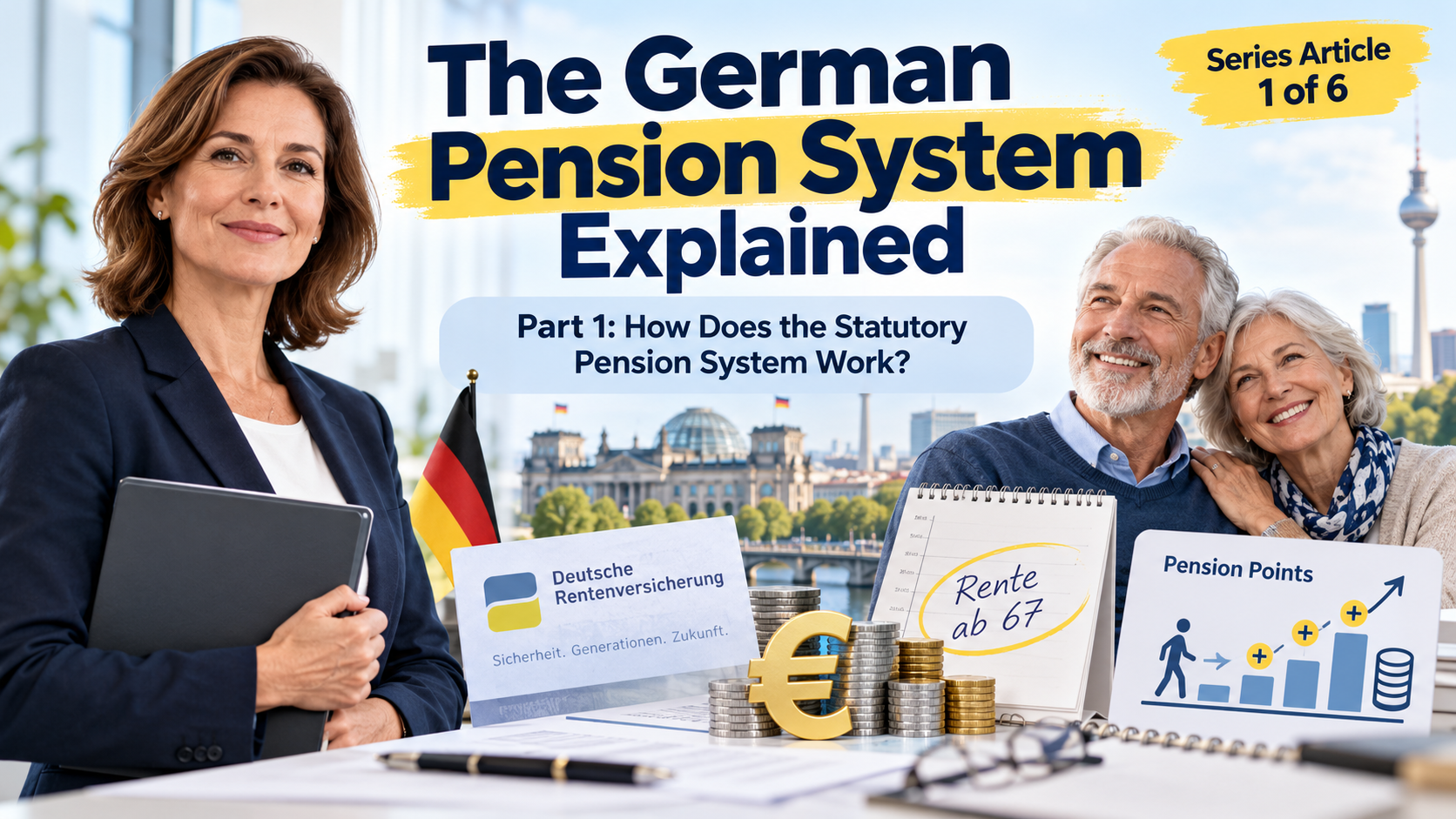
Part 1: How Does the Statutory Pension System Work?
For many people, the German pension system can initially be difficult to understand. Employees see a pension insurance deduction on their payslip every month, which can easily create the impression that this money is being saved specifically for their own future retirement.
However, this is not how the German pension system works.
Germany’s statutory pension insurance is primarily based on a pay-as-you-go system. The contributions paid today by employees and employers are largely used to finance the pensions of today’s retirees.
This does not mean that your own contributions are lost. Your insurance periods and the amount of your insured income create individual pension entitlements that will later be used to calculate your pension.

1. Statutory Pension Insurance Is Not a Personal Savings Account
A simple example helps explain the principle:
Mr A works in Germany today and pays contributions into the statutory pension insurance system together with his employer.
These contributions are not invested in shares or securities specifically for Mr A, nor are they placed in a personal savings account for him.
Instead, the contributions flow into the pension system and are used, among other things, to finance the pensions of people who are already retired today.
When Mr A later becomes a pensioner himself, his pension will in turn be financed mainly by the contributions of the working population at that time.
This principle is often referred to as the intergenerational contract.
However, this is not a personal contract between two generations. It is a way of describing the basic principle of Germany’s pay-as-you-go pension system.

2. Who Pays Contributions to the Pension System?
The statutory pension insurance system is primarily structured as a compulsory insurance scheme for employees.
Certain groups of self-employed persons and other categories of people may also be subject to compulsory pension insurance.
In a standard employment relationship, the employer and employee generally share the pension insurance contribution.
In 2026, the contribution rate for statutory pension insurance is 18.6% of the employee’s contributory gross income.
In a standard employment relationship, this is generally divided equally:
Employee: 9.3%
Employer: 9.3%
However, contributions are only charged up to the statutory contribution assessment ceiling.
In 2026, this ceiling is EUR 8,450 per month or EUR 101,400 per year.
Income above this threshold does not lead to additional statutory pension insurance contributions.
Example
An employee earns EUR 4,000 gross per month.
The total pension insurance contribution is:
EUR 4,000 × 18.6% = EUR 744
Of this amount, the employee generally pays:
EUR 372
and the employer pays:
EUR 372
A total of EUR 744 therefore flows into the statutory pension insurance system each month.
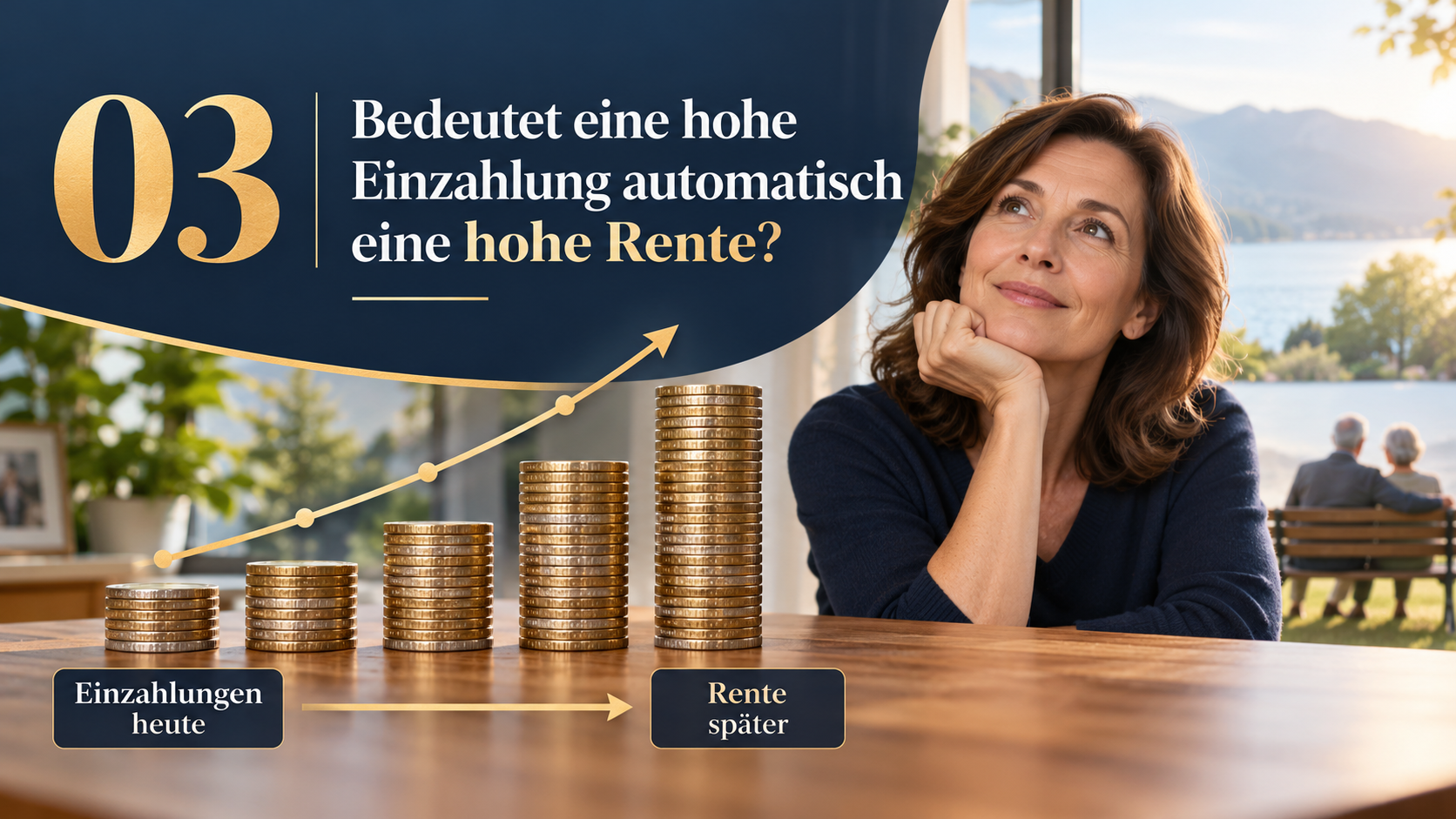
3. Does Paying More Automatically Mean Receiving a Higher Pension?
In principle:
The longer a person is insured and the higher their insured earnings are during their working life, the higher their pension entitlement will generally be.
However, the pension is not simply calculated by adding up all the euros paid into the system.
Instead, the German pension system uses so-called earnings points, commonly referred to as pension points.
The basic principle is relatively simple:
If an employee earns approximately the average insured annual income in Germany in a given year, they receive approximately one pension point for that year.
Someone who earns significantly less receives less than one pension point.
Someone who earns more may receive more than one pension point, although only up to the statutory contribution assessment ceiling.
For 2026, the average annual income used for these calculations is EUR 51,944.
We will explain in detail in Part 2 of this series how these pension points are converted into an actual monthly pension.
4. What Is One Pension Point Worth?
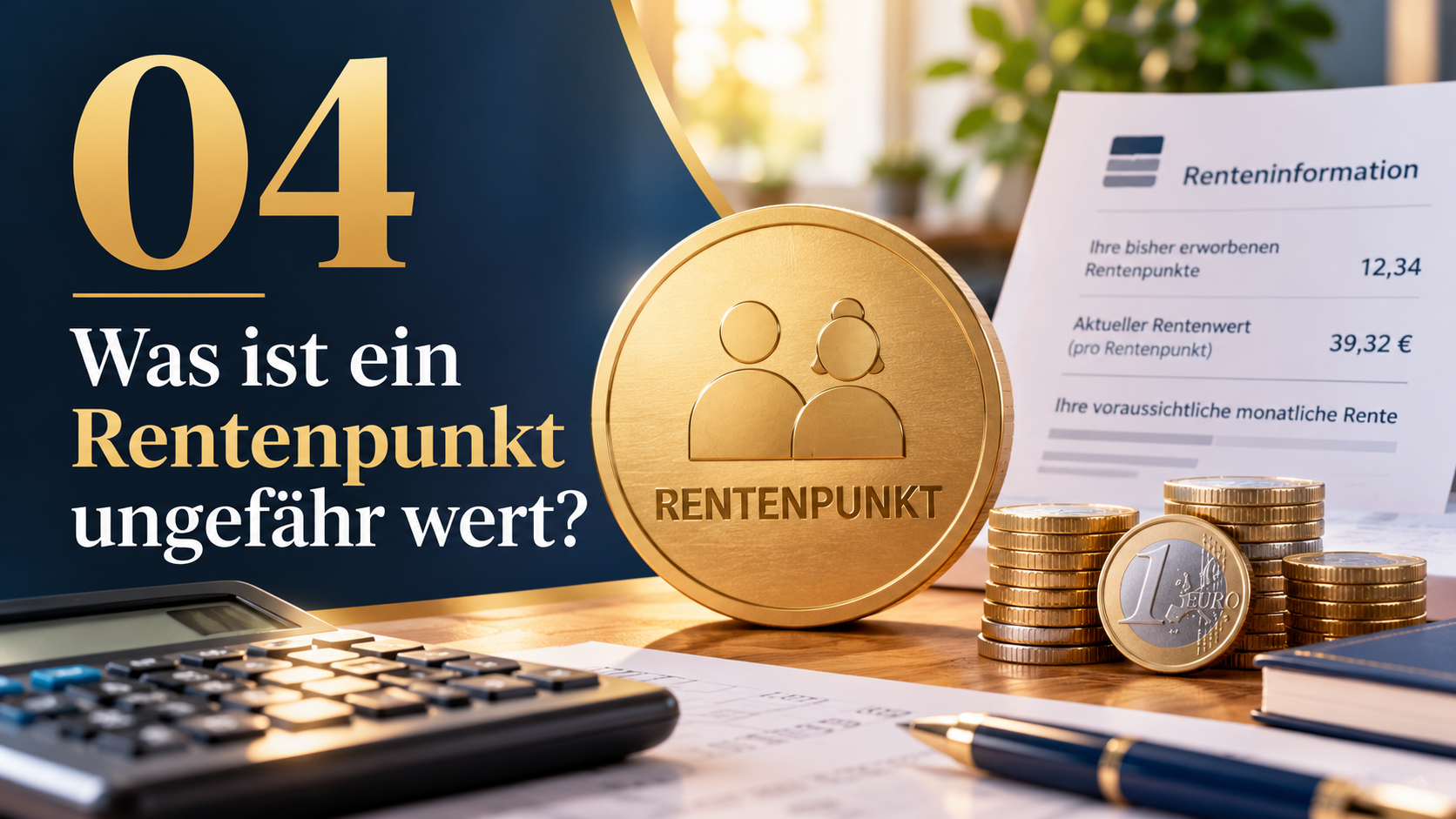
As of 1 July 2026, the current pension value is EUR 42.52 per month.
In simplified terms, this means that one pension point currently corresponds to approximately:
EUR 42.52 in monthly gross pension
for a standard old-age pension, before deductions such as health insurance, long-term care insurance and, where applicable, income tax.
For example, a person who has accumulated 40 pension points over their working life would receive approximately:
40 × EUR 42.52 = EUR 1,700.80
in monthly gross pension.
This is only a simplified example. The actual pension calculation may include additional factors.

5. At What Age Can You Receive a German Old-Age Pension?
A common misconception is that everyone automatically receives a pension at the age of 65.
Germany is gradually increasing the statutory retirement age.
For people born in 1964 or later, the standard retirement age is generally 67.
Different transitional rules apply to older birth cohorts.
However, age alone is not enough to qualify for a pension. Certain minimum insurance periods must also be fulfilled.
For the standard old-age pension, a minimum qualifying period of generally five years is required.
There are also other types of old-age pensions with different conditions, for example for people with long or particularly long insurance histories.
We will look at these differences in more detail in a later article.

6. Statutory Pension Insurance Does More Than Pay Old-Age Pensions
Germany’s statutory pension insurance system provides more than just retirement income.
Its most important benefits include:
Old-age pensions
These are the best-known form of statutory pension benefit.
Reduced earning capacity pensions
People who are permanently unable to work, or can only work to a limited extent for health reasons, may be entitled to a reduced earning capacity pension under certain conditions.
Survivors’ pensions
After the death of an insured person, a spouse, registered partner or child may, under certain conditions, be entitled to benefits.
Rehabilitation benefits
The pension insurance system may also finance medical or occupational rehabilitation measures under certain conditions.
The principle behind this is to preserve or restore a person’s ability to work wherever possible.
Germany’s statutory pension insurance is therefore not only a retirement system but also an important part of the broader social security system.
7. How Is the Pension System Financed?
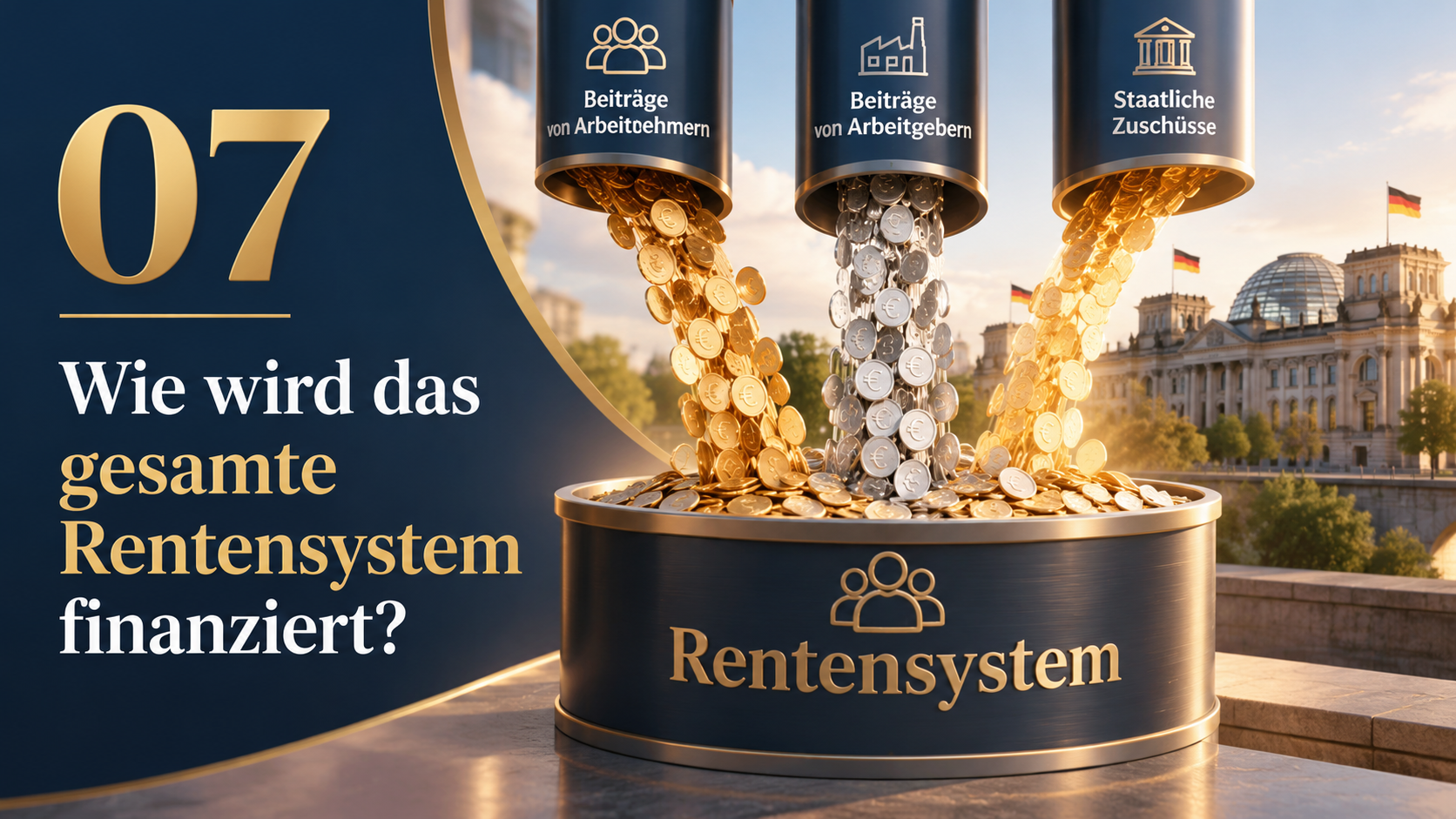
The statutory pension system is not financed solely by contributions from employees and employers.
The federal government also provides substantial funding from the national budget.
This is necessary, among other reasons, because the pension system also performs certain social policy functions that are not based exclusively on individual contribution payments.
The German pension system therefore relies on a combination of:
employee contributions, employer contributions and government funding.
8. Why Is Pension Financing Constantly Being Discussed?
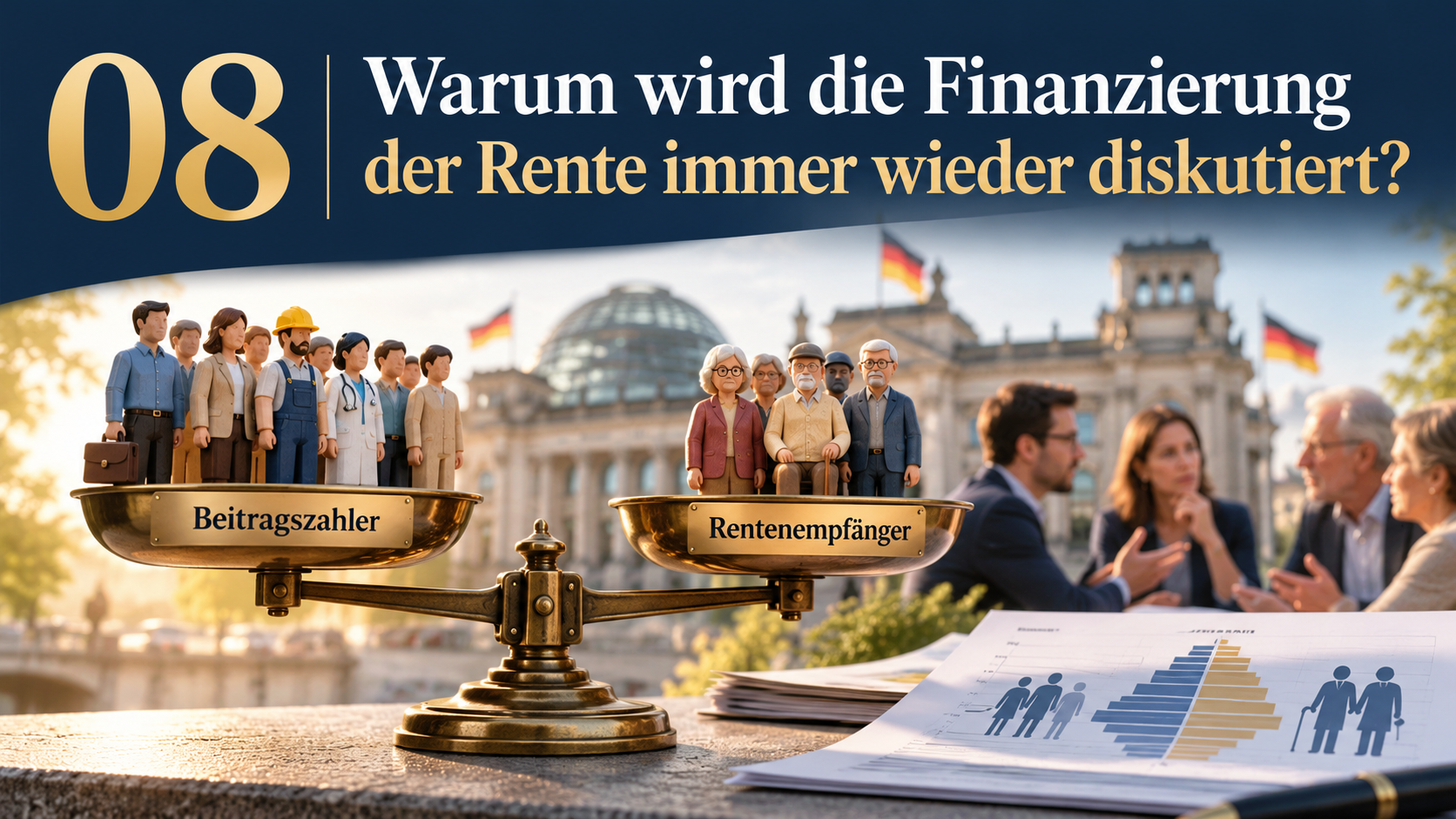
A pay-as-you-go pension system works particularly well when a large number of employees are paying contributions while a comparatively smaller number of people are receiving pensions.
Germany, however, is facing a demographic challenge.
People are living longer, while at the same time the large baby-boomer generation is increasingly reaching retirement age.
As a result, the relationship between contributors and pension recipients is changing.
This is why political discussions repeatedly focus on questions such as:
How high should pension contributions be in the future?
At what age should people retire?
How high should the general pension level be?
How much should the federal government contribute?
What additional forms of retirement provision will be necessary?
Despite these challenges, the statutory pension remains the most important pillar of retirement provision in Germany.

9. Is the Statutory Pension Alone Enough?
There is no single answer to this question.
A person who has worked and paid contributions for many decades and earned a relatively good income may receive a significantly higher pension than someone who worked only a few years, had long interruptions in their employment history or earned a low income for most of their working life.
Retirement planning should therefore not begin only shortly before retirement.
In addition to the statutory pension system, two other forms of retirement provision are particularly important:
occupational pension schemes and
private retirement provision.
For many people, the statutory pension is the foundation of retirement income, but it does not necessarily have to be the only source of income in old age.
10. How Can I Find Out How Much Pension I May Receive Later?
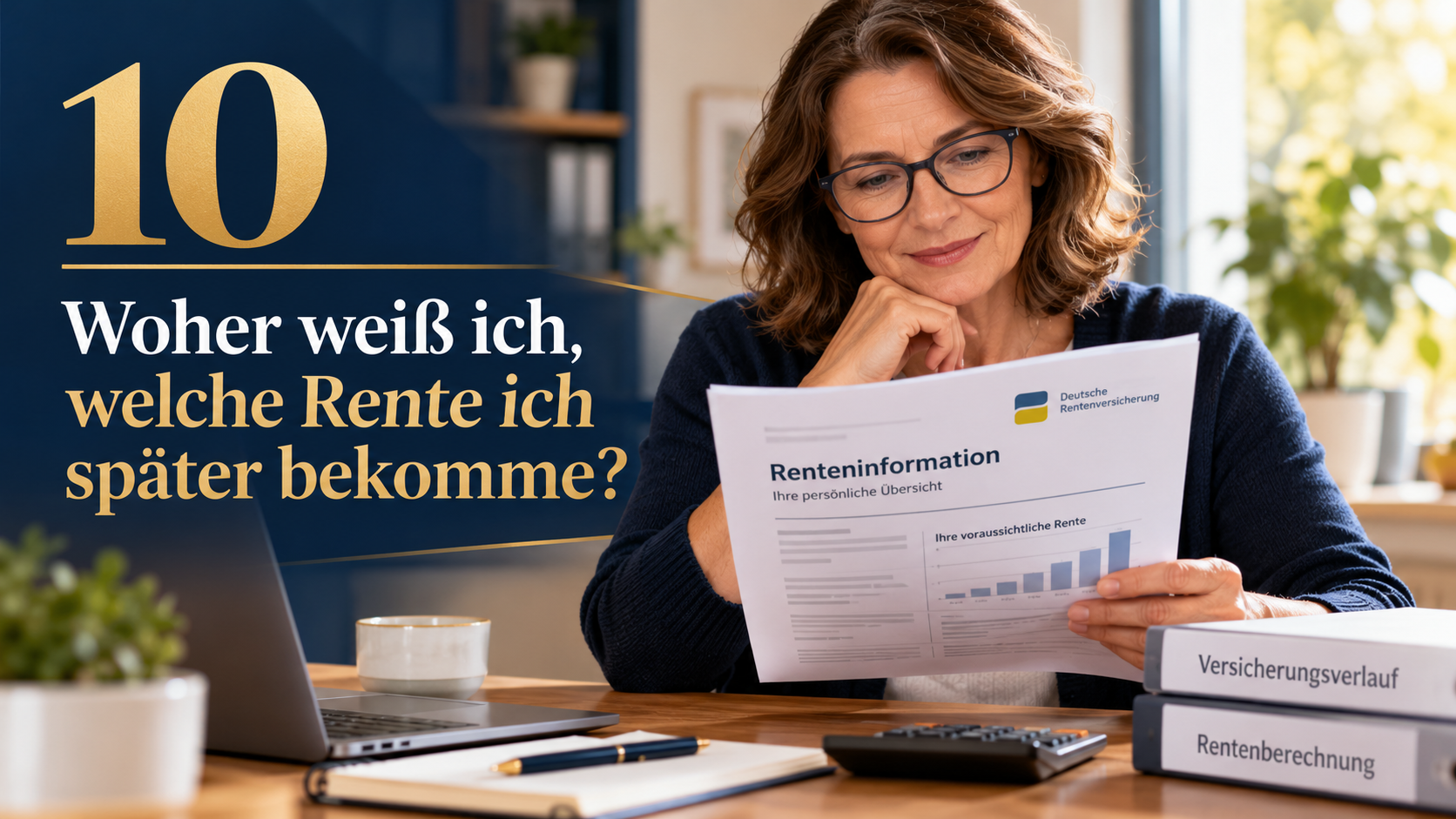
Insured persons regularly receive information from the German Pension Insurance system showing their pension entitlements acquired to date and an estimate of their possible future old-age pension.
One particularly important document is the insurance record.
It shows which pension-relevant periods are stored in the pension insurance system.
If, for example, previous periods of employment, child-rearing periods or other qualifying periods are missing, these issues should ideally not be clarified only shortly before retirement.
It can therefore be very important to review your pension insurance record at an early stage.
Conclusion: Germany’s Pension System Is Based on an Intergenerational Principle
The most important point to understand is:
Contributions to Germany’s statutory pension insurance are not saved in a personal account.
The working generation of today largely finances the pensions of today’s retirees.
In return, contributors acquire pension entitlements that are later calculated primarily on the basis of their insurance periods and the pension points earned during their working life.
The German pension system therefore combines individual pension entitlements with a solidarity-based pay-as-you-go financing model.
Once this basic principle is understood, the next important question is:
How much pension will I actually receive?
That is exactly what we will explain in Part 2 of our series “The German Pension System Explained.”
In the next article, we will use practical examples to show how pension points are earned, how insurance periods are counted and how these factors are used to calculate a monthly old-age pension.
Free Consultation
Have questions about entering the German market? Request a free consultation.
Request Free Consultation