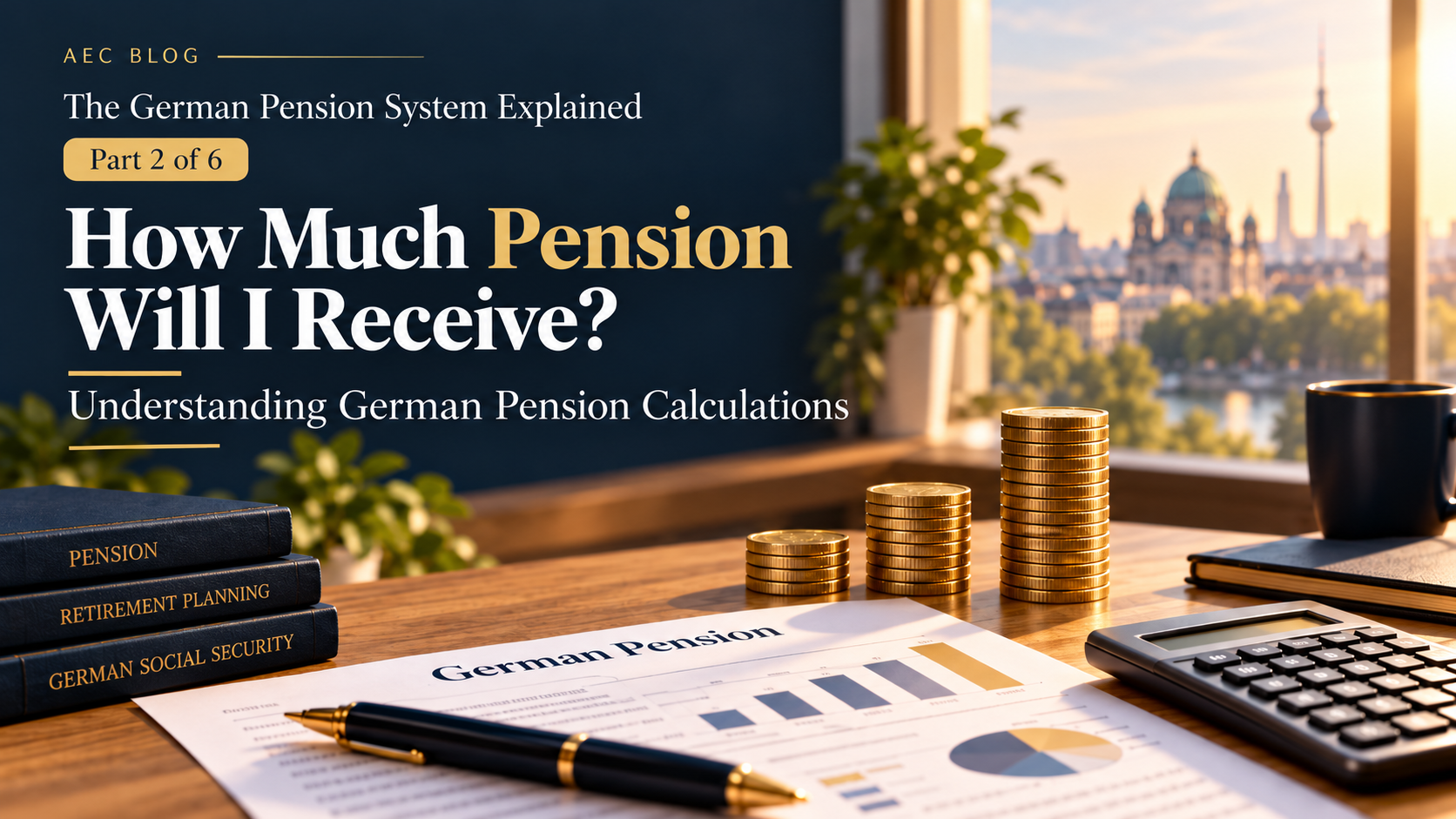
Part 2 of 6: How Much Pension Will I Receive?
In Part 1 of our series, we explained how Germany's statutory pension system works. Now we address a question that concerns almost every employee:
How much pension will I receive after working in Germany for 20, 30 or 40 years?
Your future pension is not simply the total amount of contributions you have paid. It depends primarily on your insured earnings, the pension points you accumulate and the age at which you start receiving your pension.
Using the official pension figures for 2026, we explain how the calculation works.
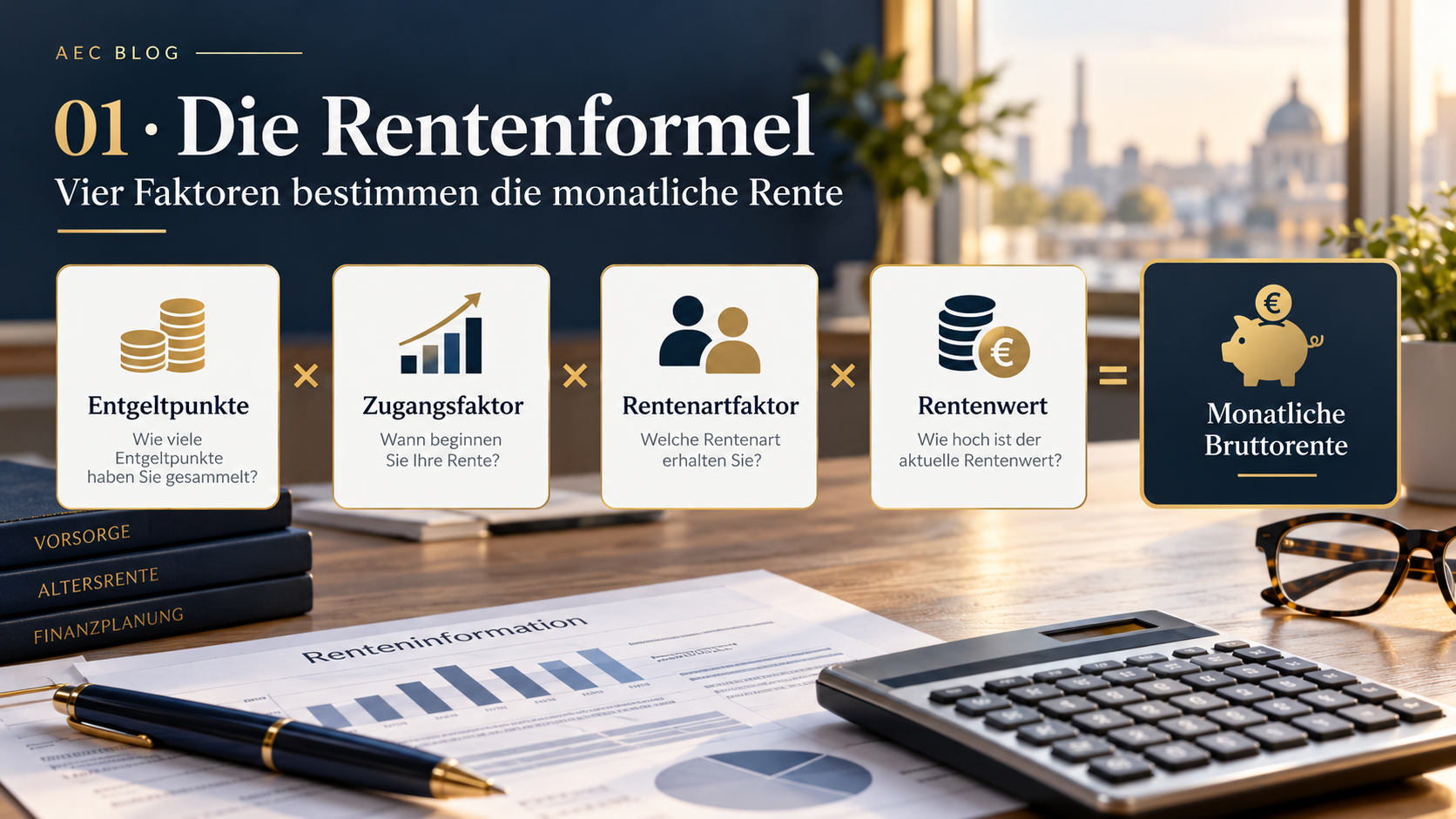
1. The Pension Formula – Four Factors Determine Your Monthly Pension
The German Pension Insurance system (Deutsche Rentenversicherung) uses the following formula:
Monthly gross pension = Earnings points × Access factor × Pension type factor × Current pension value
Earnings points (Entgeltpunkte) reflect your insured earnings during your working life.
The access factor takes into account whether you retire at the standard retirement age, earlier or later. The pension type factor depends on the type of pension and is 1.0 for a standard old-age pension.
The current pension value determines the monthly euro amount of one pension point.
Since 1 July 2026, one pension point has been worth €42.52 per month.
An employee with 30 pension points would therefore receive, assuming a standard old-age pension without deductions:
30 × €42.52 = €1,275.60 in monthly gross pension.
2. How Are Pension Points Earned?
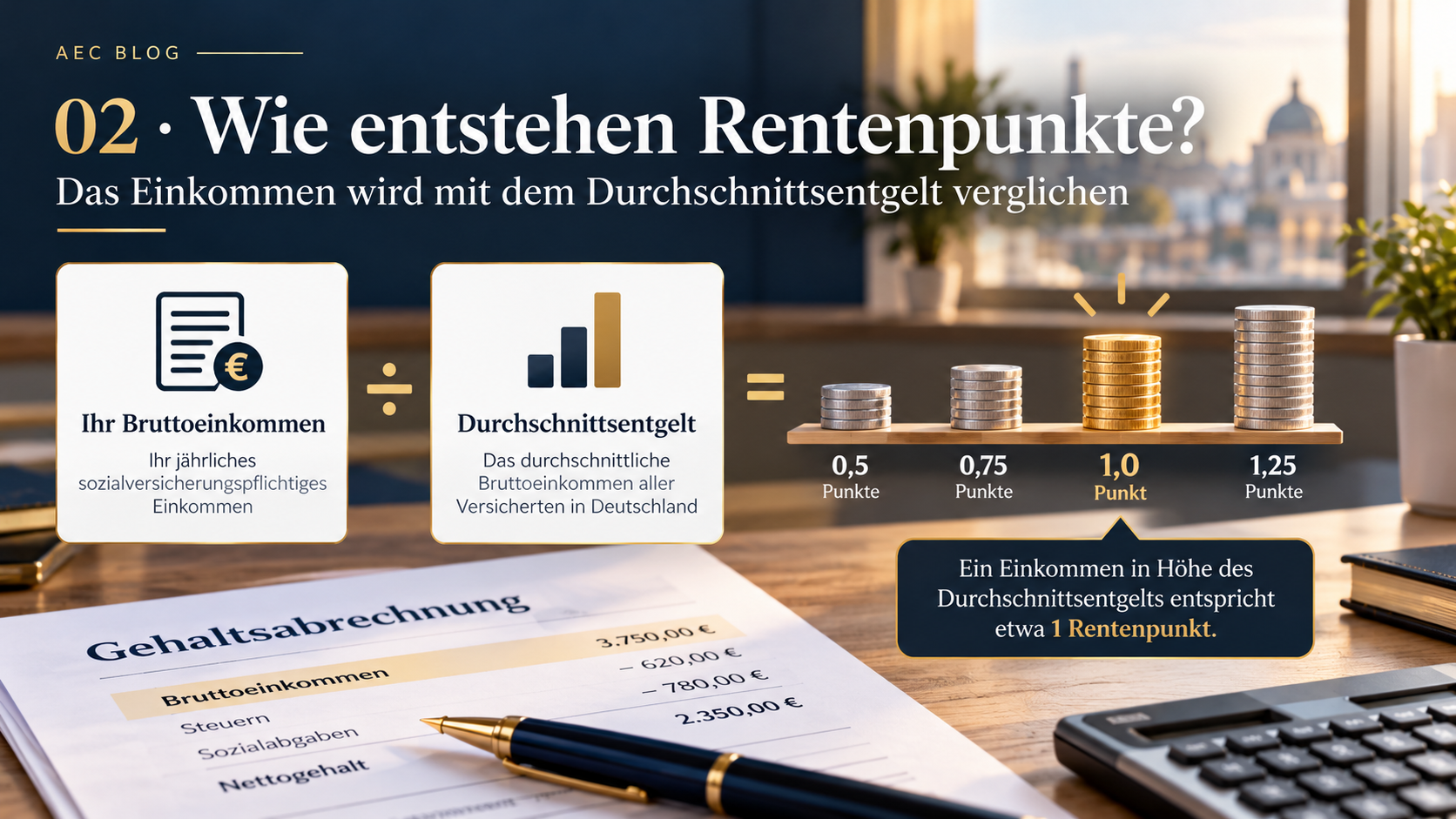
For each year of employment, your annual earnings subject to pension insurance contributions are compared with the average earnings figure used by the pension system.
The provisional average annual earnings for 2026 are €51,944.
Someone earning this amount receives approximately one pension point. Someone earning half that amount receives approximately half a point.
The basic calculation is:
Annual contributory earnings ÷ Average annual earnings = Pension points
Higher earnings can generate more pension points, but only up to the contribution assessment ceiling, which is €101,400 annually in 2026.
Because average earnings change every year, pension points are calculated separately for each calendar year.
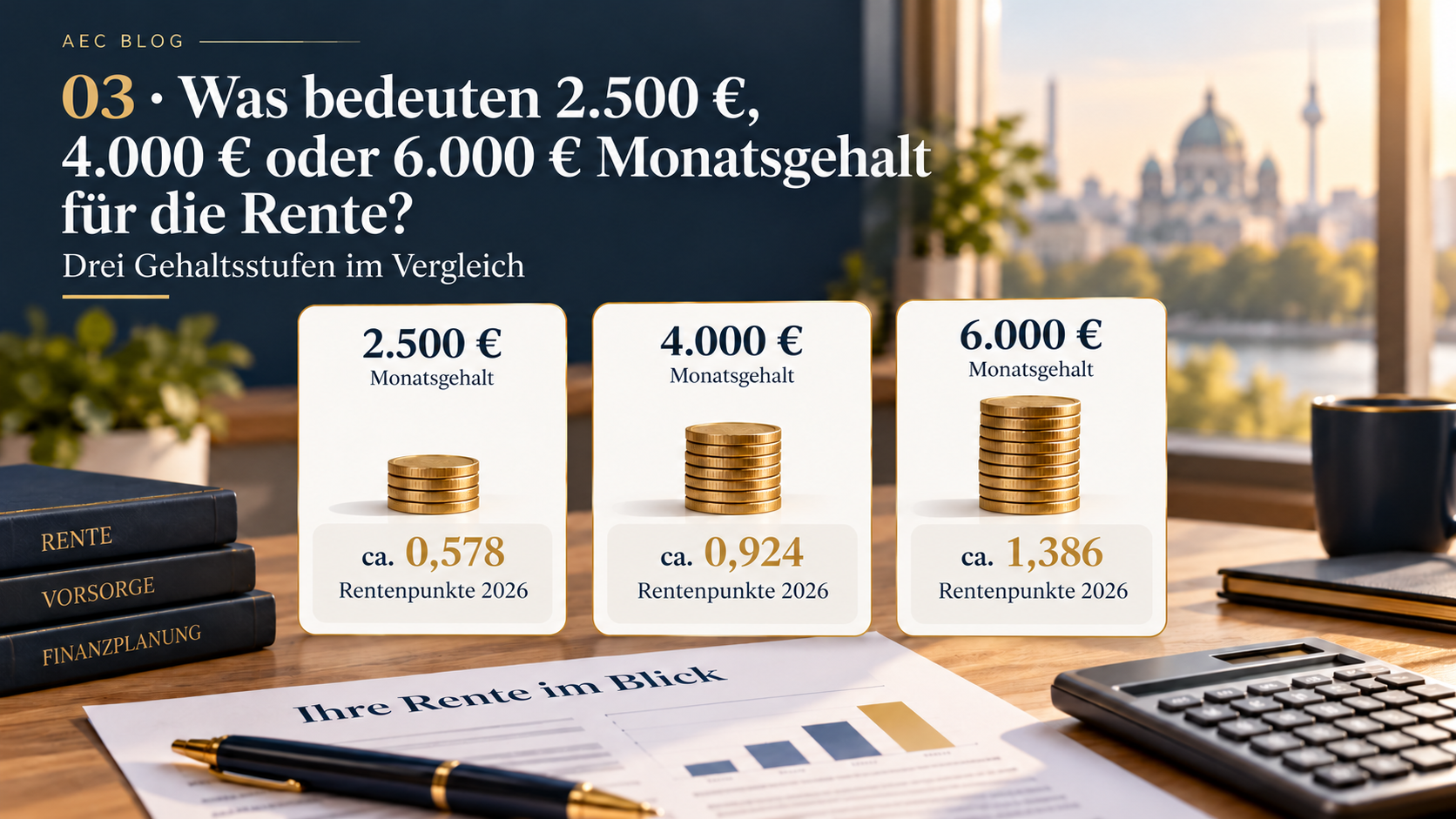
3. What Do Monthly Salaries of €2,500, €4,000 or €6,000 Mean for Your Pension?
Let us compare three employees working throughout 2026 in jobs subject to statutory pension insurance.
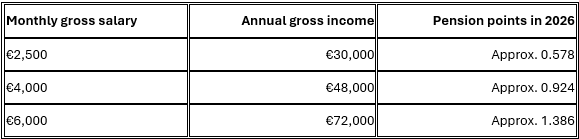
An employee earning €6,000 per month accumulates approximately 2.4 times as many pension points as someone earning €2,500.
However, salary is not the only deciding factor. The number of years spent contributing also has a significant influence on the future pension.
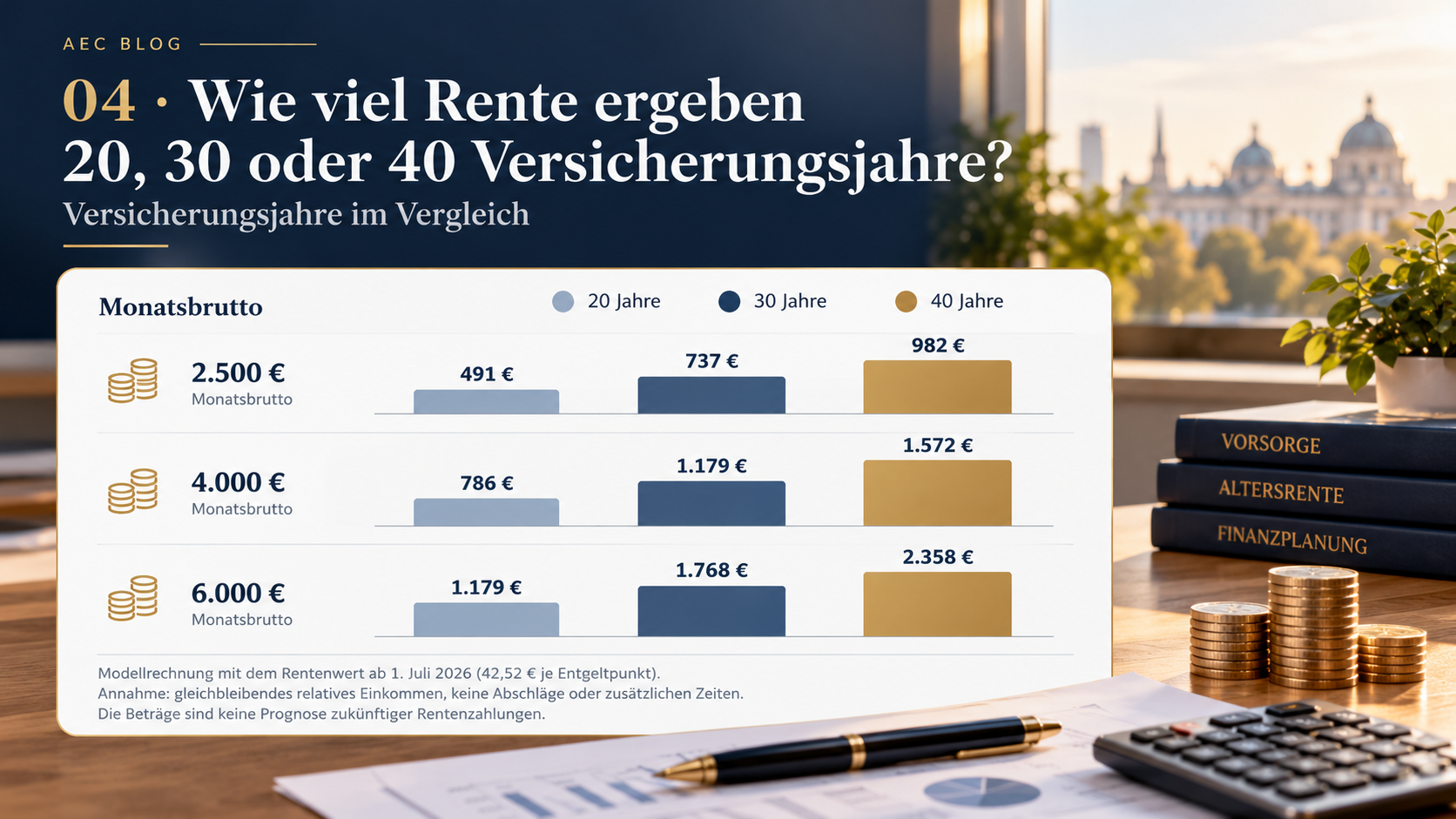
4. How Much Pension Will I Receive After 20, 30 or 40 Years?
For this simplified comparison, we assume that each employee maintains the same earnings level relative to the German average throughout their career.
We use the pension value applicable in 2026 and assume retirement without deductions.

All amounts are illustrative monthly gross pensions valued using the 2026 pension value. They are not forecasts of future pension payments.
The comparison shows that a good salary does not automatically produce a high pension if the insurance period is relatively short.
This is particularly important for people who move to Germany at the age of 35 or 45 and begin contributing to the pension system later in life.
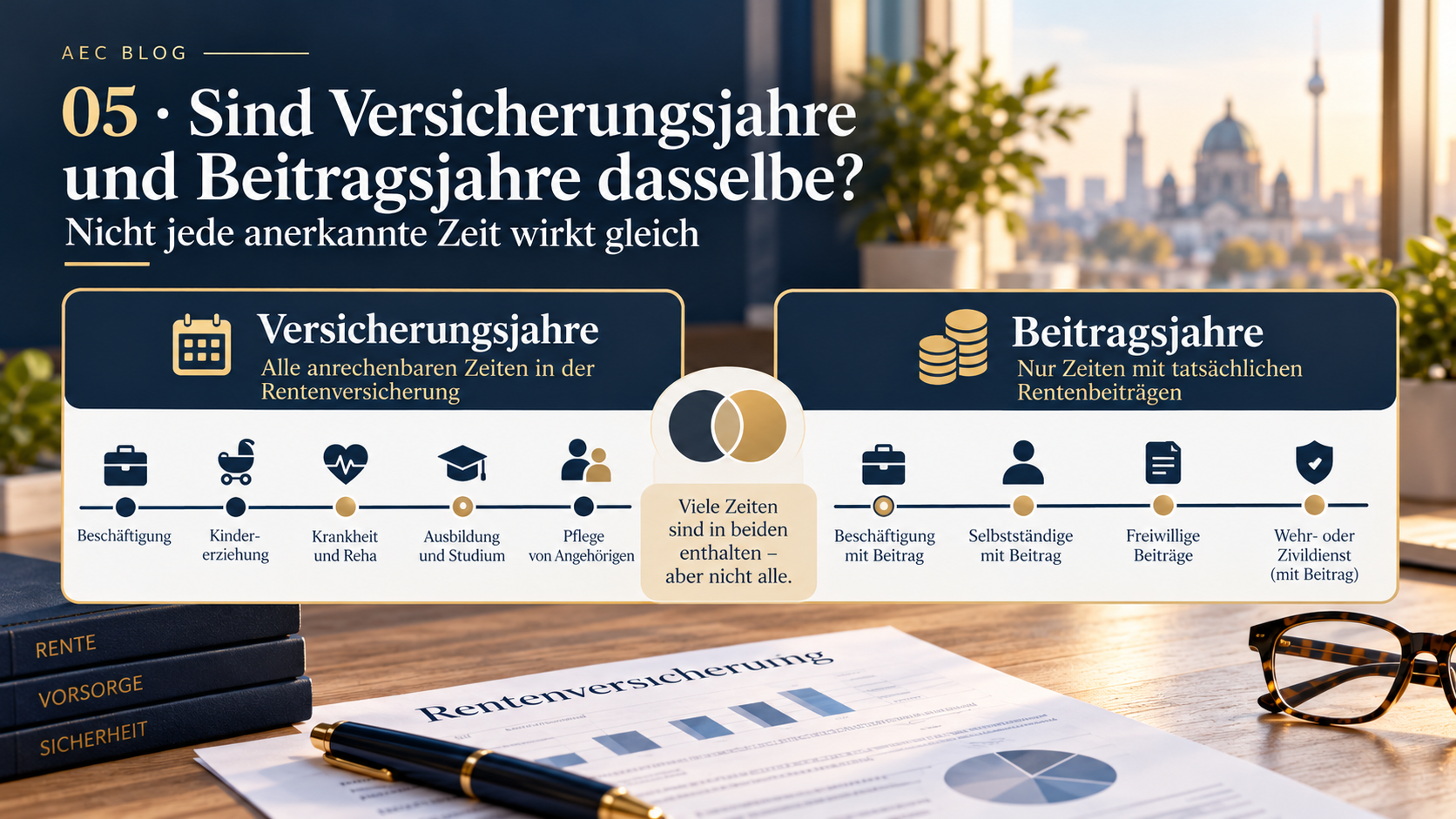
5. Are Insurance Years and Contribution Years the Same?
Not necessarily.
The pension system distinguishes between periods during which contributions were actually paid and other periods recognised under pension law.
Under certain conditions, these may include childcare, illness or education.
For a standard old-age pension, a qualifying period of at least five years is generally required.
Other types of old-age pension may require 35 or 45 qualifying years.
Importantly, not every recognised insurance period generates the same number of pension points as a year of employment at average earnings.
You should therefore check not only how many years are recorded but also how those periods have been assessed.
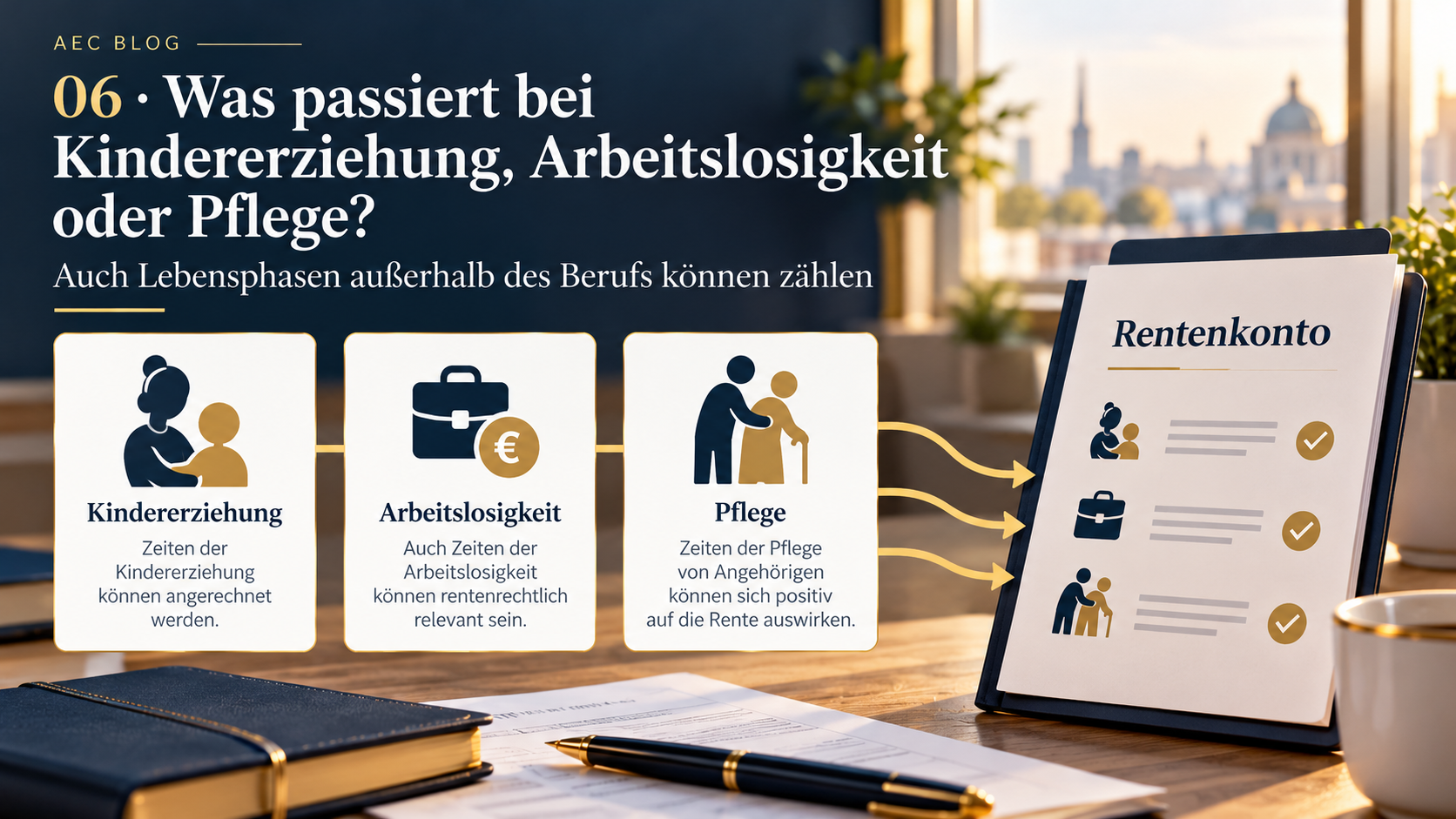
6. What Happens During Childcare, Unemployment or Family Care?
Not everyone works continuously throughout their career.
German pension law therefore recognises certain circumstances outside regular employment.
Childcare: For children born in or after 1992, up to three years of child-rearing periods may generally be recognised. Special provisions apply to children born earlier.
Unemployment: Pension contributions may be paid during periods in which unemployment benefits are received.
Family care: People caring for eligible individuals under the statutory conditions may acquire additional pension entitlements.
Illness and education: Certain periods of illness and education may also be relevant under pension law.
These periods should be correctly recorded in your personal pension insurance history.
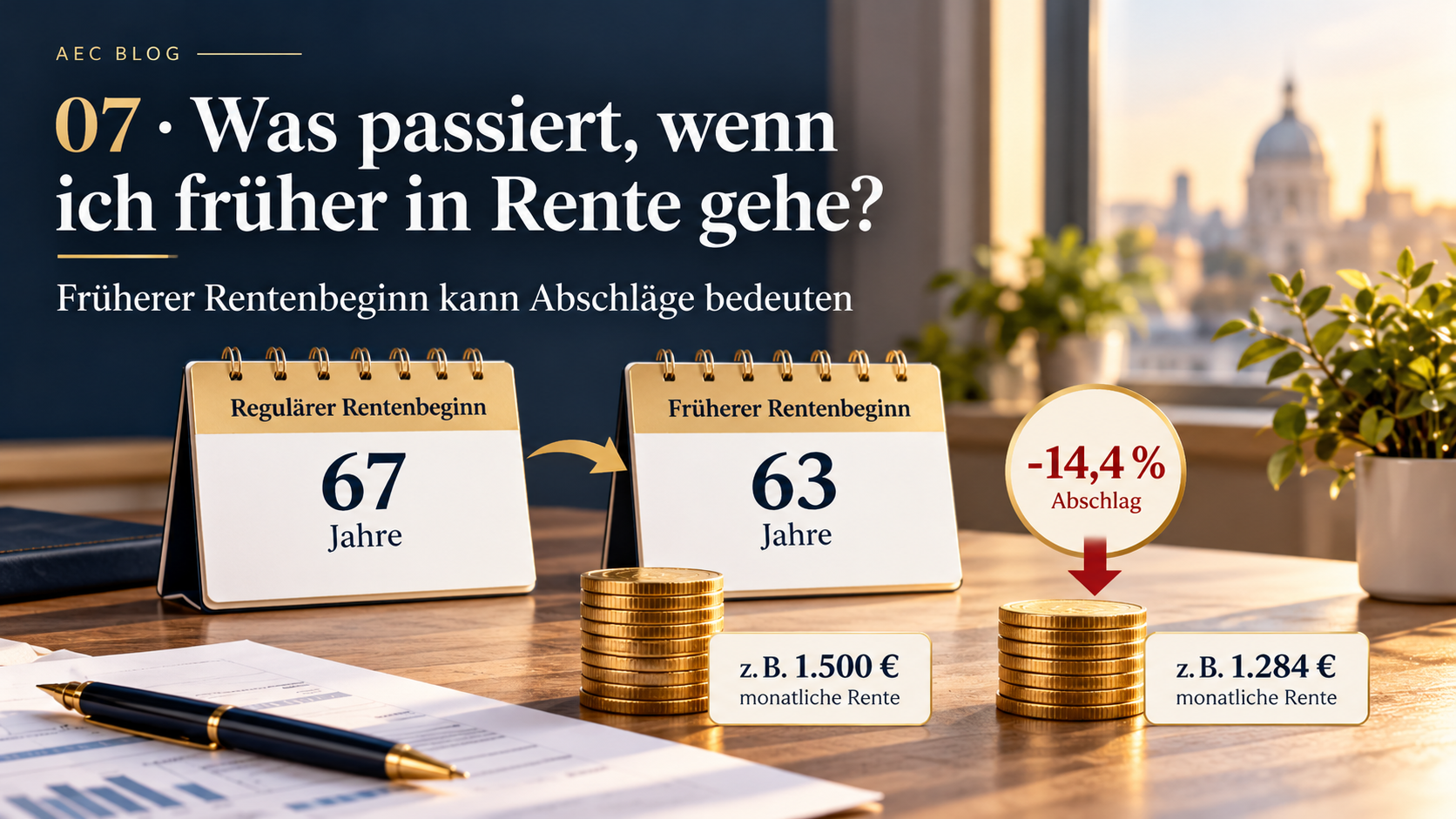
7. What Happens If I Retire Earlier?
Early retirement may be possible if the relevant legal requirements are met.
However, many early old-age pensions are reduced by 0.3% for each month before the applicable retirement age without deductions.
This corresponds to 3.6% per year.
For example, someone entitled to a gross pension of €1,500 could start an eligible pension 24 months earlier.
The reduction would be:
24 × 0.3% = 7.2%.
The resulting monthly gross pension would be €1,392.
This reduction generally remains permanent.
However, not everyone can choose an arbitrary early retirement date. Eligibility depends on the year of birth, insurance history and pension type.
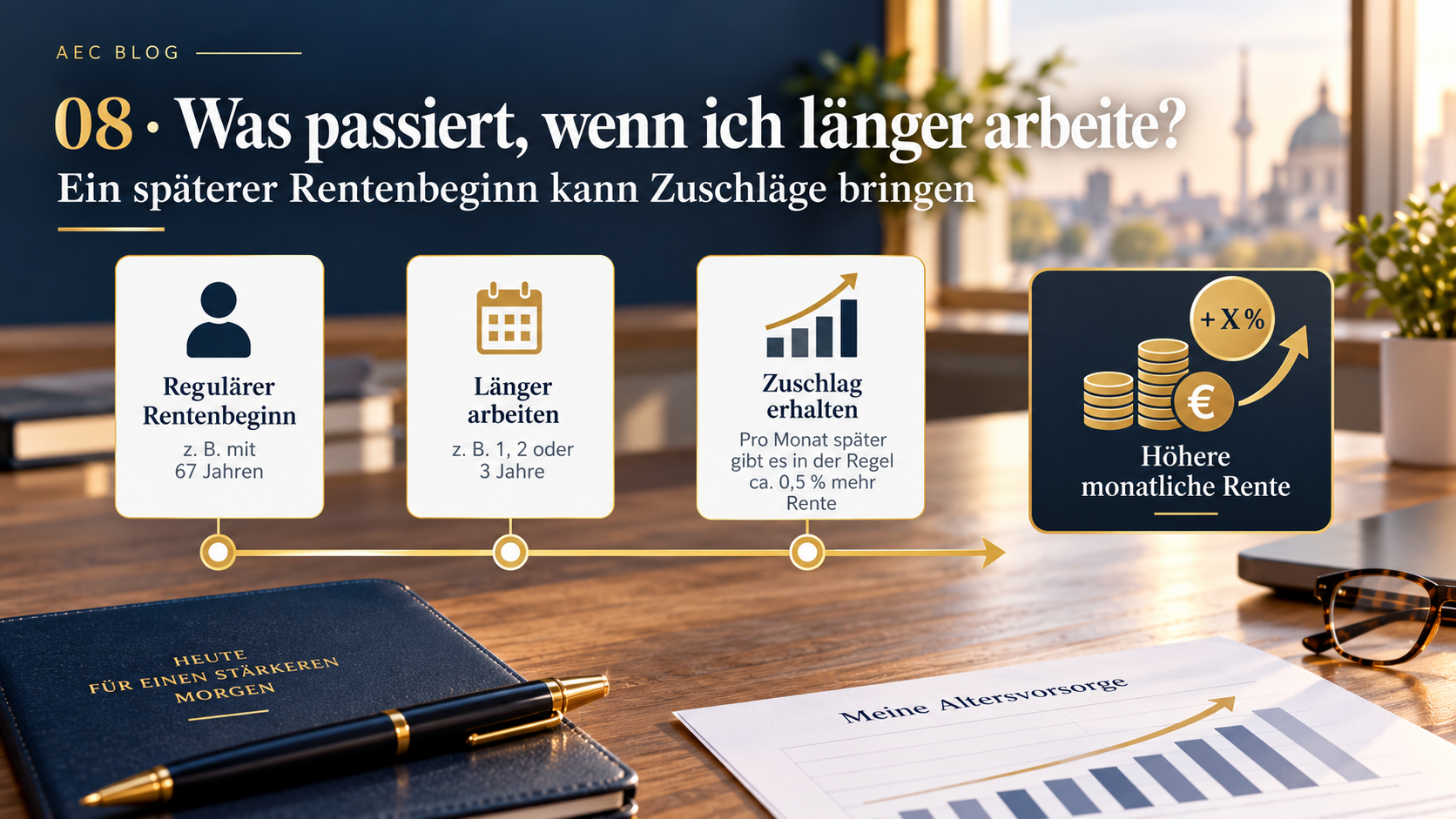
8. What Happens If I Work Longer?
Someone who postpones claiming their standard old-age pension beyond the statutory retirement age can receive an increase.
The supplement is generally 0.5% for each month of postponement.
Postponing retirement for one year therefore results in a 6% increase.
For a pension of €1,500, the calculation is:
€1,500 × 1.06 = €1,590 per month.
Additional contributions may further increase the pension.
Whether postponing retirement is worthwhile depends on personal circumstances, health and financial planning.
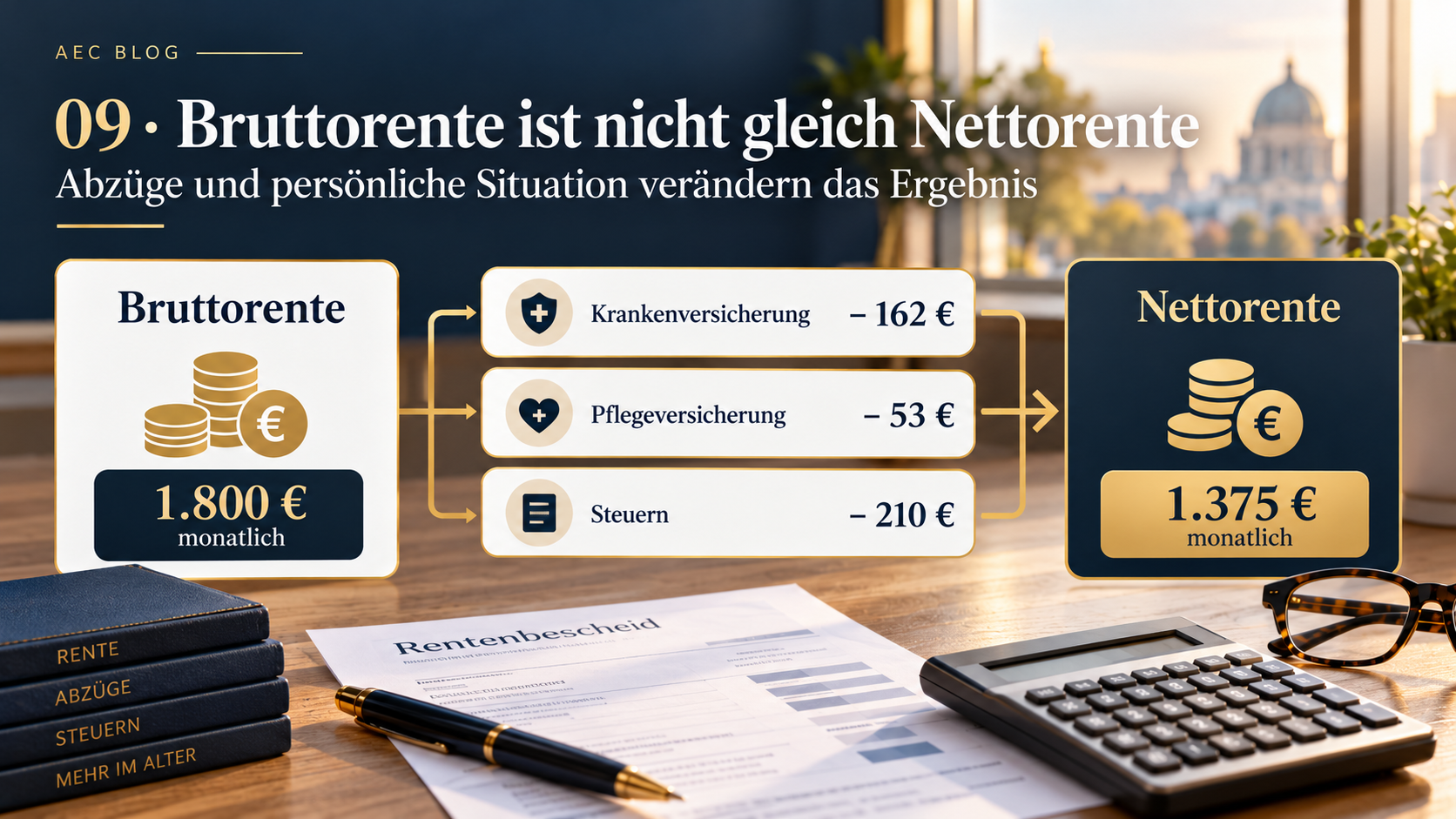
9. Gross Pension Is Not the Same as Net Pension
The statutory pension calculation initially produces a gross amount.
Health insurance, long-term care insurance and, where applicable, income tax must also be considered.
For pensioners covered by Germany's statutory pensioners' health insurance scheme, the pension insurance institution generally contributes towards health insurance costs under the applicable rules.
Pensioners generally pay their own long-term care insurance contributions.
Income tax depends on factors including the year retirement begins, other income and personal tax circumstances.
Two people receiving identical gross pensions may therefore have different disposable incomes.
Housing costs also matter: A pensioner who owns their home without a mortgage faces a different financial situation from someone paying high monthly rent.
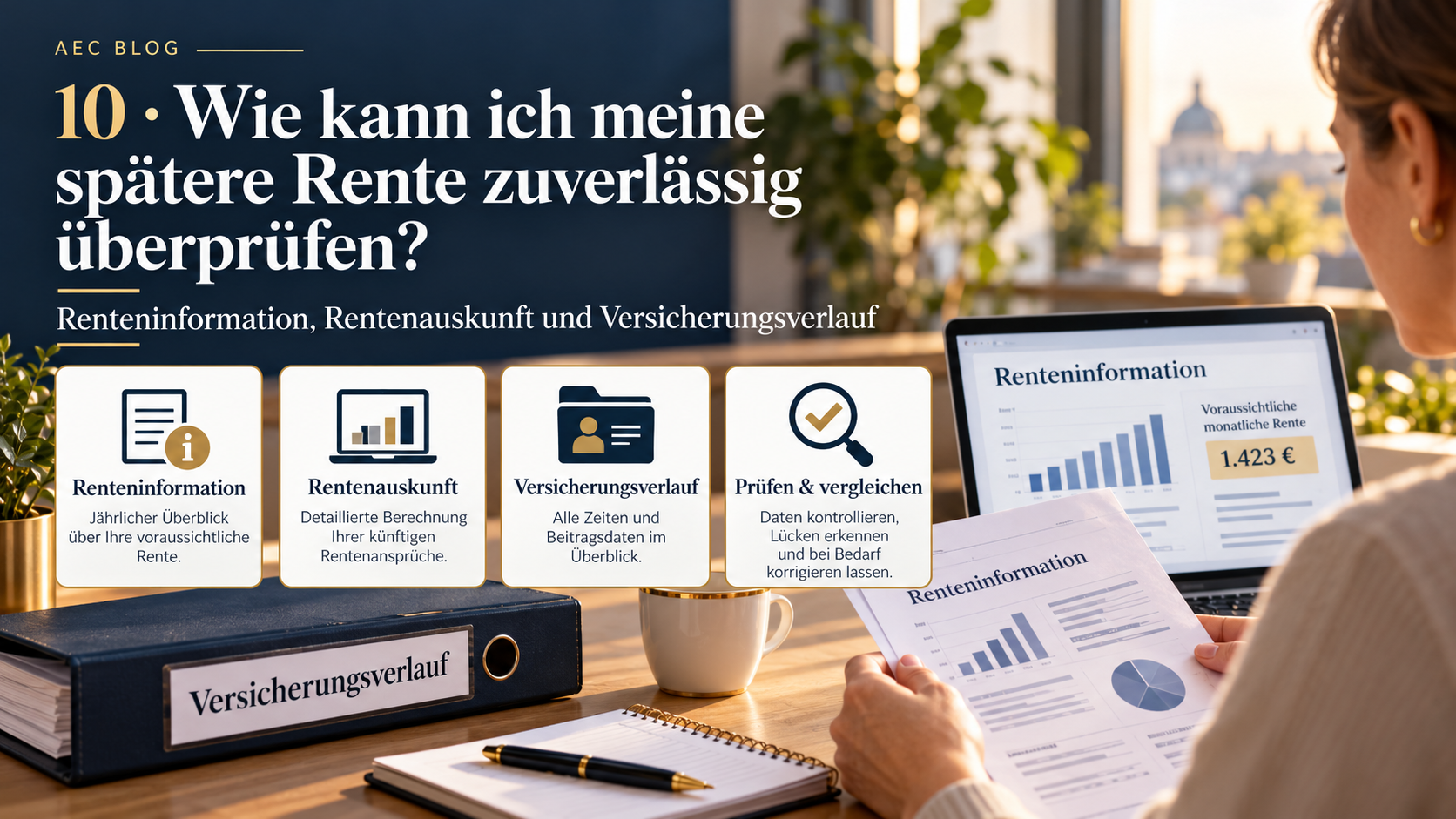
10. How Can I Check My Future Pension?
The German Pension Insurance system provides several important documents.
Pension information (Renteninformation): Shows accumulated pension entitlements and projections of future retirement income.
Detailed pension statement (Rentenauskunft): Provides more comprehensive information about pension entitlements.
Insurance record (Versicherungsverlauf): Lists recorded pension insurance periods.
A particularly important process is pension account clarification (Kontenklärung).
Missing or incorrect information about employment, childcare or other relevant periods can be reviewed and corrected.
Checking your records early can help prevent unexpected problems when applying for retirement benefits.
Conclusion: Earnings, Insurance Periods and Retirement Age Matter
Your statutory pension depends primarily on three questions:
How many pension points have I earned? How long have I been insured? And when will I start receiving my pension?
A high salary alone does not guarantee a high pension. Likewise, many years of employment at low earnings may not provide sufficient retirement income.
Reviewing your pension entitlements early can help you plan additional retirement provision.
Coming Next – Part 3: Pension Entitlements and International Employment Histories
What happens if someone first works in South Korea or another country and later moves to Germany?
Can insurance periods from different countries be taken into account? Is it possible to receive pensions from several countries?
We will answer these questions in Part 3 of our six-part series, "The German Pension System Explained."
Disclaimer: The calculations are for general information only and do not replace an individual pension statement. Calculation figures refer to 2026.
Free Consultation
Have questions about entering the German market? Request a free consultation.
Request Free Consultation