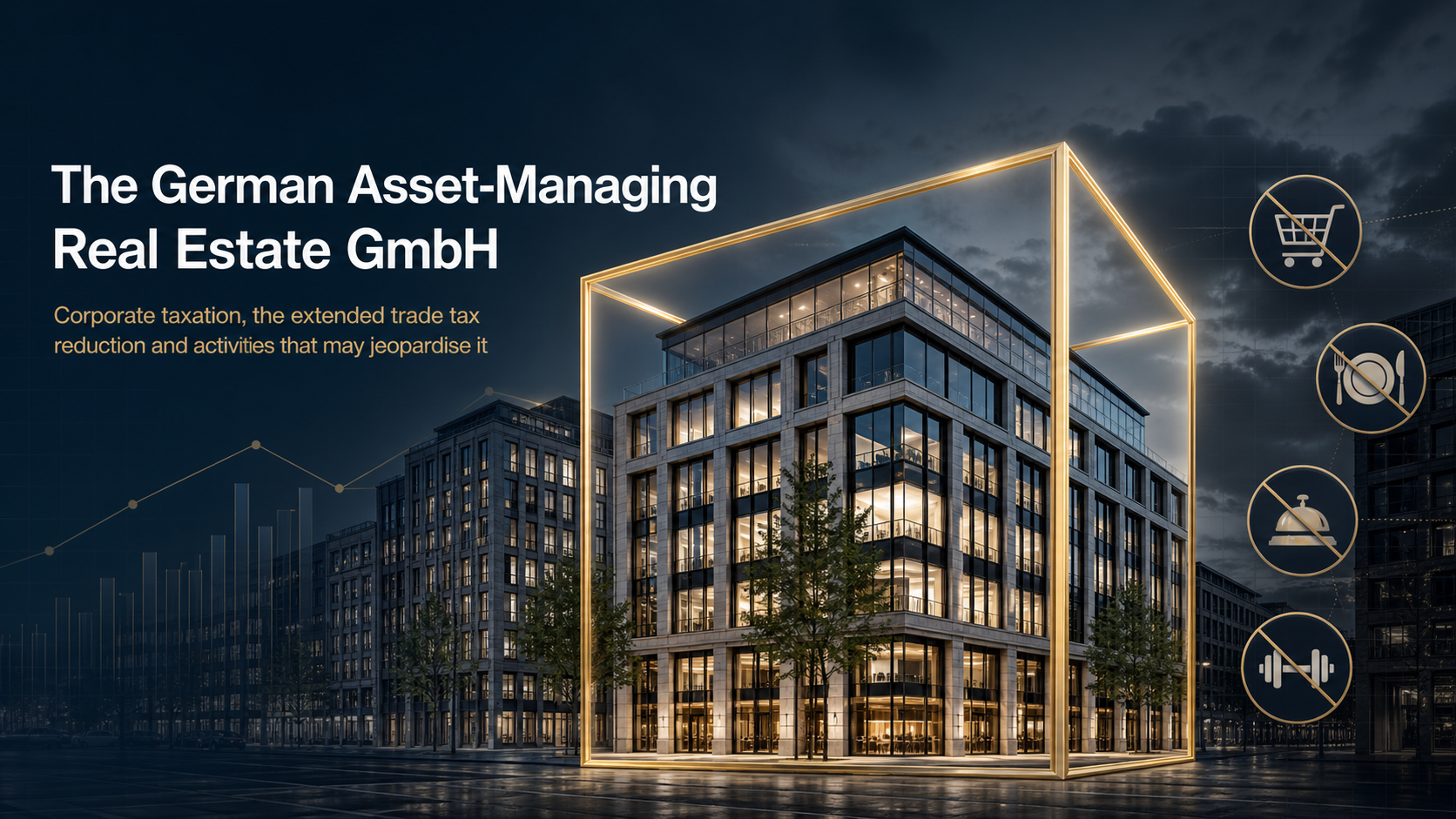
Corporate taxation, the extended trade tax reduction and activities that may jeopardise it
For an international investor building a German commercial property portfolio, the asset-managing real estate GmbH can be an important investment vehicle.
It is commonly referred to in German as a vermögensverwaltende Immobilien-GmbH or VV-GmbH. However, it is not a separate legal form. It is an ordinary German limited liability company whose activities are structured around holding, leasing and managing its own real estate.
Its main tax attraction is the potential application of the extended trade tax reduction.
If all statutory conditions are satisfied, qualifying income from the management and use of the company’s own real estate can be removed from the trade tax base. The company remains subject to corporate income tax and the solidarity surcharge.
This advantage comes with strict conditions. An apparently minor additional activity can affect the company’s eligibility and create an unexpected trade tax burden.
Why use a real estate GmbH?
A German real estate GmbH may be suitable for an investor who intends to:
Hold commercial properties for long-term rental income
Reinvest profits in further German properties
Separate real estate from other operating businesses
Introduce additional investors at company level
Organise financing and liability for individual assets
Build a portfolio that can later be transferred or sold through company shares
For a larger investor, the GmbH may become part of a wider German holding structure. Individual properties may be placed in separate subsidiaries to isolate financing and liability risks.
The detailed design of such a holding structure will be covered in Article Six of this series.

The GmbH is always a commercial enterprise
A GmbH is treated as a commercial enterprise for German tax purposes because of its legal form.
This applies even if the company merely owns one building and collects rent. Unlike a private landlord, the GmbH does not generate private rental income.
Its profits are generally subject to:
Corporate income tax
The solidarity surcharge on corporate income tax
Trade tax
The corporate income tax rate is 15 per cent through 2027. The solidarity surcharge amounts to 5.5 per cent of the corporate income tax. Under legislation currently in force, the corporate income tax rate is scheduled to decrease gradually from 2028.
Trade tax is determined partly by the municipal multiplier applicable at the company’s business location. Without a special reduction, this can substantially increase the company’s total tax burden.
The extended trade tax reduction
A company that exclusively manages and uses its own real estate may apply for the extended trade tax reduction under Section 9 of the German Trade Tax Act.
Where the requirements are met, the part of the trade income attributable to the management and use of the company’s own real estate is deducted from the trade tax base.
In practical terms, qualifying rental profit may therefore avoid trade tax. Corporate income tax and the solidarity surcharge continue to apply.
This is not a general tax exemption for the company. Income from activities outside the qualifying real estate management may remain subject to trade tax.
The reduction must be requested and its requirements must be satisfied for the relevant assessment period.
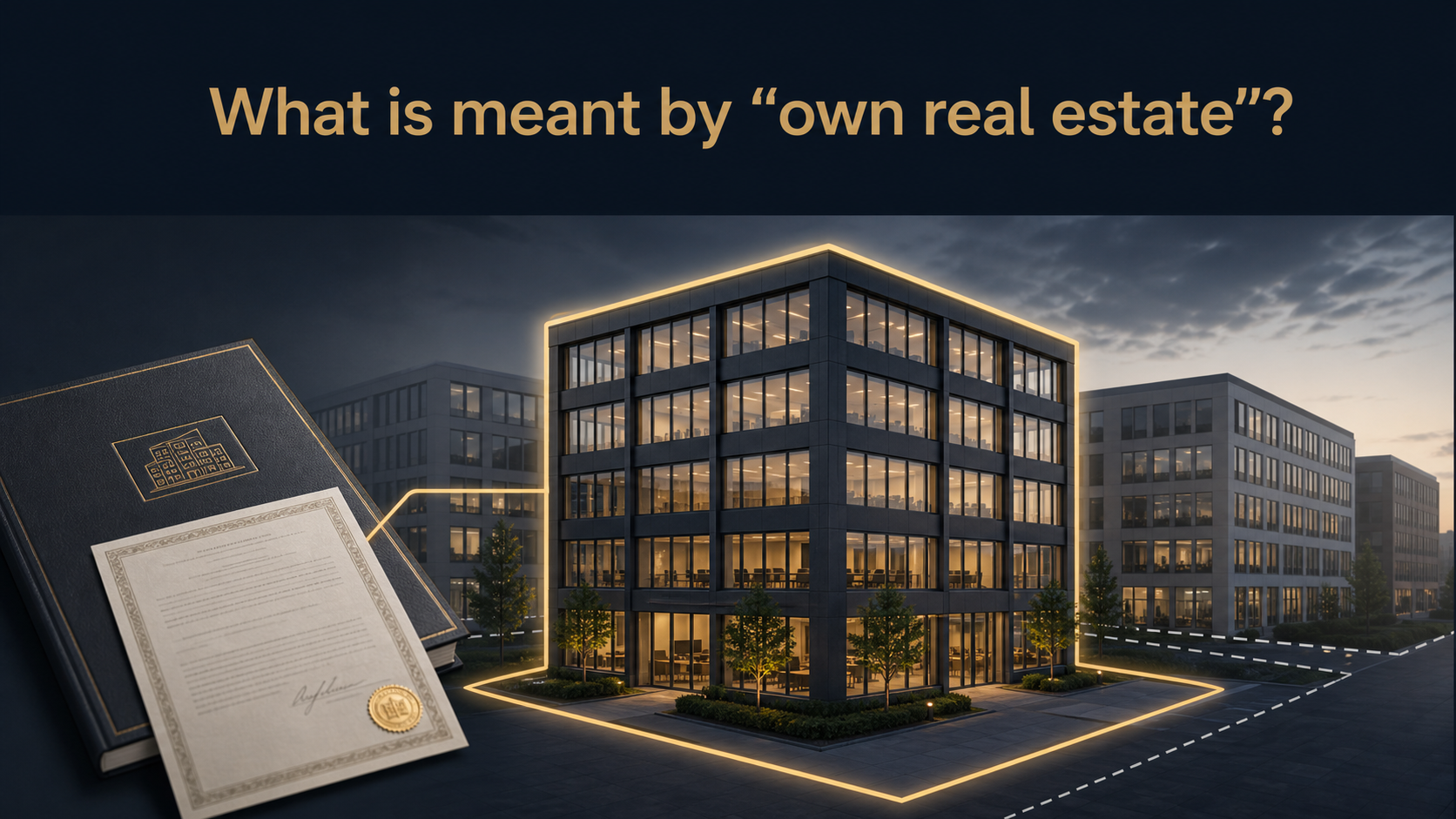
What is meant by “own real estate”?
The company must generally manage and use real estate that belongs to it.
A typical qualifying activity is the long-term rental of a company-owned office building, warehouse, retail property or residential building.
Merely managing properties belonging to other persons or affiliated companies is different. Third-party property management can constitute an additional commercial service and may jeopardise the reduction.
The distinction is especially important in a group structure. A property company should not automatically perform administrative or management services for the other property companies in the group.
Such services may be better provided by a separate management company.
Permitted activities are narrowly defined
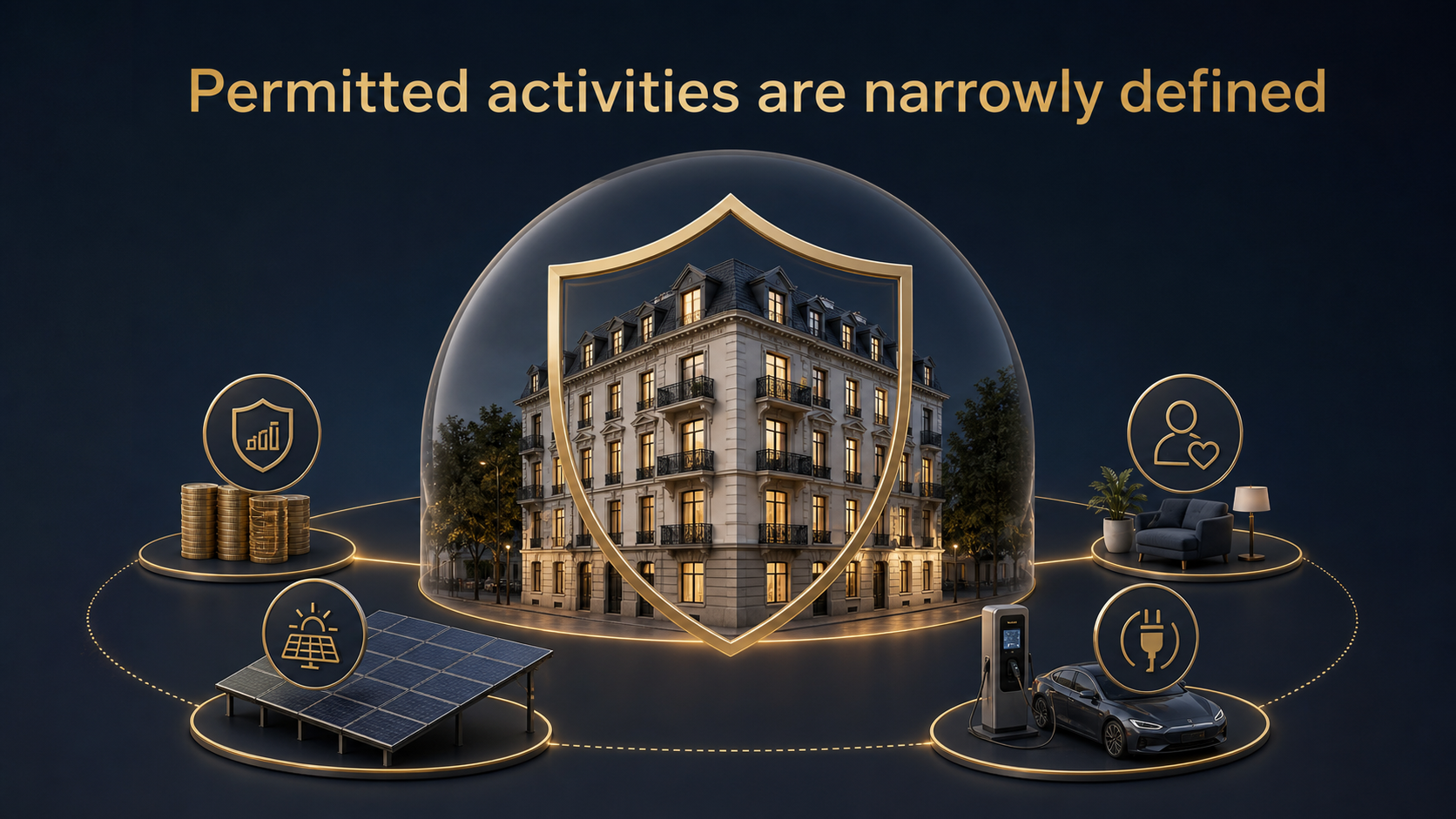
The statutory rules permit certain activities in addition to the management of the company’s own real estate.
These can include the management and use of the company’s own capital assets and certain specifically permitted housing-related activities.
The law also contains limited exceptions for:
Electricity generated from qualifying renewable-energy installations
Electricity supplied through charging stations
Certain services provided directly to tenants
These exceptions are subject to statutory revenue limits and additional requirements. Under the current legislation, qualifying electricity-related revenue may generally remain harmless up to 20 per cent of the revenue from the use of the real estate. Certain other direct tenant-related revenue is limited to 5 per cent.
These limits should not be treated as general permission to conduct unrelated business. Each activity and contract must be reviewed separately.
Activities that may jeopardise the reduction
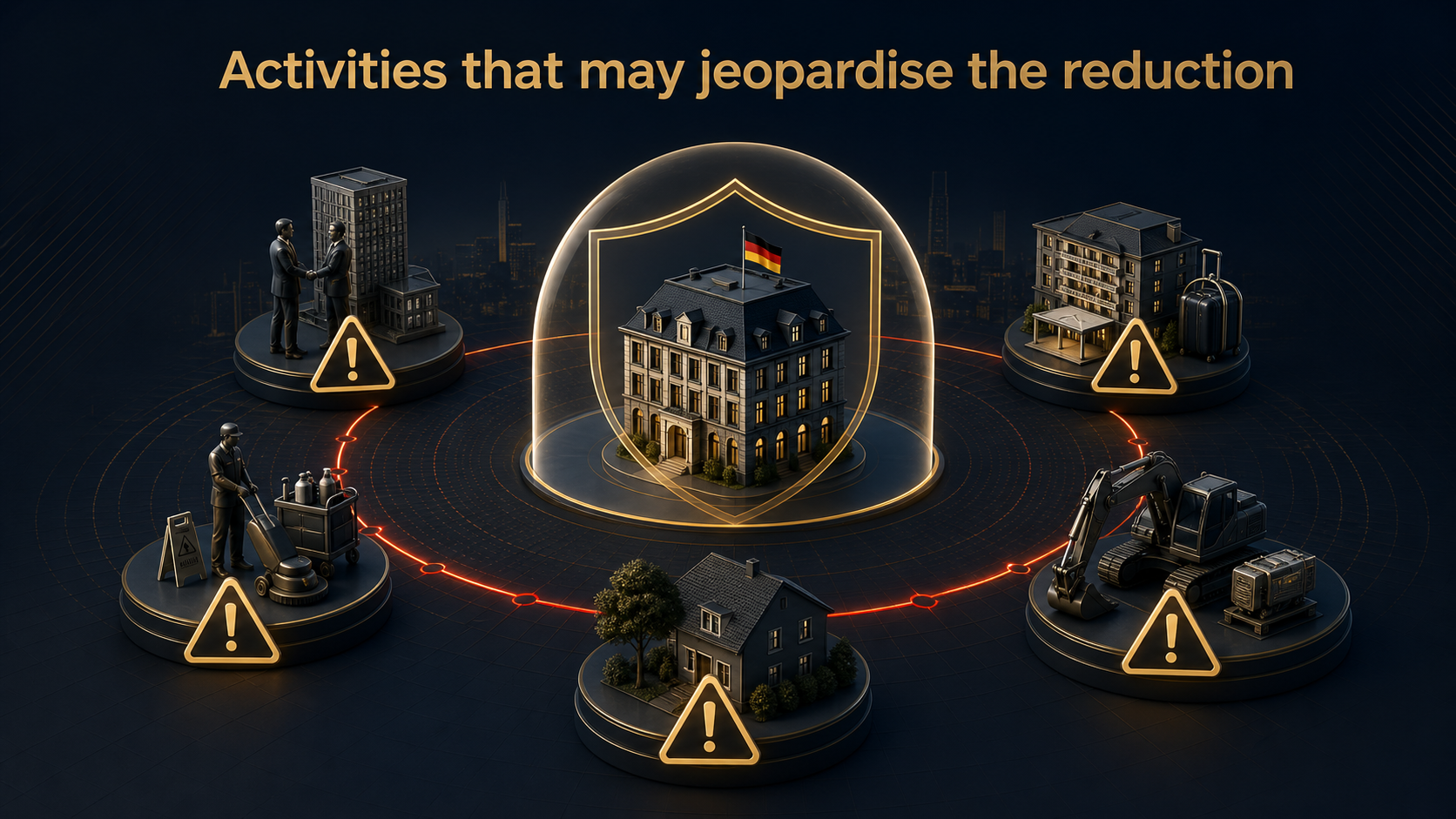
Particular caution is required where the company performs activities beyond simply leasing its own land and buildings.
Potentially problematic activities include:
Managing real estate belonging to third parties
Providing broad facility-management services
Operating a hotel, restaurant or other active business
Offering extensive services to tenants
Trading in goods or other investment assets
Holding unrelated movable assets for investment purposes
Providing services to affiliated companies
Leasing certain machinery or business equipment together with the property
Conducting systematic property development or trading activities
The German Federal Fiscal Court has confirmed that even an activity generating no current revenue can be harmful if it is not among the permitted activities.
The company’s articles of association alone are not decisive. What matters is what the company actually owns and does.
The problem of fixtures and business equipment
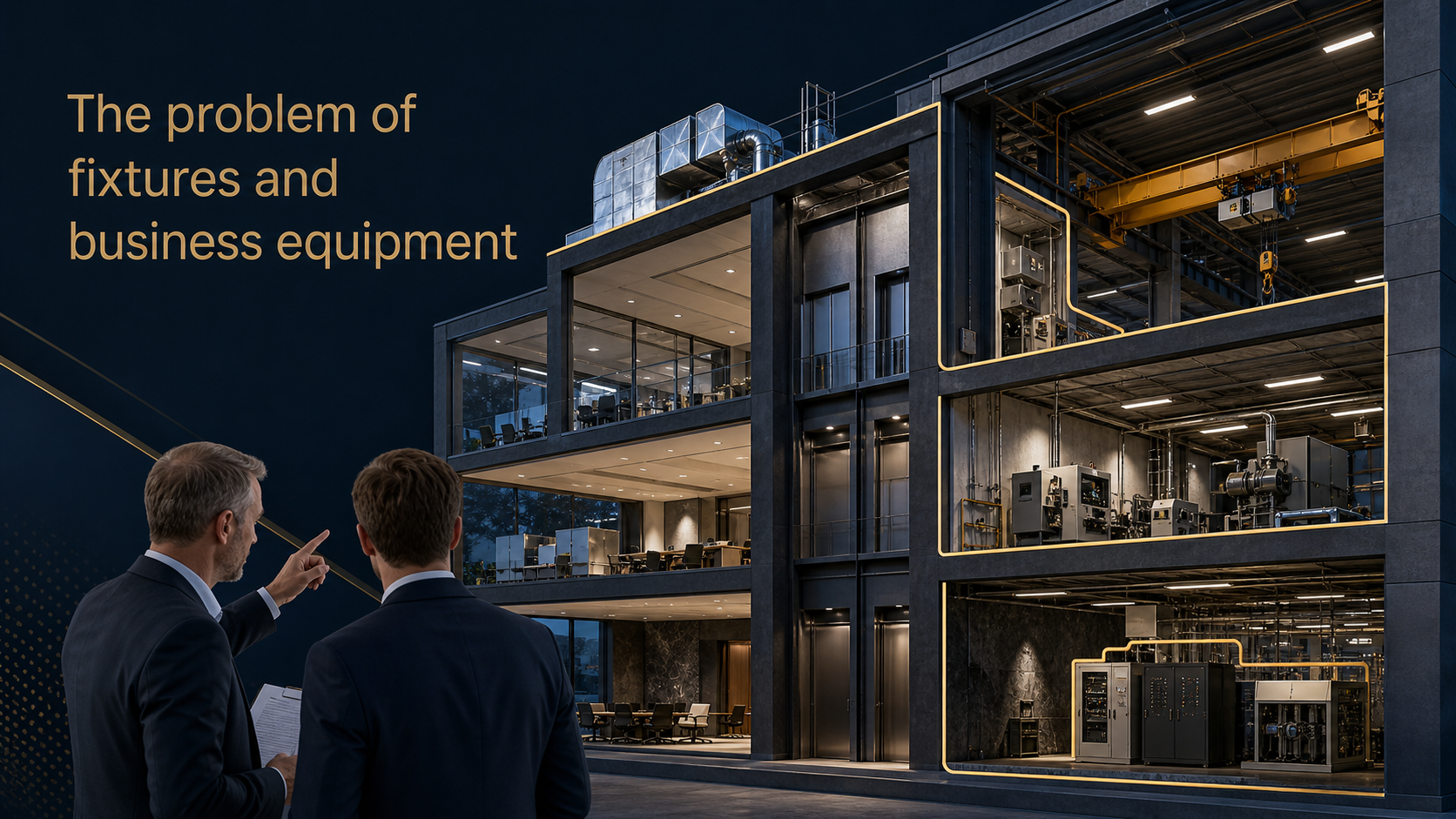
Commercial properties often contain technical installations, machinery or other equipment.
Not everything permanently connected to a building qualifies as real estate for German tax purposes. Certain installations may be classified as business equipment—Betriebsvorrichtungen—rather than part of the property.
Examples can include specialised production equipment, cranes, certain lifts or installations serving a tenant’s particular business.
Leasing such equipment together with the building can jeopardise the extended reduction.
A narrowly defined exception may apply where the additional equipment is an indispensable or functionally necessary part of an economically meaningful use of the company’s own property. However, the requirements are strict and fact-specific.
The equipment included in a commercial lease should therefore be reviewed before the agreement is signed.
Long-term rental versus active property development
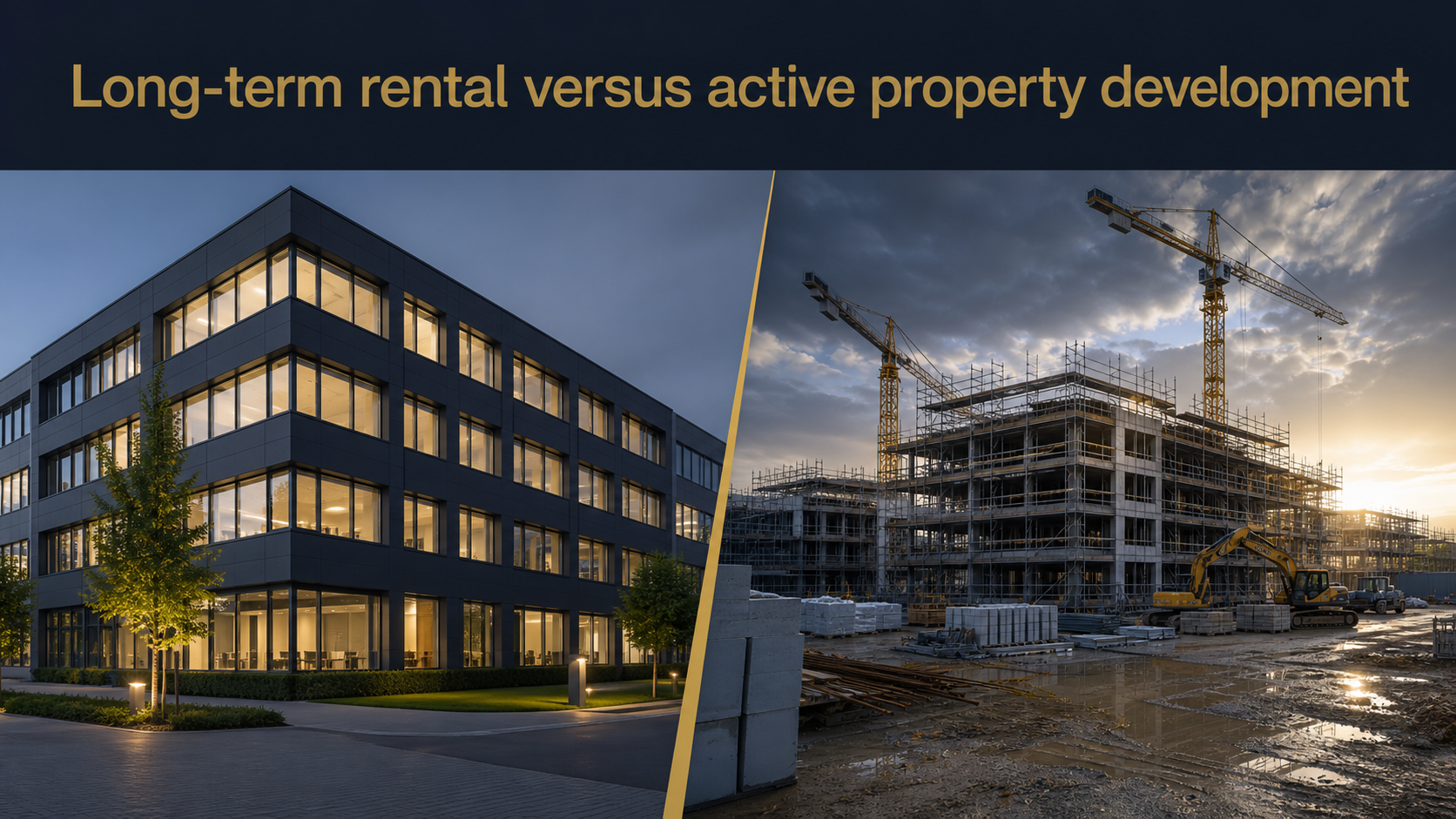
Selling a company-owned property does not automatically prevent the extended reduction. A sale can still form part of managing and using the company’s own real estate.
The risk increases where the company repeatedly acquires, develops and quickly resells properties or provides substantial development services.
A company acting like an active property trader or project developer should not simply be treated as a pure asset-managing company.
Larger investors may therefore separate:
Long-term rental properties
Development and renovation projects intended for sale
Operational management and service activities
Placing these activities in separate companies can protect the tax profile of the long-term property companies and isolate commercial risks.
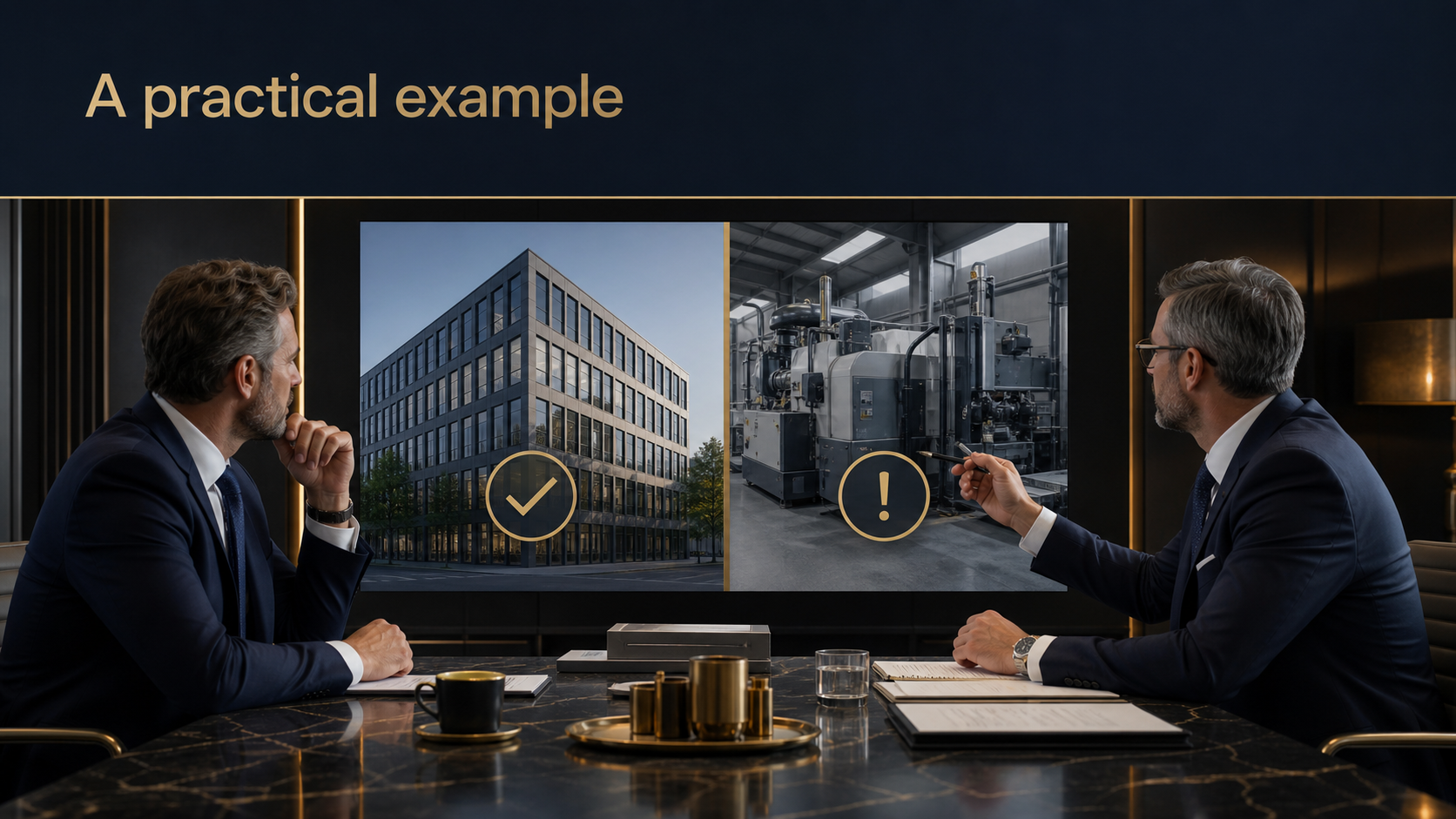
A practical example
Suppose an international investor establishes Berlin Office Property GmbH to acquire and lease a commercial building.
The company owns the building, receives rent and performs only the activities necessary for managing that property. If all conditions are met and the extended reduction is properly requested, the qualifying rental profit may be removed from the trade tax base.
Now assume the same company begins managing buildings belonging to other investors, provides extensive facility services and leases specialised machinery to tenants.
These additional activities may jeopardise the extended reduction. As a result, the company could face trade tax that was not included in the original investment calculation.
The potential loss of the reduction should therefore be considered before introducing any new source of revenue.

Financing and deductible expenses
The company may generally deduct expenses connected with its rental business, subject to the applicable tax rules.
These may include:
Interest on property financing
Depreciation of the building
Maintenance and repair costs
Property management expenses
Insurance
Professional and advisory fees
However, German interest-deduction restrictions, transfer-pricing rules and conditions for related-party financing may apply.
If a foreign parent company provides a shareholder loan, the interest rate and other terms must be commercially justifiable and properly documented.
The extended trade tax reduction does not replace a complete financing and tax analysis.

Retaining and distributing profits
One advantage of a corporate structure is the ability to retain profits for future investments.
After paying corporate income tax and the solidarity surcharge, the company may use the remaining funds to repay debt, renovate the property or finance another acquisition.
If profits are distributed to the shareholder, an additional level of taxation may arise.
For a foreign shareholder, the result depends on:
German withholding tax
The applicable double taxation agreement
Whether the shareholder is an individual or a foreign company
Taxation in the shareholder’s country
Any available treaty or participation relief
The tax burden inside the property company should therefore not be confused with the investor’s final tax burden after distribution.

Practical safeguards
A company seeking the extended trade tax reduction should maintain a clearly limited business purpose and review every additional activity before it begins.
Practical safeguards may include:
Keeping long-term properties and development projects in separate companies
Using a separate company for third-party management and services
Reviewing equipment before signing commercial leases
Separately recording permitted ancillary income
Monitoring the statutory revenue thresholds
Examining related-party agreements
Reviewing planned property sales in advance
Applying for the reduction correctly in the annual tax return
The structure must also be observed in everyday operations. A carefully drafted company agreement cannot protect the reduction if the company conducts harmful activities in practice.
The extended reduction should be planned before acquisition
The tax concept should be established before the property is purchased and before the main lease and financing agreements are signed.
A later transfer of the property into another company may trigger notarial costs, land-register fees, financing problems and German real estate transfer tax.
It is therefore important to determine in advance:
Whether the property will be held or developed for sale
Which equipment will be leased with the building
Which company will provide tenant and management services
How renewable-energy installations will be operated
Whether additional investors will participate
How the acquisition will be financed
How the property or company may later be sold
The extended trade tax reduction is valuable, but it should never be assumed without analysing the actual investment and operating model.
Conclusion
The German asset-managing real estate GmbH can be an effective vehicle for holding and leasing commercial property.
Its principal attraction is the extended trade tax reduction, which may remove qualifying rental profit from the trade tax base. The company nevertheless remains subject to corporate income tax and the solidarity surcharge.
The benefit depends on strict compliance with the statutory requirements. Third-party management, operational services, unrelated assets, business equipment and active property development can create significant risks.
For a larger international investor, the safest approach is often to separate long-term property ownership from development, trading and service activities.
The correct structure must be established before the property is acquired. It must then be protected through appropriate contracts, accounting and ongoing tax review.
This article provides general information and does not constitute individual legal, tax, financing or investment advice. The extended trade tax reduction depends on the company’s actual assets, contracts and activities and must be examined for each individual case.
Free Consultation
Have questions about entering the German market? Request a free consultation.
Request Free Consultation