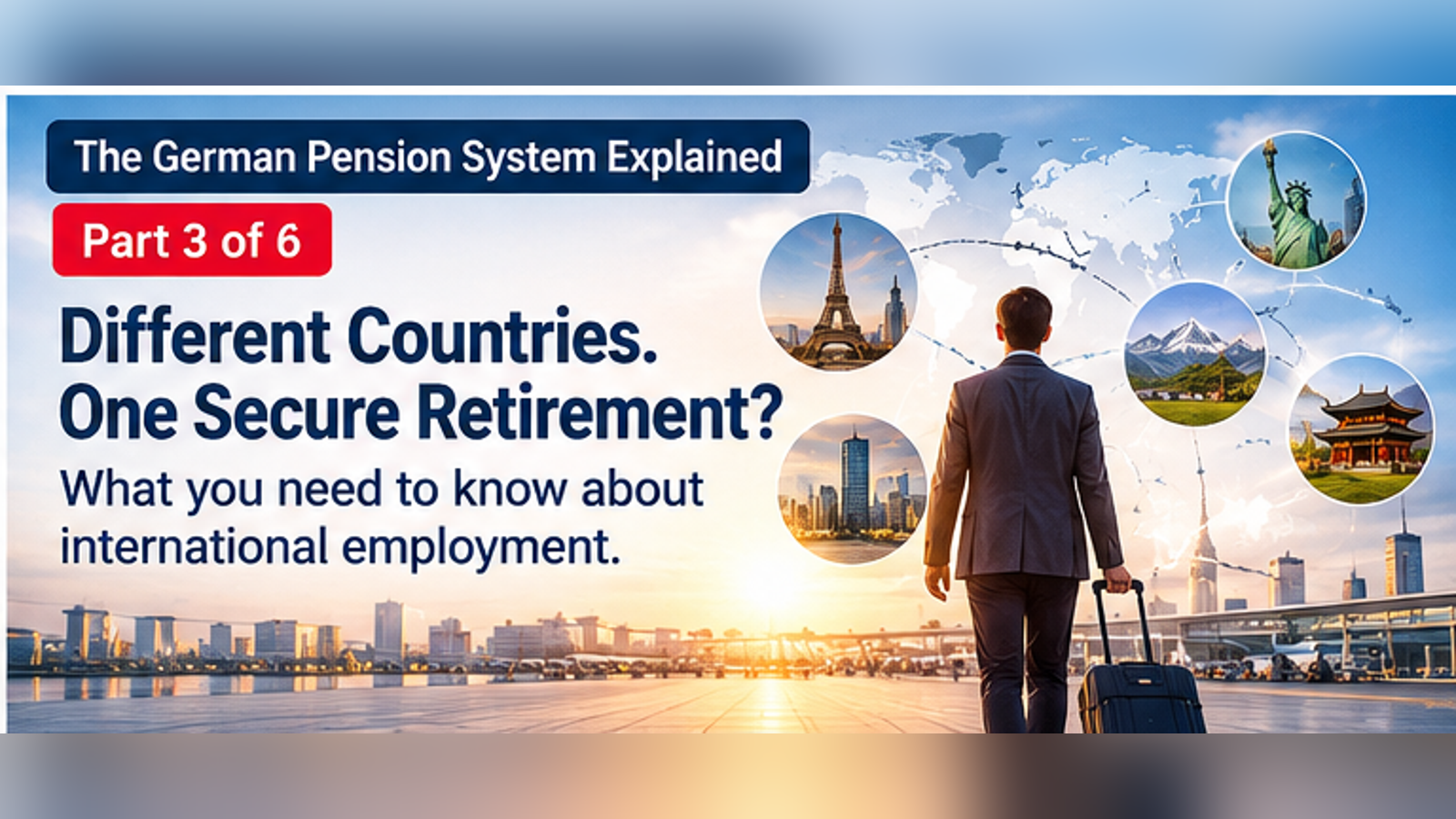
What Happens to Your German Pension?
More and more people spend their working lives in different countries.
A German engineer may work in Germany before moving to Switzerland. An American professional may move to Germany at the age of 40 after spending many years working in the United States.
But what happens to the pension rights accumulated in different countries?
Can insurance periods be combined? Do pension rights disappear when you move abroad? And is it possible to receive pensions from several countries?
Germany has established international coordination rules and social security agreements to address these questions.
In this third part of our series, we explain the most important rules for people with international employment histories.
1. Can Insurance Periods from Different Countries Be Combined?
Yes, under certain conditions.
Two important frameworks are the European social security coordination rules and bilateral social security agreements between Germany and other countries.
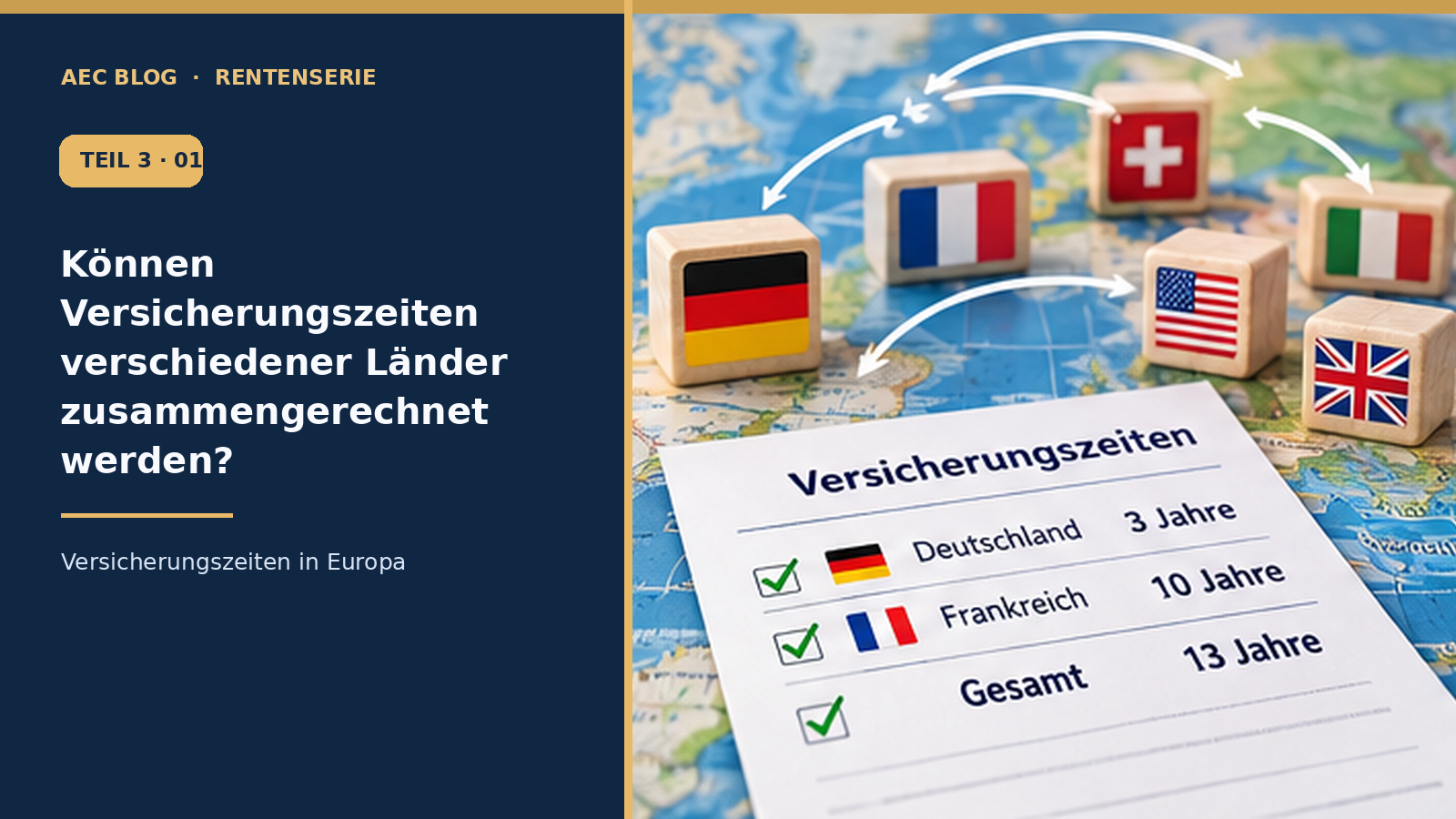
For example, someone has worked for three years in Germany and ten years in France.
The standard German old-age pension generally requires a minimum qualifying period of five years.
Under European coordination rules, the ten years completed in France can be taken into account when determining whether the person meets this requirement.
As a result, the person may qualify for a German pension despite having worked in Germany for only three years.
However, this does not mean that all thirteen years are automatically treated as German contribution years.
2. How Do Foreign Insurance Periods Affect Your Pension Amount?
It is important to distinguish between qualifying for a pension and calculating the amount payable.
Foreign insurance periods can help satisfy the minimum qualifying period.
However, different calculation rules apply depending on whether European coordination regulations or a bilateral agreement is involved.
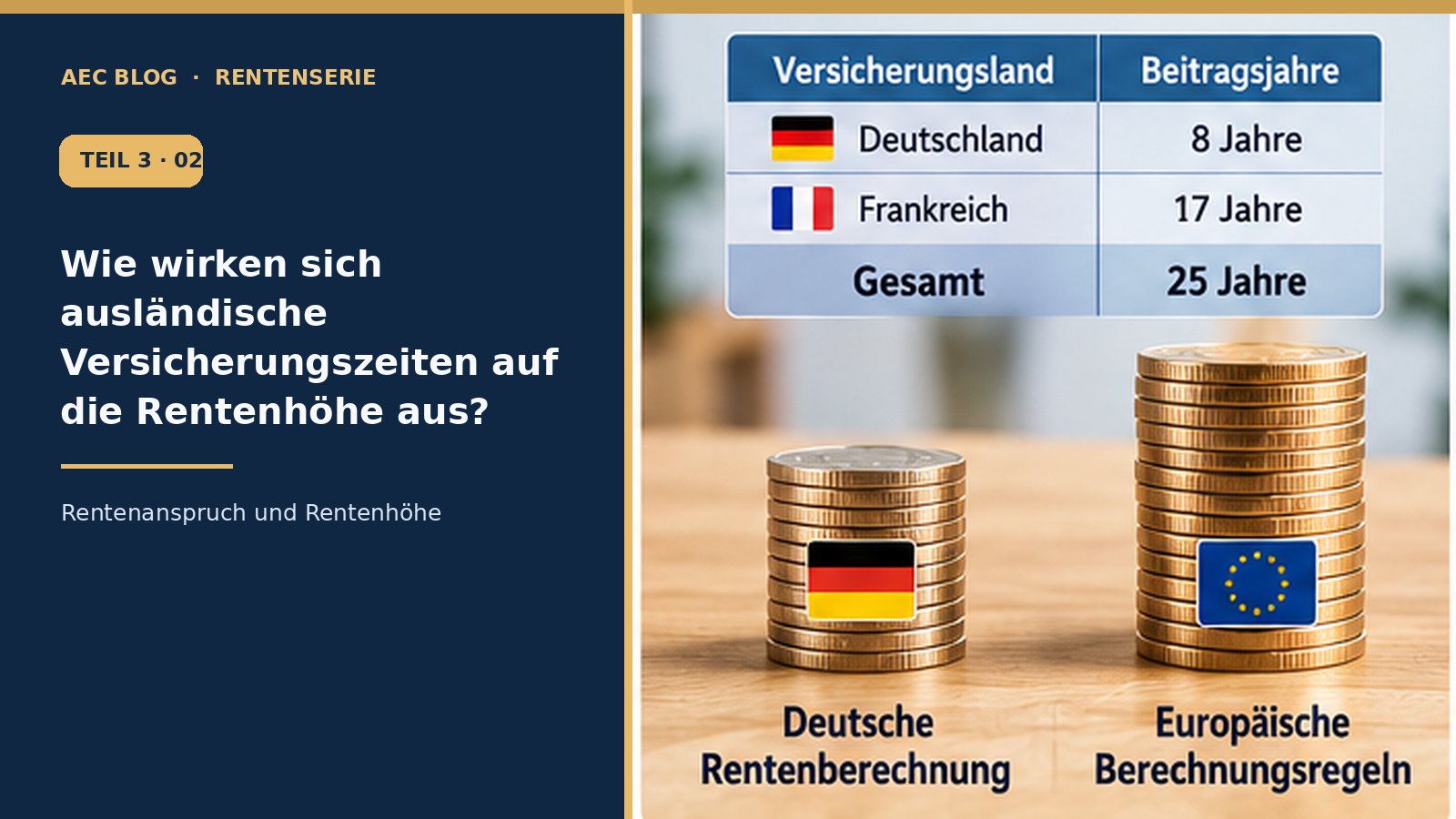
Consider the following example:
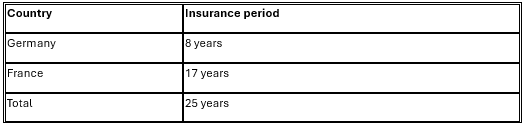
The individual has accumulated 25 years of insurance coverage across both countries.
Under European coordination rules, these periods can be taken into account when calculating a proportional pension.
Germany generally pays the pension amount determined under the applicable European calculation rules for its share of the insurance history.
Under many bilateral social security agreements, the German pension amount is generally calculated using German pension-relevant periods.
Combining insurance periods does not mean that contributions from different countries are transferred into one common pension account.
3. What Is the Role of International Social Security Agreements?
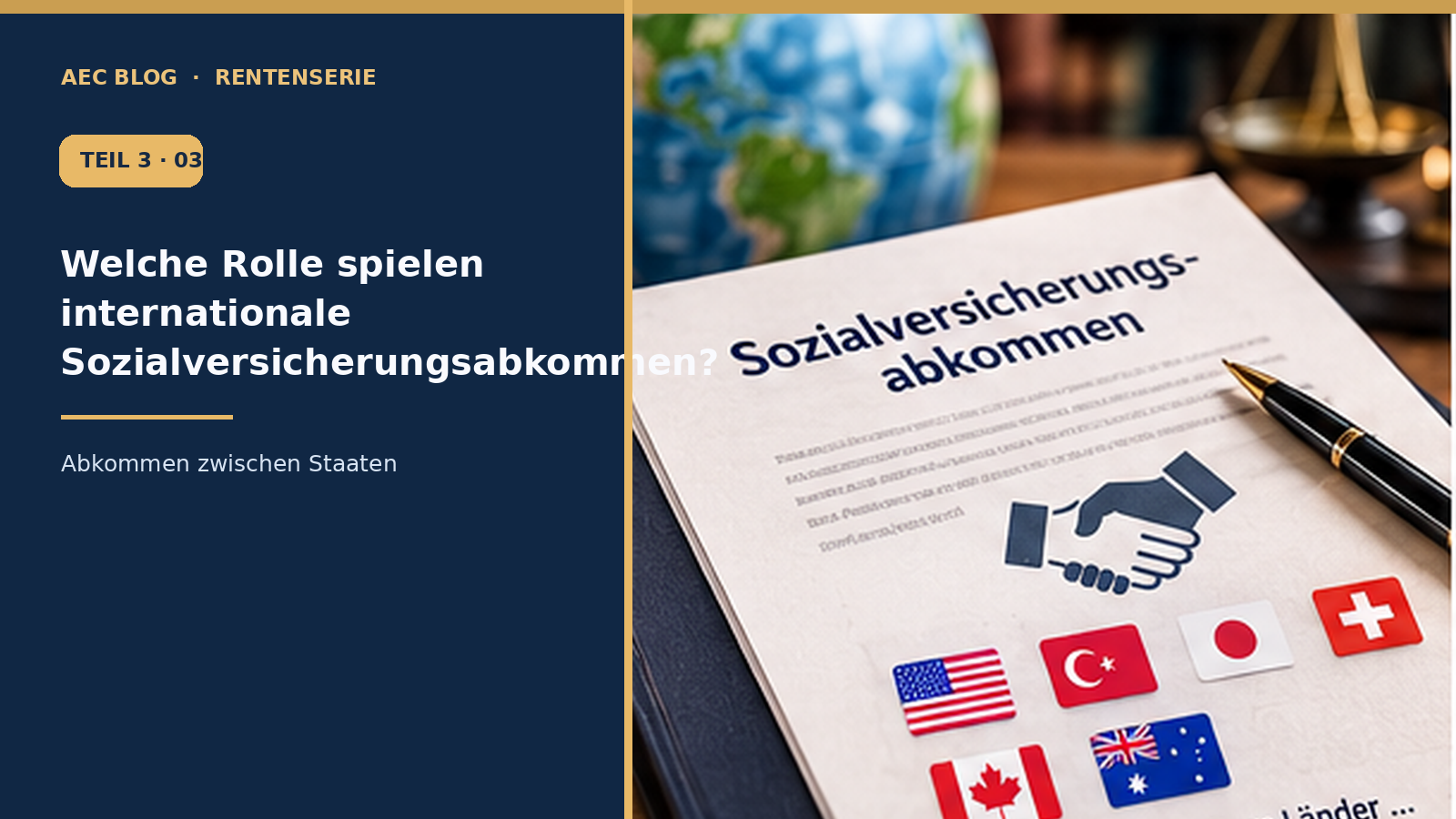
Germany has concluded bilateral social security agreements with numerous countries outside the European Union.
Examples include the United States, Turkey, Japan and other countries.
Depending on the agreement, these arrangements may allow insurance periods to be recognised when determining pension eligibility.
They may also help prevent double pension insurance contributions during temporary overseas assignments.
However, not all agreements provide identical benefits.
The types of insurance covered and the conditions for recognising foreign periods depend on the specific agreement.
For countries without an applicable agreement, foreign insurance periods generally cannot be counted towards Germany's minimum qualifying period.
It is therefore important to check the rules applicable to each country.
A further point is that insurance periods from different agreement countries cannot always be combined with one another. Separate agreements may need to be considered individually.
4. Can I Receive Pensions from Several Countries?
Yes, provided you meet the relevant legal requirements in each country.
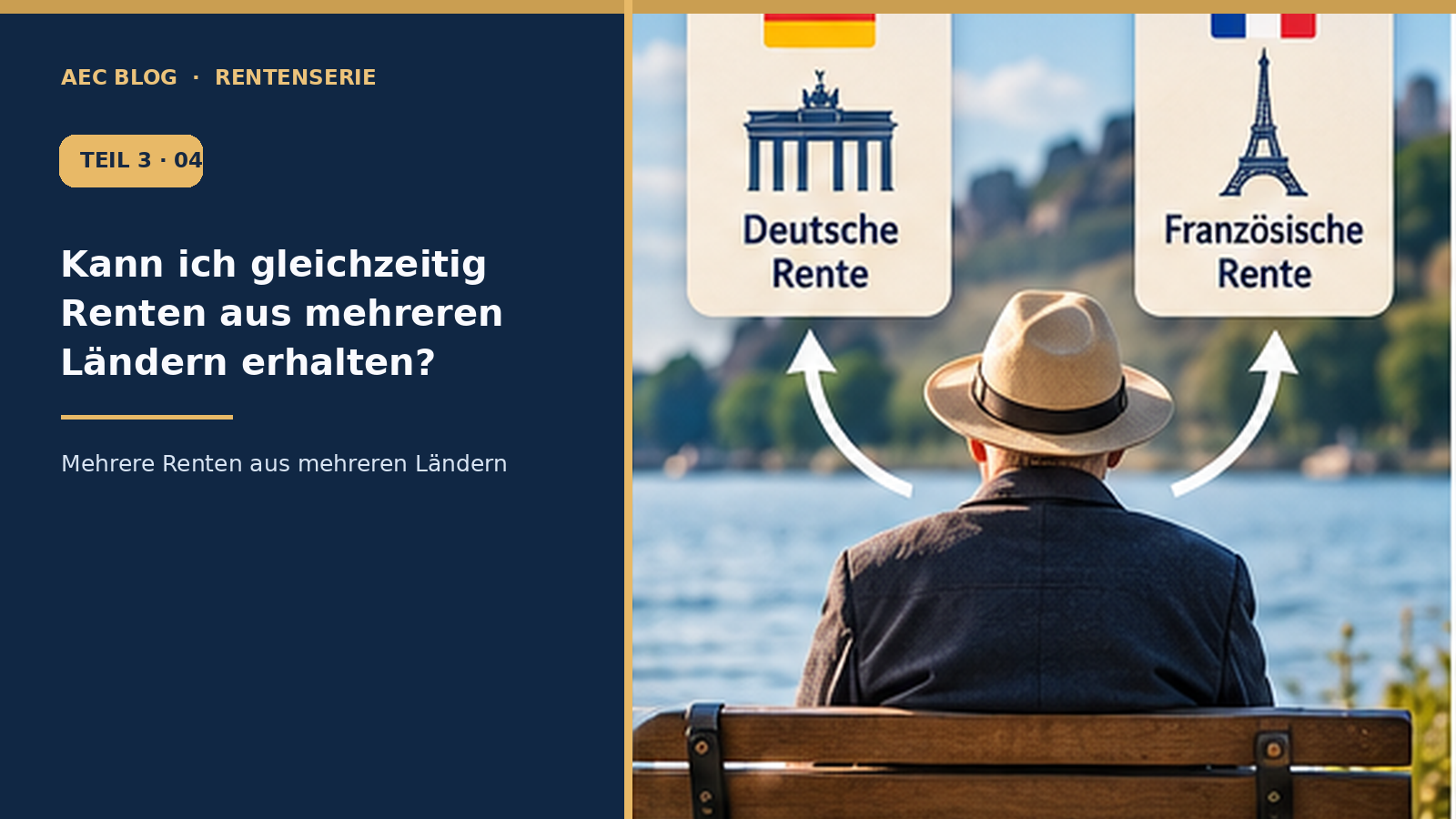
For example, an employee may work in Germany before moving to the United States.
If the person has acquired pension entitlements in both countries, they may later receive payments from both the German Pension Insurance system and US Social Security.
These pensions are generally not combined into one single payment.
Each country examines eligibility and calculates its benefits under the applicable rules.
Retirement ages may also differ.
This means someone could begin receiving a German pension before becoming eligible for their American pension, or vice versa.
Having pension entitlements in several countries does not mean that each country pays a full pension for the entire international working career.
5. What Happens During a Temporary Assignment Abroad?
A temporary overseas assignment does not necessarily mean that an employee must immediately switch to the pension insurance system of the host country.
For example, a German company may temporarily send an employee to France.
Under the relevant European rules, the employee may remain subject to German social security legislation if the conditions are fulfilled.
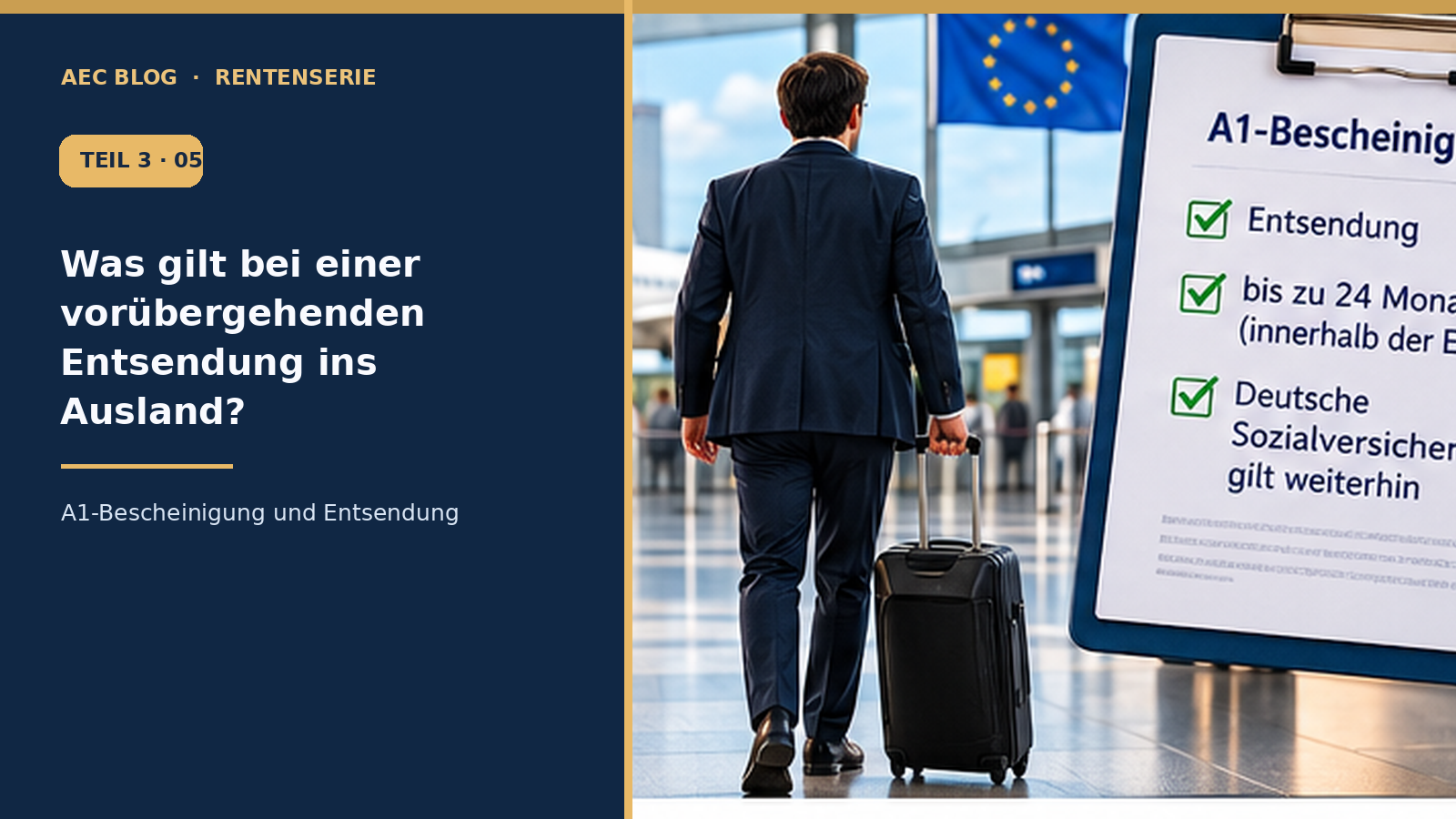
Within the European Union, qualifying posted-worker arrangements generally allow coverage under the sending country's social security legislation for up to 24 months.
An important document is the A1 certificate, which confirms which country's social security legislation applies.
For assignments outside the EU, different rules and time limits may apply under bilateral agreements or national legislation.
Employers and employees should clarify their social security status before the assignment begins.
6. What Should Self-Employed People and Those with Short Insurance Periods Know?
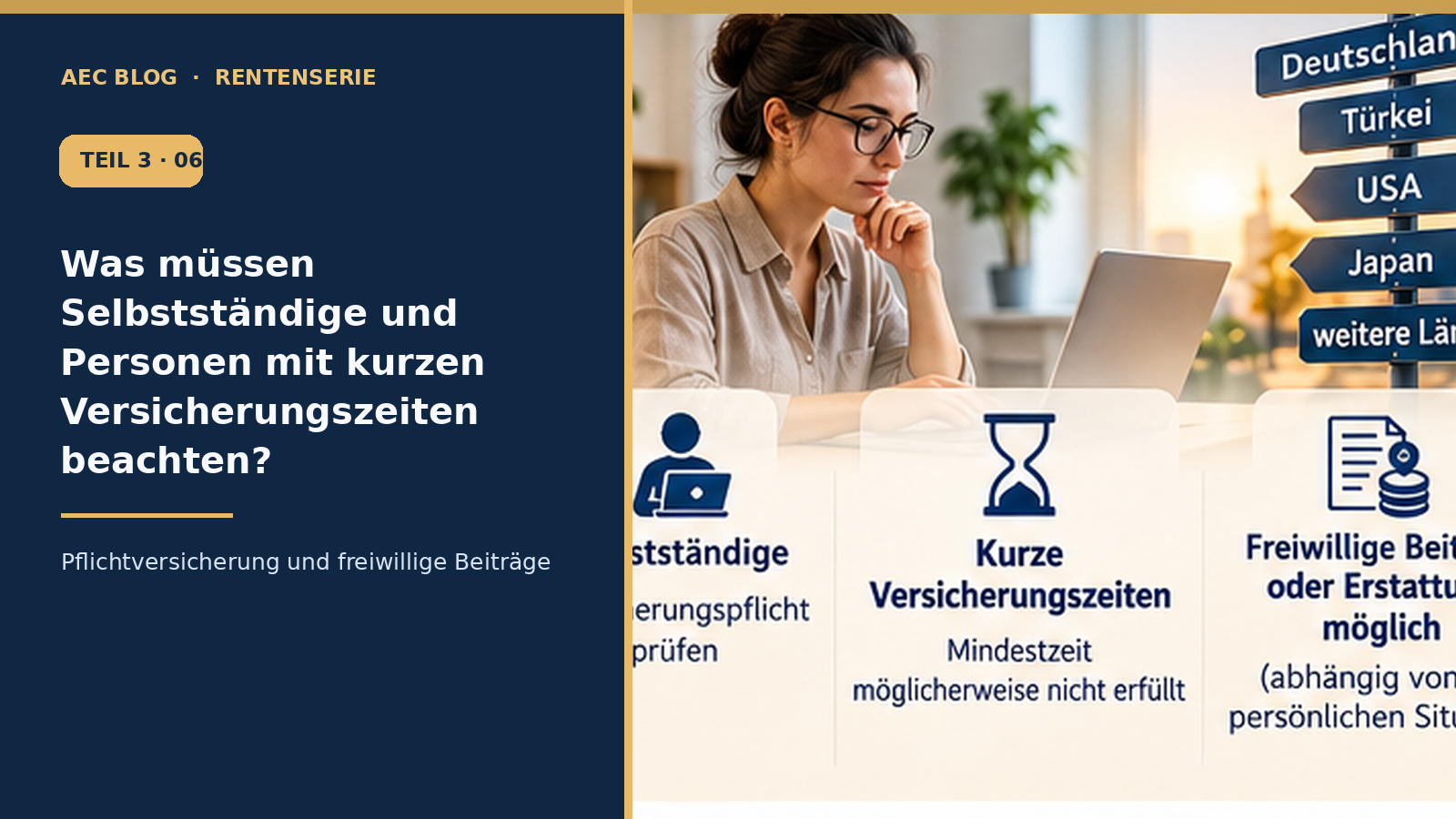
Not every self-employed person in Germany is automatically required to contribute to statutory pension insurance.
However, certain categories of self-employed professionals are subject to compulsory insurance.
Anyone working independently in several countries should therefore check where pension insurance obligations arise and whether international coordination rules apply.
People with only short German insurance periods should also pay particular attention.
For example, someone who has contributed to the German pension system for only three years and subsequently works in a country without a relevant social security agreement may not meet Germany's five-year qualifying period.
Depending on their individual circumstances, additional German insurance periods, voluntary contributions or a contribution refund may be possible.
We will explain pension contribution refunds and their consequences in Part 6 of this series.
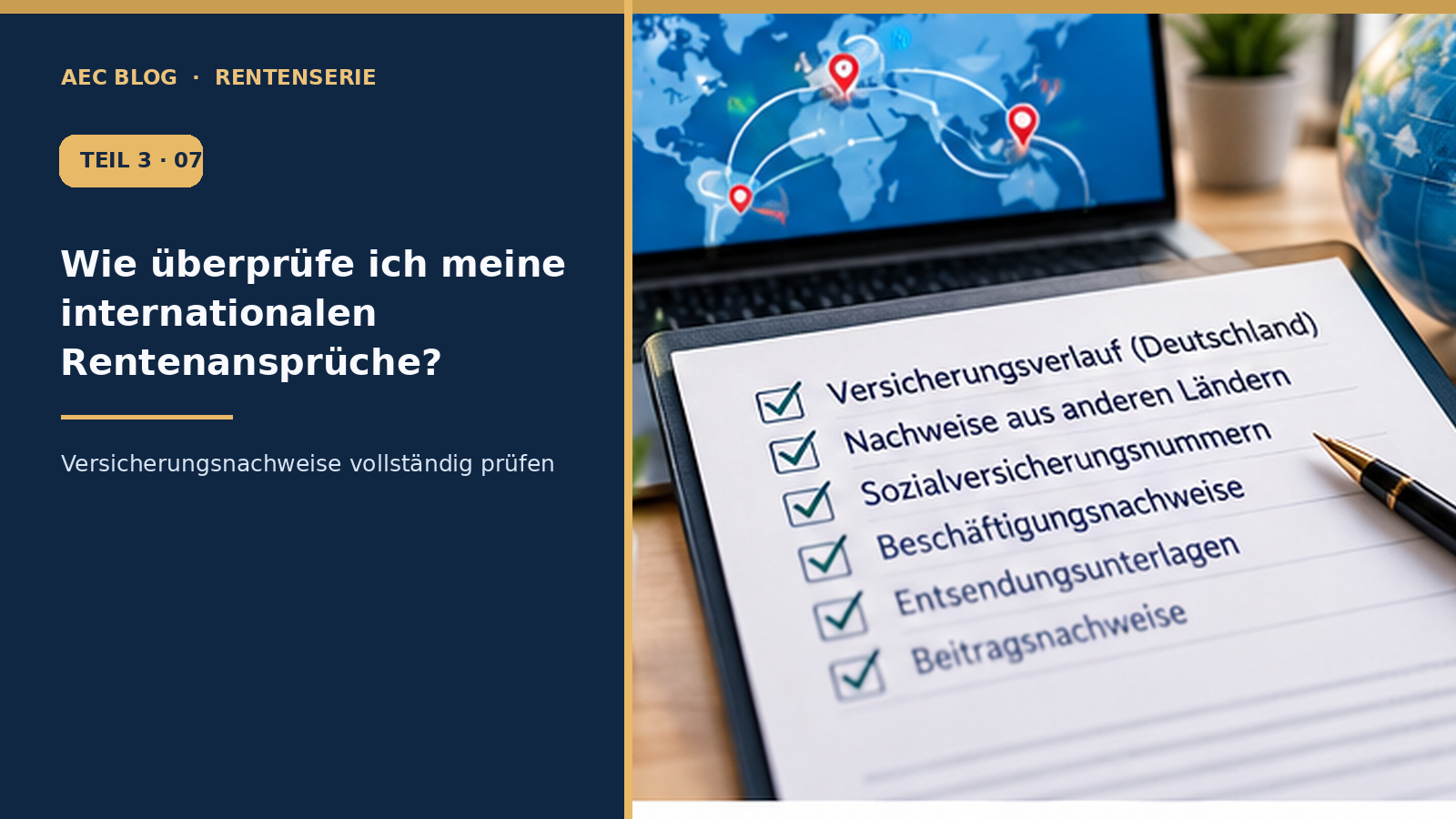
7. How Can I Check My International Pension Rights?
Anyone who has worked in several countries should keep accurate records of their employment and pension insurance history.
Important documents include:
Your German pension insurance record (Versicherungsverlauf)
Pension insurance statements from other countries
Social security numbers and employment records
Certificates of coverage for temporary assignments
Evidence of pension contributions
The German Pension Insurance organisation, Deutsche Rentenversicherung (DRV), has specialised liaison offices for different countries.
These offices assist with international insurance records and cross-border pension procedures.
When applying for a pension, you should declare all relevant insurance periods completed abroad.
The competent authorities can then determine which periods may be recognised and whether pension entitlements exist in several countries.
For people who have worked in several EU countries, the application is generally submitted to the pension authority in the country of residence, or to the relevant authority in the last country of employment if they have never worked in their country of residence.
Conclusion: An International Career Does Not Have to Put Your Pension at Risk
Anyone who has worked in more than one country should review their pension entitlements well before retirement.
International social security rules may allow insurance periods to be combined for the purpose of meeting pension eligibility requirements.
Three principles are particularly important:
First: You may acquire separate pension entitlements in several countries.
Second: Foreign insurance periods may help you meet minimum qualifying periods under applicable international rules.
Third: Each competent pension authority calculates its benefits according to the relevant legal provisions.
Keeping complete records of your international employment history can help prevent delays and difficulties when you eventually apply for retirement benefits.
Free Consultation
Have questions about entering the German market? Request a free consultation.
Request Free Consultation