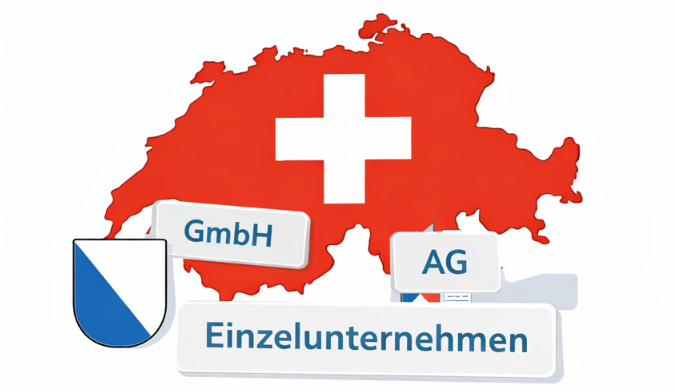

A practical look at why these two Swiss locations continue to attract global talent, entrepreneurs, and international businesses
When international clients think about relocating to Switzerland, two names come up again and again: Zurich and Zug.
That is not a coincidence. Switzerland remains one of Europe’s most international countries: at the end of 2024, it had 2.37 million permanent foreign residents, and 41% of the permanent resident population aged 15 and over had a migration background. Within that picture, Zurich and Zug stand out as especially attractive destinations for foreign professionals, executives, investors, and internationally active companies.
The numbers show just how international these locations already are. At year-end 2024, the canton of Zurich counted 449,976 permanent foreign residents, while the canton of Zug counted 40,215. In the same year, Zurich recorded 32,524 entries into the permanent foreign resident population, and Zug recorded 2,460. Zurich is therefore a large-scale international hub, while Zug is smaller, but highly concentrated and unusually international for its size.
Zurich: international, connected, and economically diverse
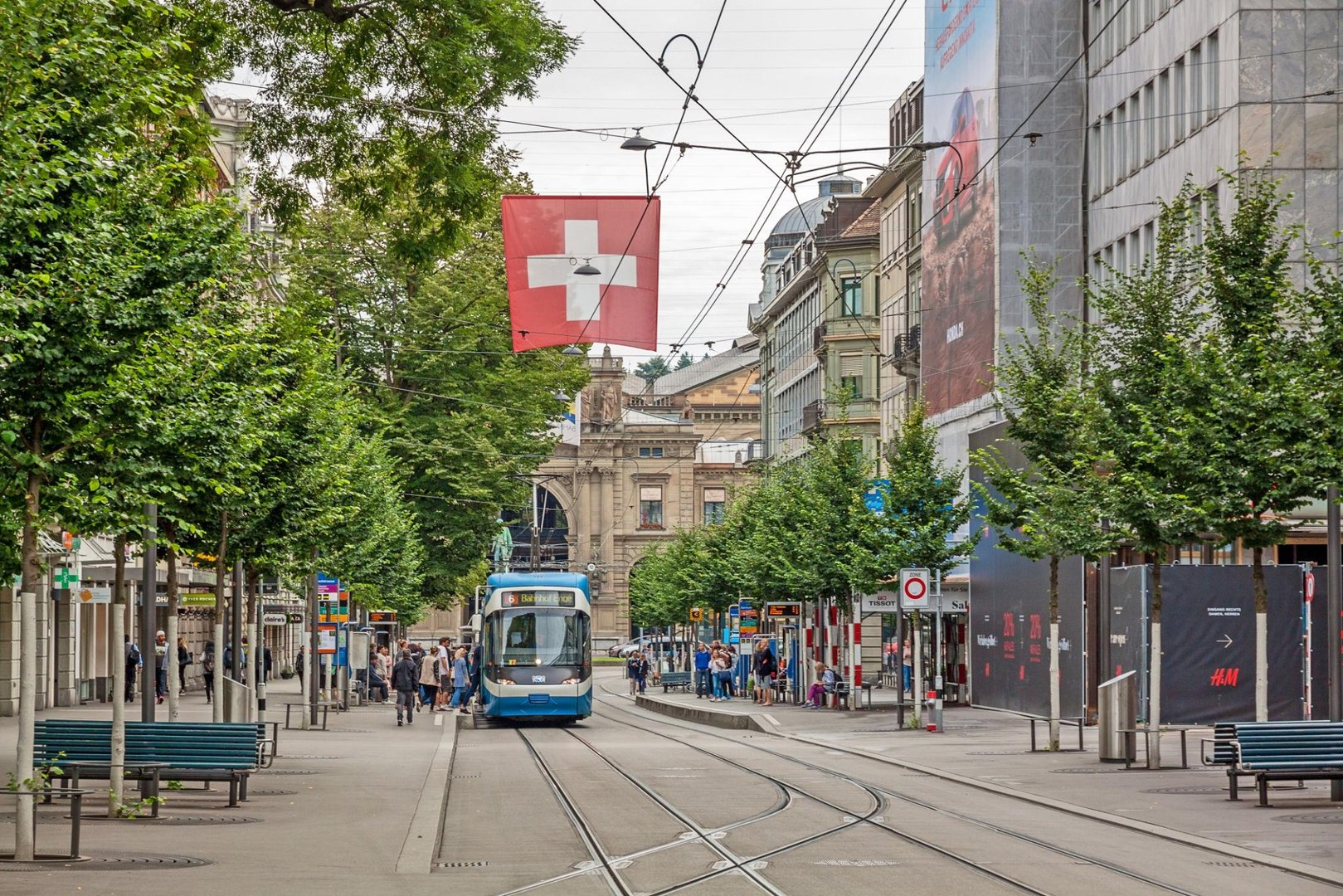
For many international clients, Zurich is the natural first choice because it offers something rare in Europe: global connectivity, a strong financial ecosystem, a diversified business base, and a high degree of day-to-day international usability.
Zurich’s economic profile is broader than many outsiders assume. It is not only a financial center. Official business materials from Zurich describe strong clusters in finance, IT, life sciences, and cleantech, and emphasize the concentration of companies, research institutions, and educational organizations in the region. That matters for foreign clients because it creates more than just jobs — it creates networks, ecosystems, and long-term business opportunities.
Finance remains one of Zurich’s biggest draws. Zurich’s business portal points to around 500 financial institutions in the region and presents the city as a leading European financial center with strong links to banking, insurance, stock exchange infrastructure, and fintech. For international professionals in private banking, wealth management, insurance, asset management, and financial technology, Zurich offers both reputation and density.
Accessibility is another major reason why international clients prefer Zurich. According to Zurich Airport, the airport handled over 740 flights a day to 163 destinations in 71 countries in 2025, and it combines air access with extensive rail, bus, and tram connections. For companies with mobile teams, cross-border clients, or regional headquarters functions, that level of connectivity is not just convenient — it is strategic.
Zurich is also more manageable for newcomers than many people expect. The canton’s official newcomer information highlights migrant advisory structures, multilingual support, and free information services; the city’s Infodona advice center alone provides information in 20 languages. That kind of practical onboarding infrastructure is one reason why internationally mobile professionals often find Zurich easier to navigate than a city that is large on paper but fragmented in practice.
Zug: smaller, sharper, and exceptionally business-friendly
If Zurich is Switzerland’s broad international gateway, Zug is its more focused premium business location.
Zug’s economic positioning is very clear. The canton’s official business-promotion materials describe it as Switzerland’s leading business location, part of the greater Zurich area, and a magnet for international talent. They also stress business friendliness, lean administration, and a service-oriented approach — all factors that matter especially to foreign founders, investors, and internationally expanding firms that want a predictable and efficient setup environment.
One of Zug’s strongest attractions is its headquarters profile. Zug’s official investment-promotion site says the canton has the highest density in Switzerland for international headquarters and identifies key clusters such as life sciences, consumer goods and commodities, high-tech, fintech/blockchain, financial services, and corporate headquarters functions. In other words, Zug is not just attracting residents; it is attracting decision-making structures.
Tax is also part of the story. The canton of Zug states that its total regular tax rate on company earnings is 11.8%, including federal, cantonal, and communal tax, and explicitly presents this as highly competitive both within Switzerland and internationally. For globally mobile companies, holding structures, regional headquarters, and owner-managed businesses, that is one of the reasons Zug remains on the shortlist.
But Zug is not only about tax. Its own business-promotion office also emphasizes that the canton is home to more than 160 nationalities and promotes its multicultural environment as part of its appeal. That is important because international clients are usually not choosing a jurisdiction alone; they are choosing a place where executives, specialists, and families can realistically live. Zug’s attraction lies in the combination of corporate efficiency, international community, and close proximity to Zurich.
Even geographically, Zug benefits from being close enough to Zurich to use the larger metropolitan ecosystem, while still offering its own distinct identity. Zurich Tourism notes that Zug is reachable from Zurich in about 21 minutes by train and describes it as a business hub with a strong tech and finance ecosystem. That proximity is one of the key reasons why many international clients do not see Zurich and Zug as competitors, but as complementary locations within one high-functioning business region.
What kind of international clients tend to prefer Zurich and Zug?
In practice, Zurich and Zug often appeal to different types of international clients — although there is overlap.
Zurich tends to attract:
internationally mobile professionals,
finance and insurance specialists,
tech and life-sciences talent,
expats who want a larger city ecosystem,
companies that need visibility, connectivity, and broad access to talent.
Zug tends to attract:
founders and entrepreneurs,
headquarters and regional management functions,
holding and investment structures,
internationally active SMEs,
senior professionals who value efficiency, discretion, and a highly business-oriented environment.
That is why many foreigners who move to this region are not looking for “Switzerland” in the abstract. They are looking for a very specific combination: stability, credibility, international access, legal predictability, and a place where business can be done efficiently. Zurich and Zug each offer that package, but in slightly different ways.
Conclusion
For international clients, Zurich and Zug are attractive for different but connected reasons.
Zurich is the larger gateway: international, diversified, highly connected, and supported by strong finance, innovation, and talent ecosystems.
Zug is the sharper business location: smaller, more concentrated, strongly international, headquarters-friendly, tax-competitive, and closely linked to the greater Zurich region.
Free Consultation
Have questions about entering the German market? Request a free consultation.
Request Free Consultation